

 Kate Margallo
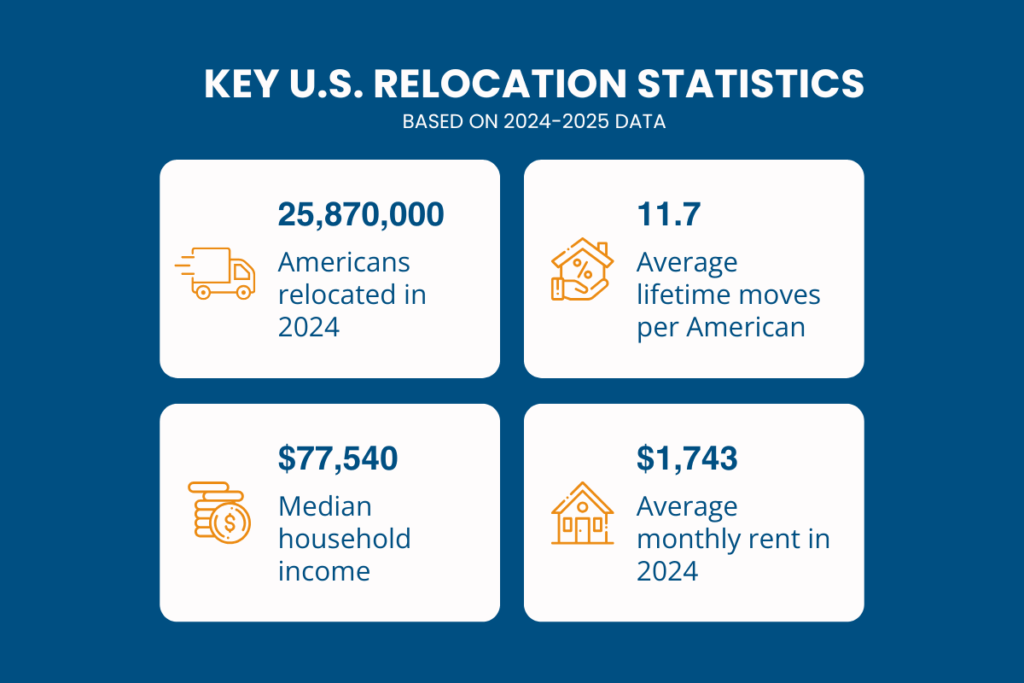
Relocation has always been part of American life. People move to chase new opportunities, to live closer to loved ones, or simply to cut living costs. In 2024, more than 25.8 million Americans moved, a number that highlights just how common these decisions remain.
On average, a person in the United States will move nearly twelve times over a lifetime. These moves are not random. They often reflect a mixture of personal milestones and financial pressures. The median household income in 2024 was $77,540, while the average monthly rent was $1,743. Numbers like these directly influence people’s decisions to relocate and where they ultimately go. Affordability, flexibility, and family priorities are shaping mobility more than ever.
Which U.S. States Are People Moving To?
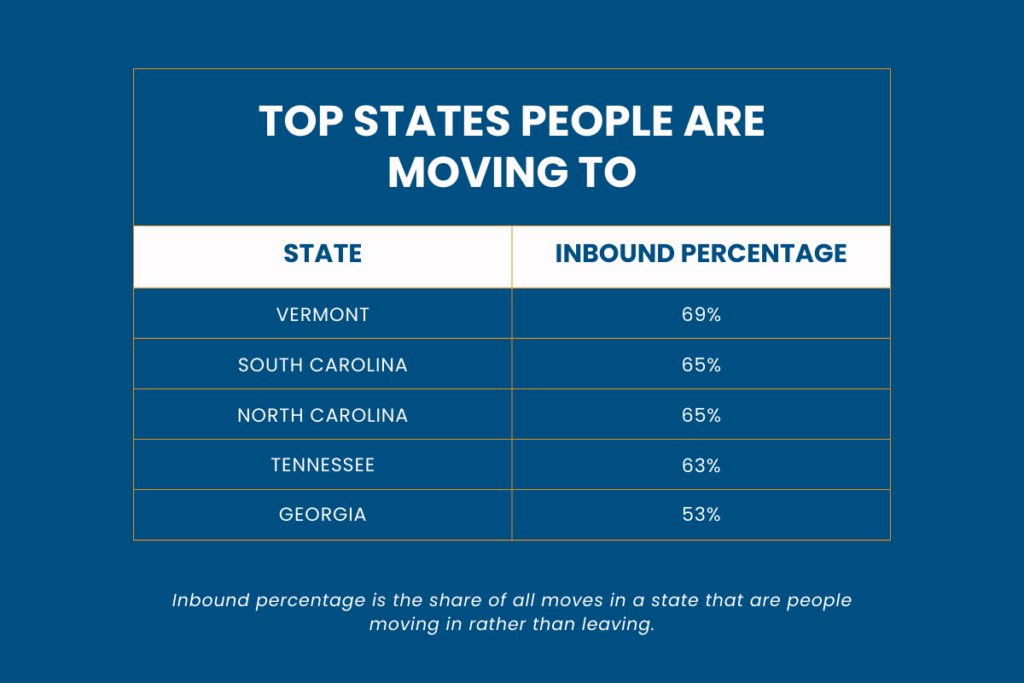
The most popular states are not the largest or the most expensive. They are places that offer space, livability, and relative affordability.
- Idaho: In 2024, sixty-nine percent of moves in Idaho were inbound. Families and workers are attracted to lower housing costs and wide-open living. Many newcomers are leaving California and Washington behind.
- South Carolina: Sixty-five percent of moves into South Carolina were inbound. Its warm weather, coastal towns, and affordable lifestyle make it appealing to both retirees and professionals.
- North Carolina: Also recording sixty-five percent inbound moves, North Carolina continues to grow. Raleigh, Charlotte, and Asheville combine expanding job markets with cultural appeal and competitive housing options.
- Tennessee: Sixty-three percent of moves into Tennessee were inbound. No state income tax, a central location, and growing cities like Nashville make it a magnet for movers.
- Georgia: Georgia recorded fifty-three percent inbound moves. Atlanta remains a major hub for jobs, while suburban and rural areas provide affordable alternatives.
Which U.S. States Are People Moving Out Of?
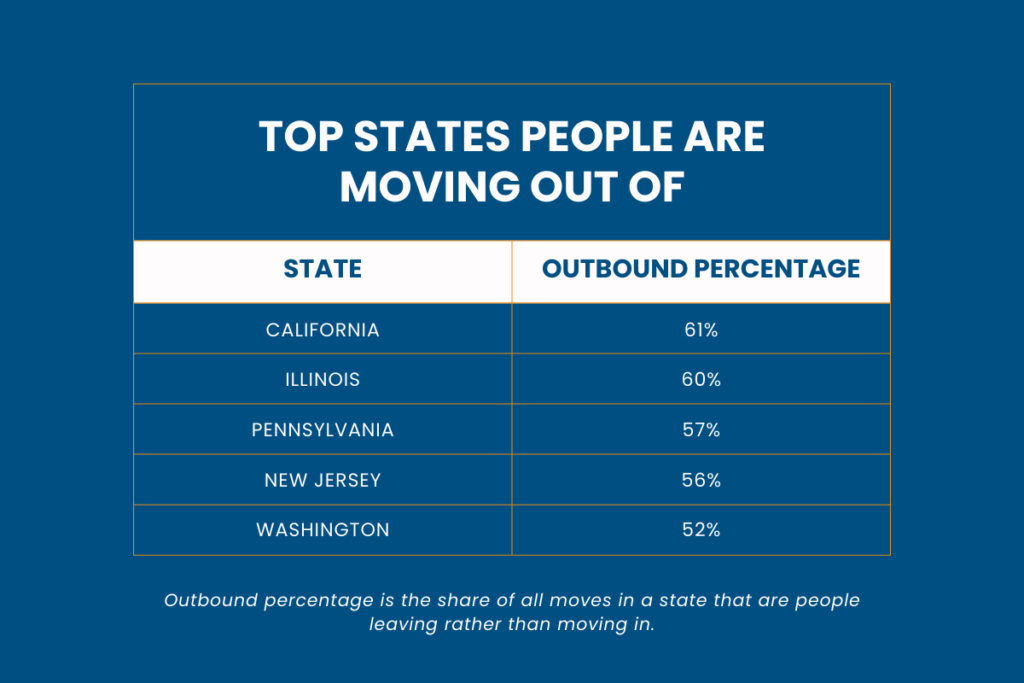
Just as some states attract movers, Other states are losing residents faster than they gain them, often due to high costs or limited affordability.
- California: Sixty-one percent of moves in California were outbound. High living expenses and housing shortages continue to drive people to states such as Idaho and Nevada.
- Illinois: Sixty percent of Illinois moves were outbound. Residents frequently cite high taxes and limited growth around Chicago as reasons for leaving.
- Pennsylvania: Fifty-seven percent of moves in Pennsylvania were outbound. Many younger residents are relocating to find better career opportunities.
- New Jersey: In New Jersey, fifty-six percent of moves were outbound. Residents point to steep housing costs and tax pressures as common reasons.
- Washington: Fifty-two percent of moves were outbound in Washington. Rising expenses in urban areas, especially Seattle, continue to push residents toward less costly states.
Reasons Why People Are Moving in the USA
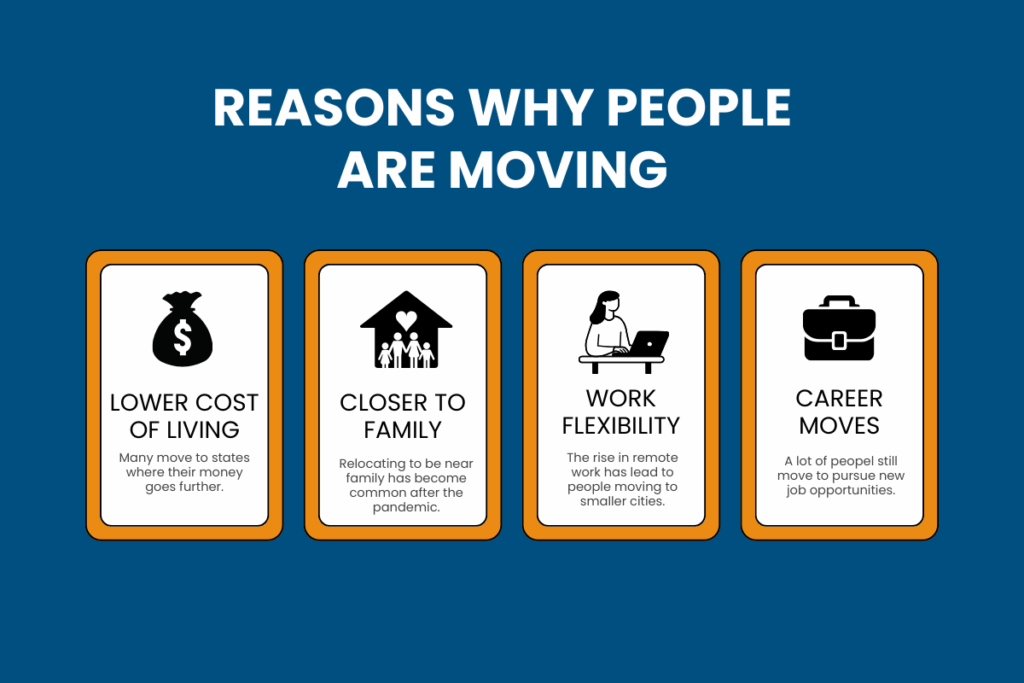
The reasons behind moves are just as telling as the destinations. Survey data reveals that the cost of living is the single biggest driver, but family and lifestyle also rank highly.
- Lower Cost of Living: Rising rents and housing costs are the number one factor. Many households are seeking states where their income stretches further, especially when they can work remotely.
- Closer to Family: After the pandemic, many Americans reevaluated priorities. Being near family has become one of the top reasons for relocation.
- Work Flexibility: Remote and hybrid work options have freed people to live outside major metro hubs, fueling moves to smaller or mid-sized cities.
- Career Moves: While fewer people move solely for jobs than in past decades, career changes and growing industries still play a role.
Who’s Doing the Moving in the USA.?
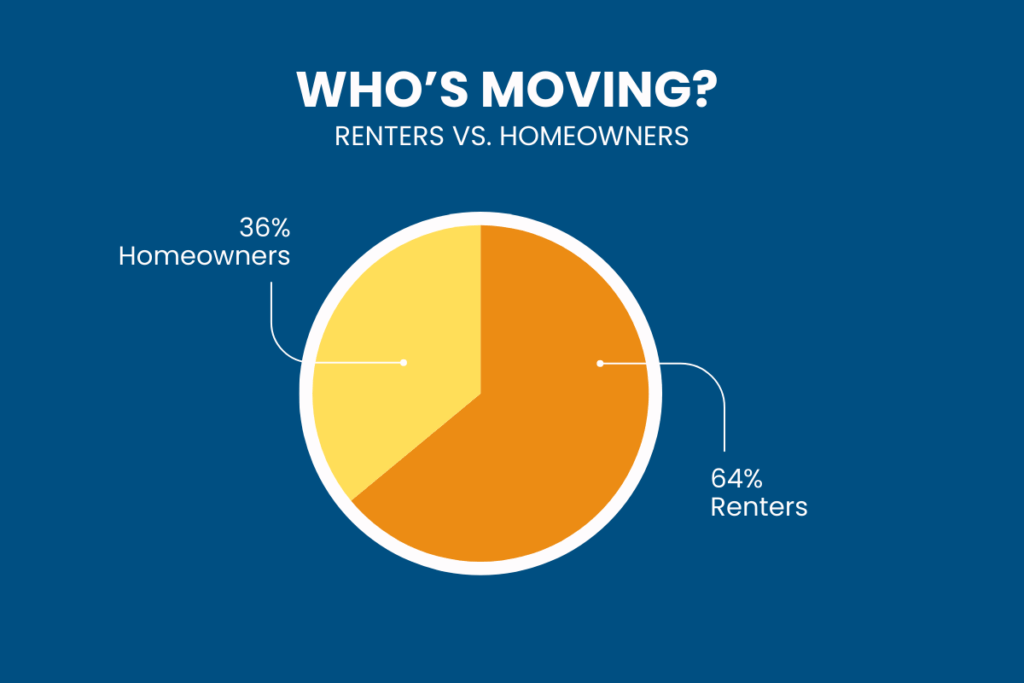
Demographics show that renters are driving the majority of moves:
- 64% renters
- 36% homeowners
Renters are less tied down financially, and they often seek mobility and affordability. This trend also highlights how difficult homeownership remains for many younger Americans.
How Much Does Moving Cost in the United States?
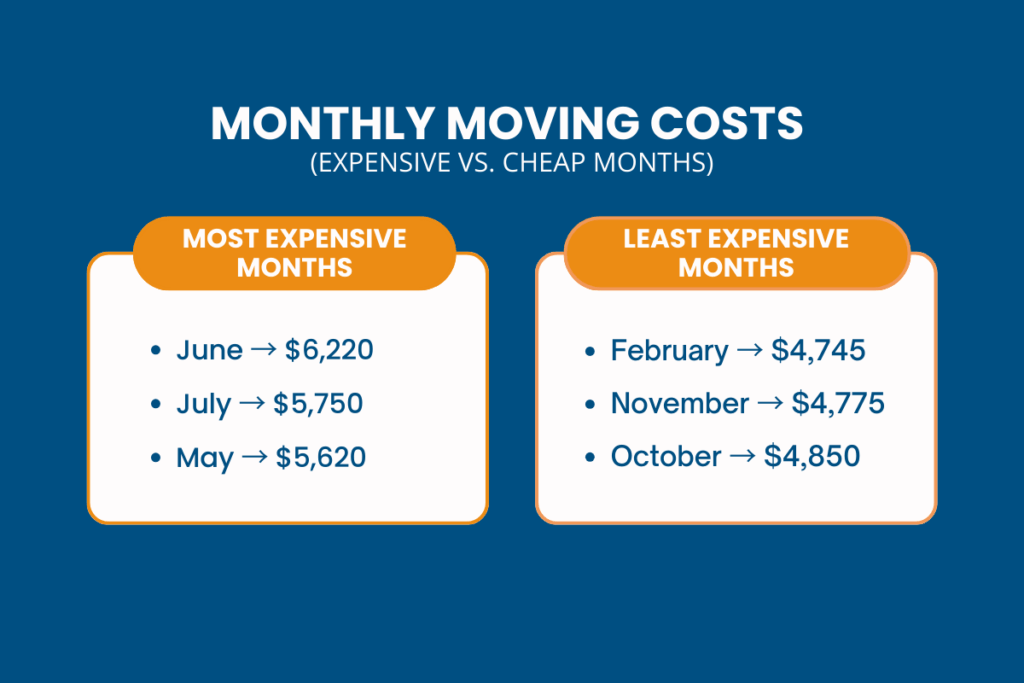
Relocation is never cheap, but the timing of your move can make a huge difference. Costs peak in the summer months, when demand is highest, and fall during the off-season, which lines up with broader U.S. delivery and moving demand trends.
Most Expensive Months to Move
- June → $6,220
- July → $5,750
- May → $5,620
Least Expensive Months to Move
- February → $4,745
- November → $4,775
- October → $4,850
That’s a difference of over $1,400 simply based on timing. For families or individuals planning a move, shifting the date by a month or two can lead to significant savings.
Final Thoughts
The United States is a nation in motion. High-cost states continue to lose residents, while more affordable states gain them. Renters remain the most mobile, shaping relocation patterns with decisions that often reflect cost, flexibility, and family ties. Rising living expenses and shifting work arrangements are changing not only where Americans move but also how often. Timing continues to matter, as summer moves cost far more than those made later in the year.
Relocation involves finding the right balance between financial stability, opportunity, and lifestyle. Careful planning, seasonal timing, and services such as auto transport or consolidated freight can make the process easier and less expensive. And remember, if you need car shipping, furniture delivery, or affordable moving solutions, Shiply makes the process simple and cost-effective. Request a quote today!
Sources: U.S. Census Bureau, U.S. Census Bureau (State-to-State Migration), U.S. Census Bureau (Return Home Migration), Economic Innovation Group (EIG), North American Van Lines, PODS Moving Trends, moveBuddha, RentCafe