
 Kate Margallo
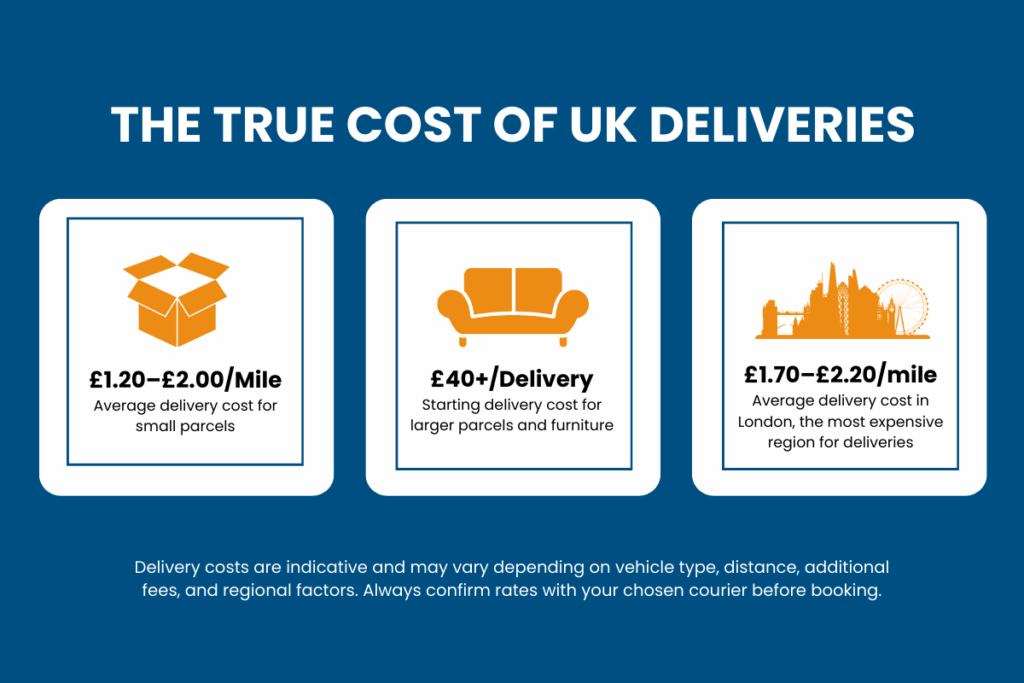
Delivery pricing in the UK is often difficult to predict. Courier rates typically range from £1.20 to £2.00 per mile, while large or bulky item deliveries commonly start at around £40. However, the final cost can vary significantly depending on factors such as vehicle type, distance travelled, labour requirements, and access restrictions in busy or urban areas. While mileage-based pricing may appear straightforward, additional charges, including congestion fees, waiting time, or minimum call-out rates, can quickly inflate the overall price.
This uncertainty affects both individuals sending items locally and small businesses managing regular shipments. In many cases, a lack of clear pricing information leads to overspending, delivery delays, or avoidable logistical issues.
How Much Is the Average Cost Per Mile for Deliveries in the UK?
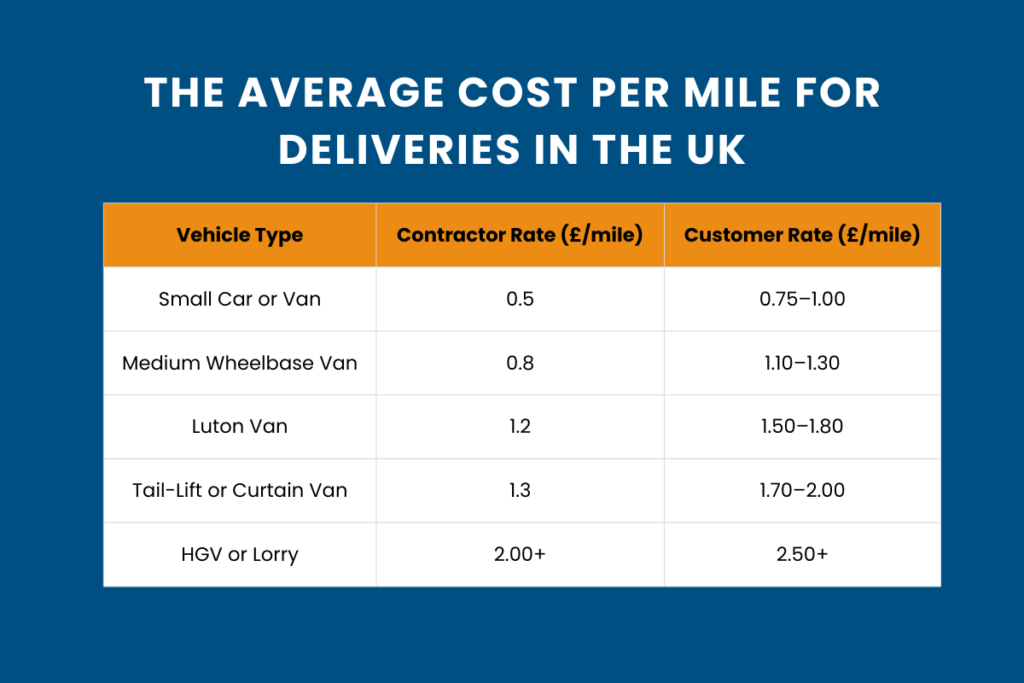
Delivery costs per mile vary depending on vehicle type, distance, and load size. Small cars and vans are cheaper and better for city deliveries, while larger vans and lorries cost more due to fuel, crew requirements, and handling. Even short trips can include extra fees like congestion charges or minimum call-out fees, so mileage alone rarely reflects the total price.
The Price of Multi-Stop Deliveries in the UK
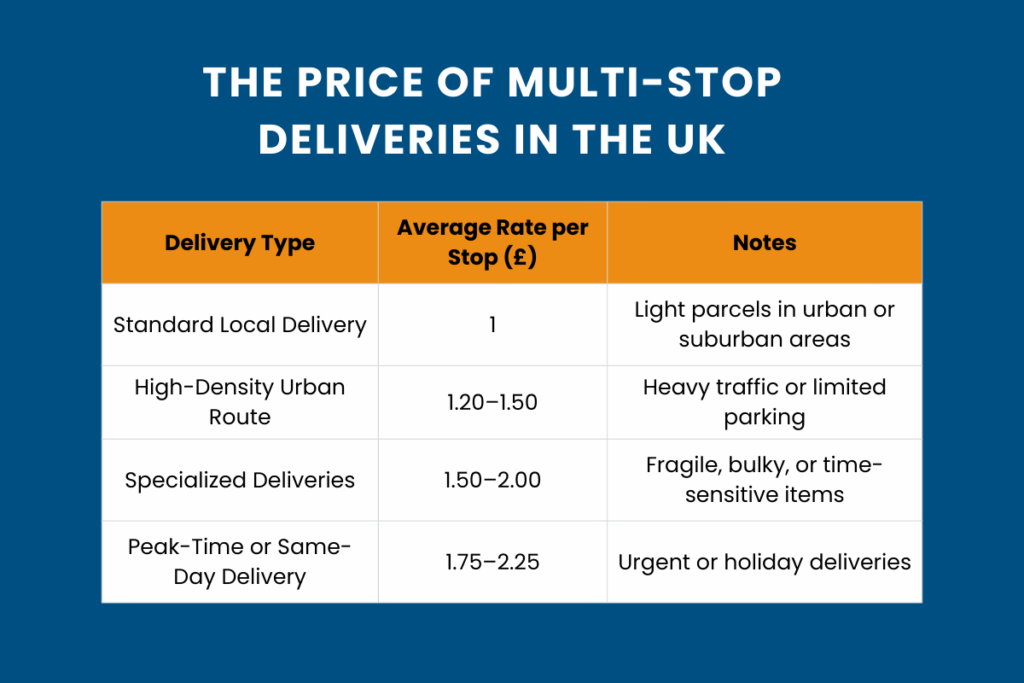
Multi-stop deliveries are often charged per drop rather than per mile, making them suitable for businesses that deliver to multiple addresses within a single area. Compact vehicles are usually used to save time and fuel, while efficient route planning reduces travel distances. Rates per stop depend on traffic, delivery density, and the type of items being carried. High-demand areas or urgent windows can result in increased fees.
The Cost to Deliver Large Items and Furniture
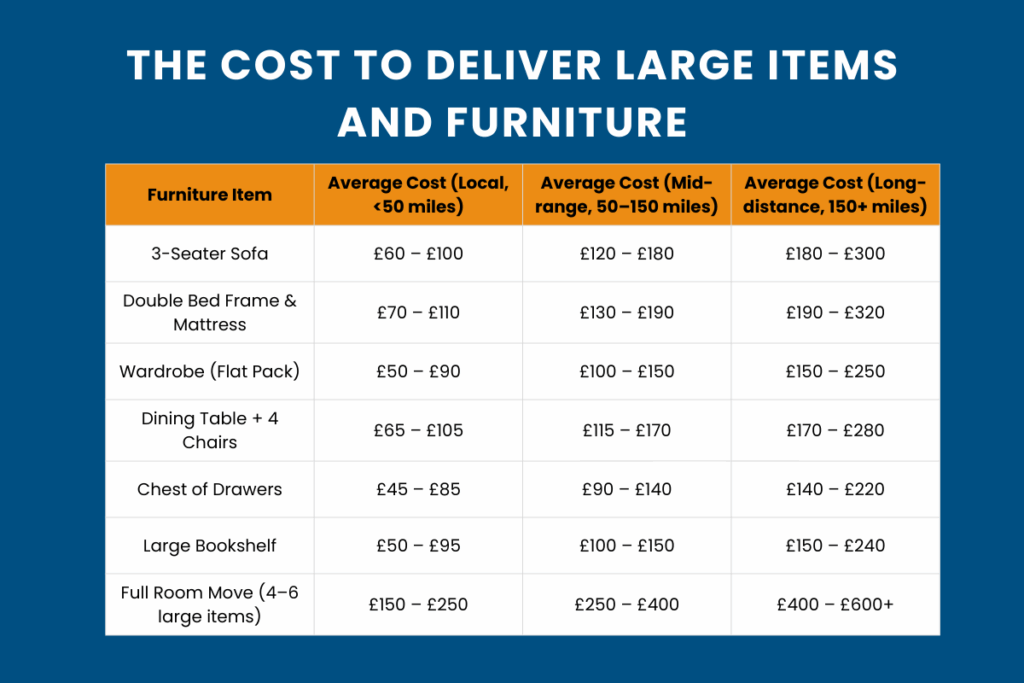
Delivering large items or furniture requires bigger vehicles, two-person crews, and sometimes additional equipment, which increases costs. Fees depend on distance, handling complexity, and extra services such as in-room placement, minor assembly, or disposal of old items. Even short city deliveries can cost more than small parcels due to the labour and materials required to safely move bulky goods.
The Factors That Affect the Price of Delivery
Several factors influence the cost of a delivery, and these can vary widely depending on the vehicle, distance, and type of goods. Understanding these elements helps explain why two similar deliveries may have very different quotes.
- Fuel Prices: Increases in diesel or petrol directly raise delivery costs.
- Labour Costs and Availability: Skilled drivers and two-person crews demand higher wages, and shortages can push prices up.
- Vehicle Type and Size: Larger vans or lorries cost more to operate and are harder to park or navigate in busy areas.
- Congestion and Access Fees: Urban areas often charge tolls, congestion fees, or parking charges that add to the total cost.
- Seasonal Demand: Prices often rise during holidays or busy sales periods due to higher demand for deliveries.
- Fragility and Liability: High-value or delicate items may require extra packaging, equipment, or insurance, increasing the fee.
The Current Trends Affecting Delivery Costs
Delivery costs are influenced not only by individual factors but also by broader market trends that affect the entire industry. These trends shape pricing, service expectations, and the types of vehicles or technology used by couriers.
- Rising Per-Mile Costs: Fuel prices, labour increases, and urban fees have pushed average rates higher across all van types.
- E-Commerce Growth: More one-off deliveries from online marketplaces increase demand for flexible and last-mile services.
- Sustainability Efforts: Businesses are adopting electric or hybrid vehicles and optimizing routes to reduce fuel usage.
- Consumer Expectations: Customers increasingly expect tracking, delivery windows, and full-service handling, which can raise costs.
- High-Density Urban Deliveries: Congested city routes require careful planning and sometimes specialized vehicles, impacting fees.
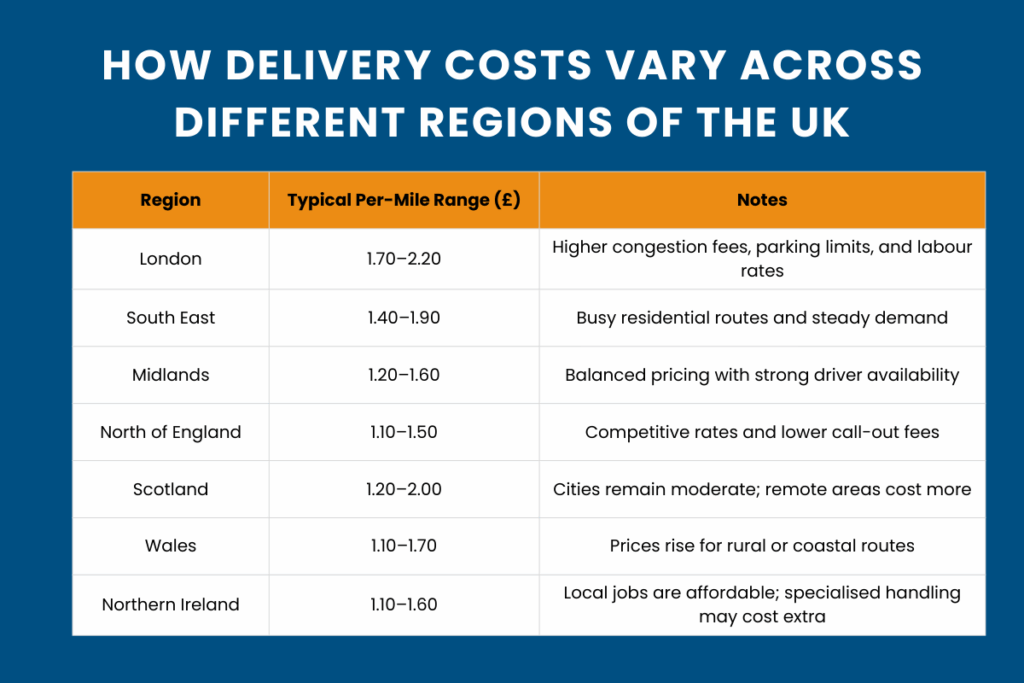
How Delivery Costs Vary Across Different Regions of the UK
Delivery prices shift from region to region due to differences in congestion levels, labour availability, fuel usage, and road accessibility. Some areas face higher charges because drivers spend more time dealing with traffic or restricted parking, while other locations benefit from open roads and steady delivery demand. These regional variations influence both per-mile rates and overall job costs, creating noticeable gaps between the north, south, and more remote parts of the UK.
Tips to Reduce Delivery Costs
Delivery expenses can be lowered through practical planning and clear communication. Many senders pay more than necessary because of rushed bookings, limited delivery windows, or avoidable delays at pickup and drop-off locations. Small adjustments can create noticeable savings, especially for frequent senders or businesses handling multiple weekly jobs.
- Book Early: Last-minute or same-day requests usually come with higher fees.
- Group Deliveries: Combining several items or coordinating nearby stops can reduce the total cost.
- Flexible Time Windows: Allowing couriers more scheduling freedom often leads to lower quotes.
- Prepare the Property: Clear hallways, driveways, and entry points to reduce unloading time.
- Share Accurate Details: Provide photos of access points, staircases, or parking limits to prevent delays.
- Compare Rates: Checking multiple providers gives a clearer sense of fair pricing.
- Negotiate for Repeat Work: Regular bookings can qualify for better per-mile rates or discounted call-out fees.
Last Mile Thoughts
Delivery pricing does not have to feel like a moving mystery. By keeping an eye on vehicle type, distance, labour, regional quirks, and seasonal shifts, you can dodge surprise fees and plan smarter. Use this index as your cheat sheet for UK delivery costs, whether you are sending a single parcel across town or coordinating multiple bulky shipments. A little knowledge upfront goes a long way, saving time, money, and unnecessary headaches.
With Shiply, you can compare quotes from trusted transport providers and book the service that fits your needs. It takes the guesswork out of delivery, so your items arrive safely and on time.
Sources: Elogii, StockOne Logistics, Ofcom, NearMe Trades, Fleetnews, Parcel and Post Technology International