

 Kate Margallo
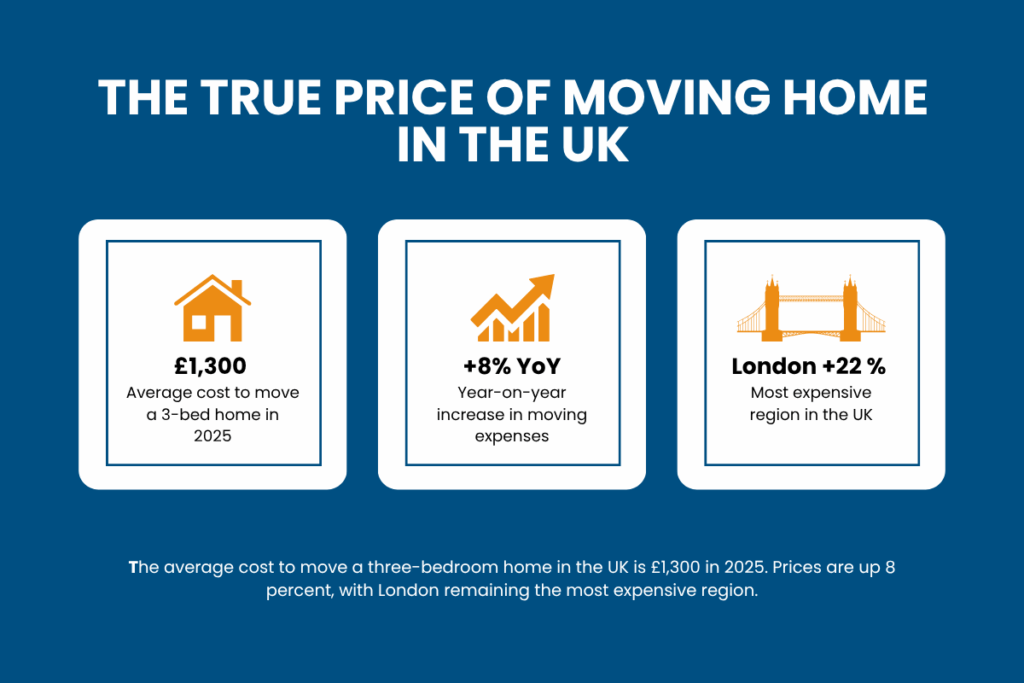
Removals in the United Kingdom have become more expensive in almost every measurable way. Fuel, insurance, and labour prices have risen, and the availability of drivers and moving staff has not yet returned to pre-pandemic levels. The result is that UK moving costs in 2025 are higher than they were even a year ago, and the difference is being felt across all property types.
This article summarises current removal and relocation costs. It aims to provide a reliable overview of what households are actually paying, what factors shape the price, and how movers can reduce their expenses without compromising service quality.
National Averages: What Households in the United Kingdom Are Paying to Move in 2025
Across the country, removal prices in 2025 range between £350 and £2,000, depending on property size, distance, and level of service. Small flats typically sit at the lower end of the range, while larger houses using full packing and unloading services occupy the upper range.
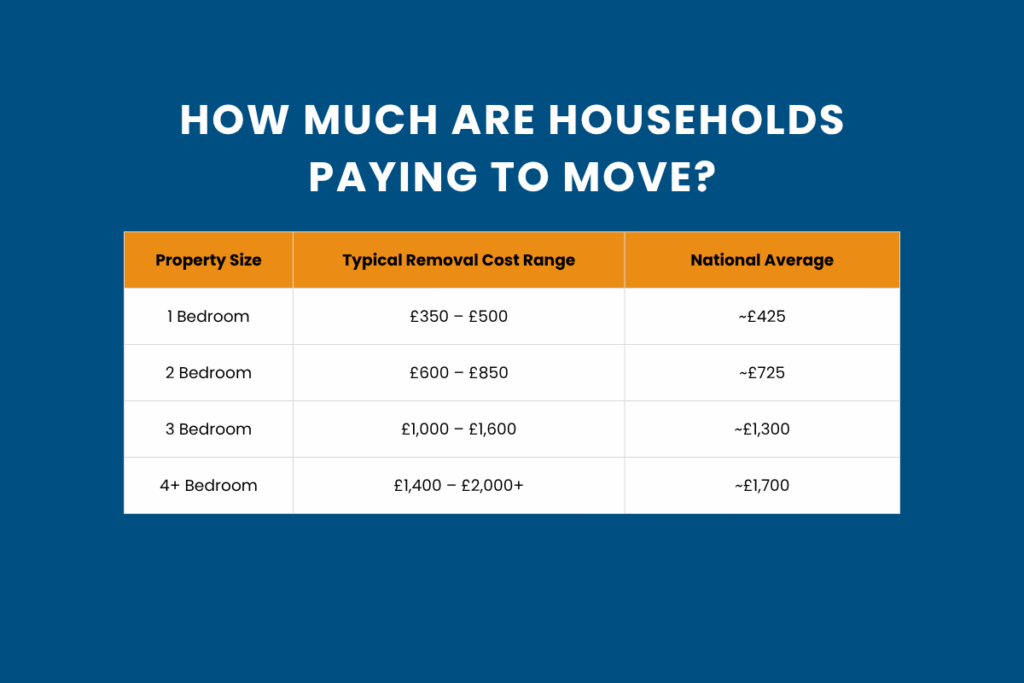
The price range reflects variations in location and service level. A self-pack move in a small town will be cheaper than a full-service move within London. Compared with 2023, the average cost for a three-bedroom move has increased by roughly eight to ten percent. The main drivers are higher vehicle operating costs and labour rates. Fuel has become more expensive, and insurance for transport services continues to rise. Some removal companies now include additional coverage or upgraded materials as standard, increasing the headline figure.
UK Moving Costs by Property Size and Distance
The total price of a move grows in line with the property’s size and the journey’s length. A one-bedroom flat may fit into a single van handled by two movers, whereas a three-bedroom property often needs two large vehicles and a full team. The number of hours and trips required can double the final quote.
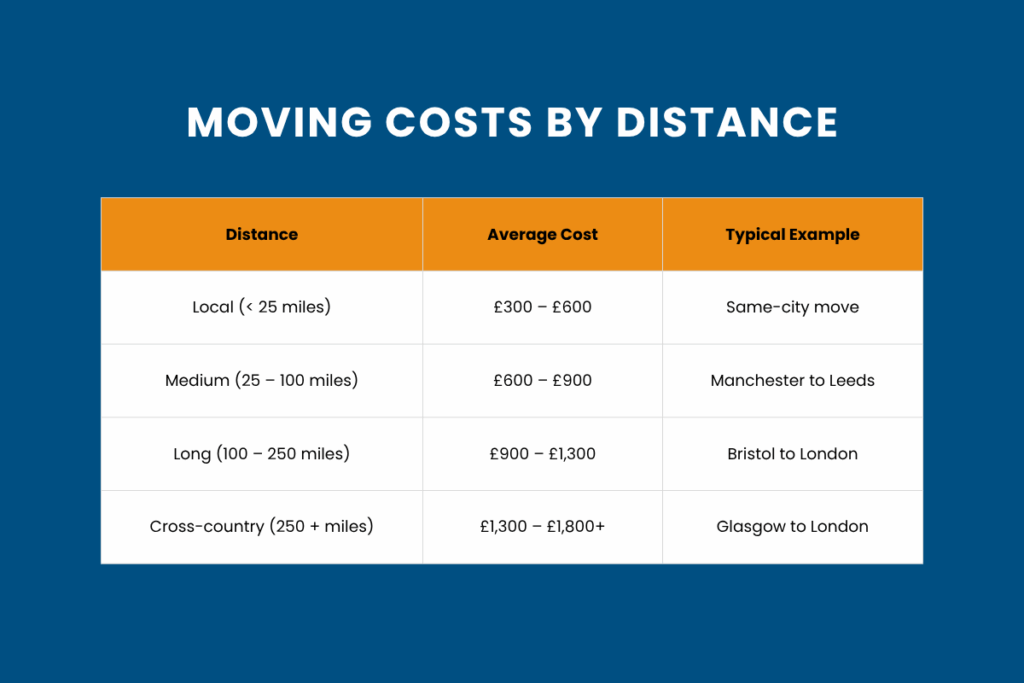
Fuel, tolls, and longer driver hours account for the jump in long-distance costs. A move of more than two hundred miles can cost twice as much as one inside the same city, even when the contents are identical.
Regional Price Gaps Across the United Kingdom
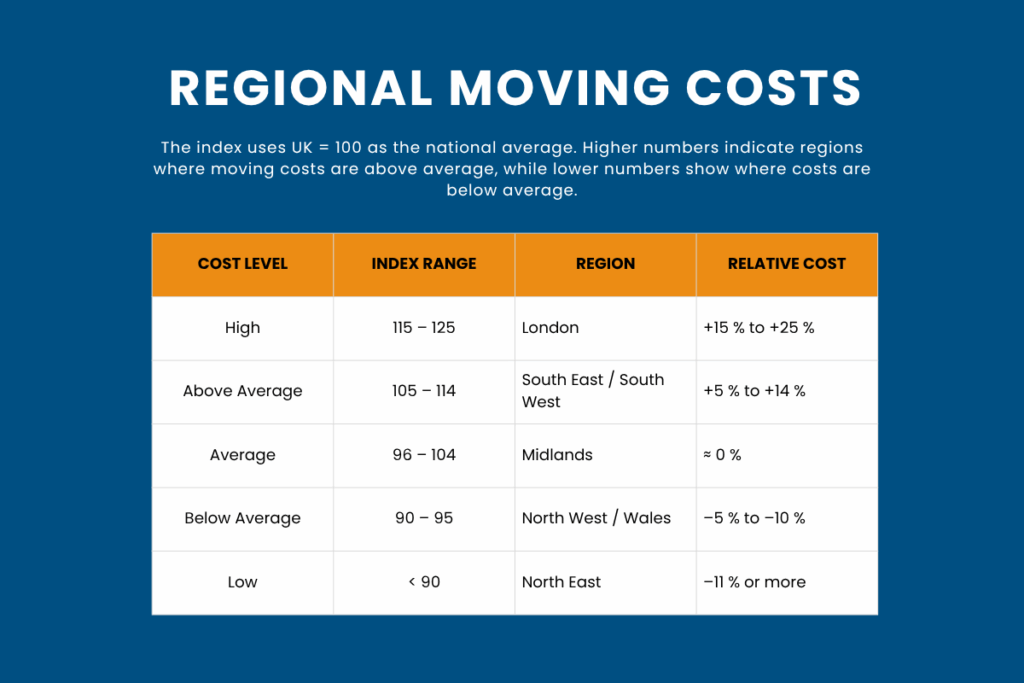
Removal costs are not uniform. London and the South East remain the most expensive areas, averaging 15 to 25 percent above the national mean. The North East, Wales, and much of Scotland fall below that figure, usually between 10 and 20 percent less than the national average.
A regional index places London at roughly 122 against a UK average of 100. The South East stands at 118, the Midlands at 98, and the North East at 90. In practice, a three-bedroom move costing £1,300 in Birmingham might reach £1,600 in Greater London.
Higher costs in southern cities stem from urban congestion, parking limitations, and high demand. Northern and rural regions benefit from lower hourly rates and easier vehicle access, although fewer operators may be available.
What Is Normally Included in a Professional Removal Quote?
Most standard removal quotes include the essential tasks needed to relocate a household safely. A typical quotation covers:
- Labour for loading and unloading
- Vehicle hire, fuel, and mileage
- Equipment such as trolleys and blankets
- Basic packing materials
- Standard goods-in-transit insurance
Full-service packages also include packing and unpacking, while self-pack services exclude these steps. Pricing can vary further if movers face stairs, narrow corridors, or long walking distances between the vehicle and the door. Always check that the quotation specifies the number of staff, estimated hours, and any potential surcharges.
Hidden Expenses That Will Increase Your Final Bill
Many households underestimate how quickly extra services raise the total cost. These additions often add 10 to 25 percent to the base quote.
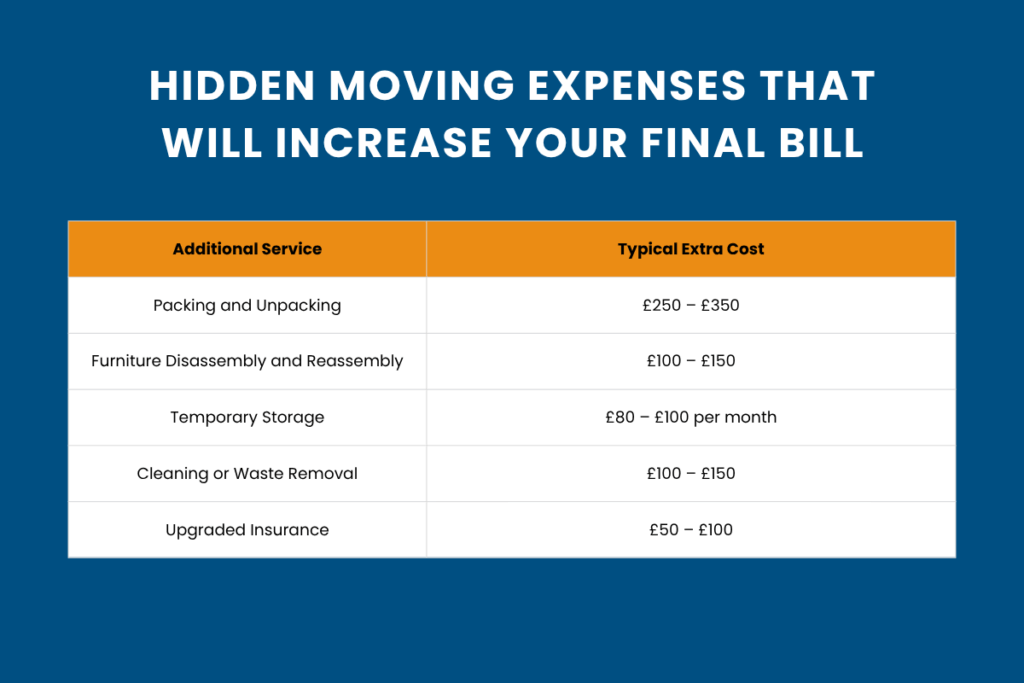
Other hidden costs can appear on moving day. Waiting time charges may apply if keys are delayed at completion. Urban parking fees and congestion charges are sometimes passed directly to the customer. Obtaining a full written list of possible extras before signing prevents disputes later.
How UK Removal Costs Have Changed Over the Past Five Years
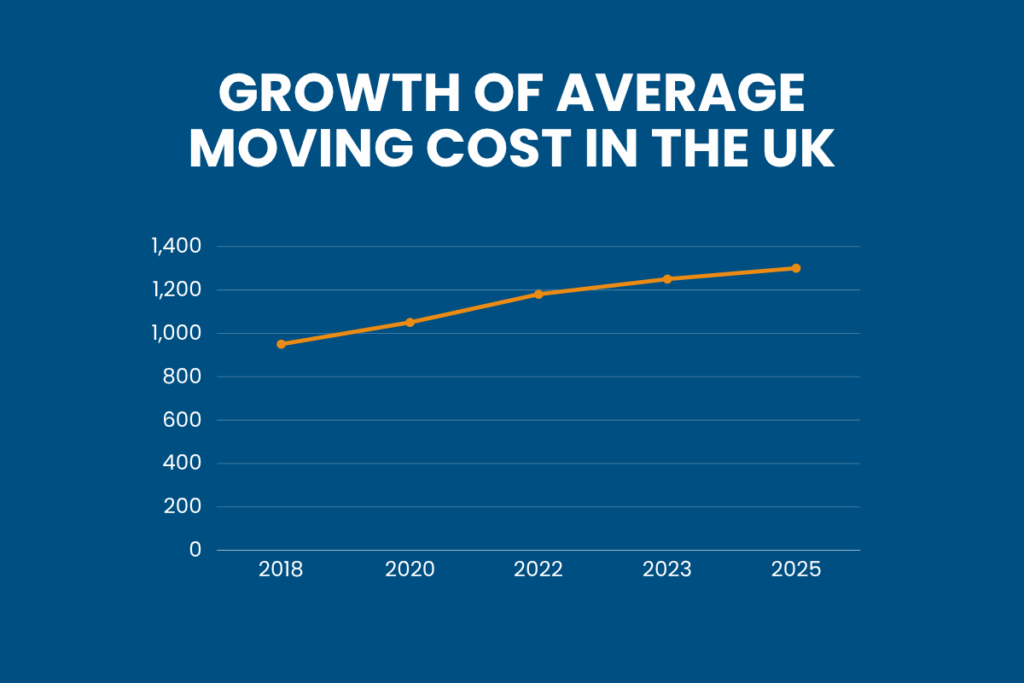
Removal costs have climbed steadily rather than sharply. In 2018, the average for a three-bedroom move was about £950. By 2020, it had risen to £1,050, then to £1,180 in 2022, and £1,250 in 2023. In 2025, the same job averages £1,300 or more, marking a rise of roughly 30 percent over five years.
This increase aligns with inflation in transport and logistics. Fuel and maintenance costs have risen, as have wages. Industry feedback suggests that more customers now request complete packing and unpacking, which adds convenience and lifts the average figure. The overall pattern mirrors the general consumer price index for household services.
The Total Cost of Moving House Including All Associated Fees
The physical move is only one element of the full financial picture. When adding legal fees, estate agent commissions, mortgage charges, and taxes, the total cost of moving house can reach five figures.
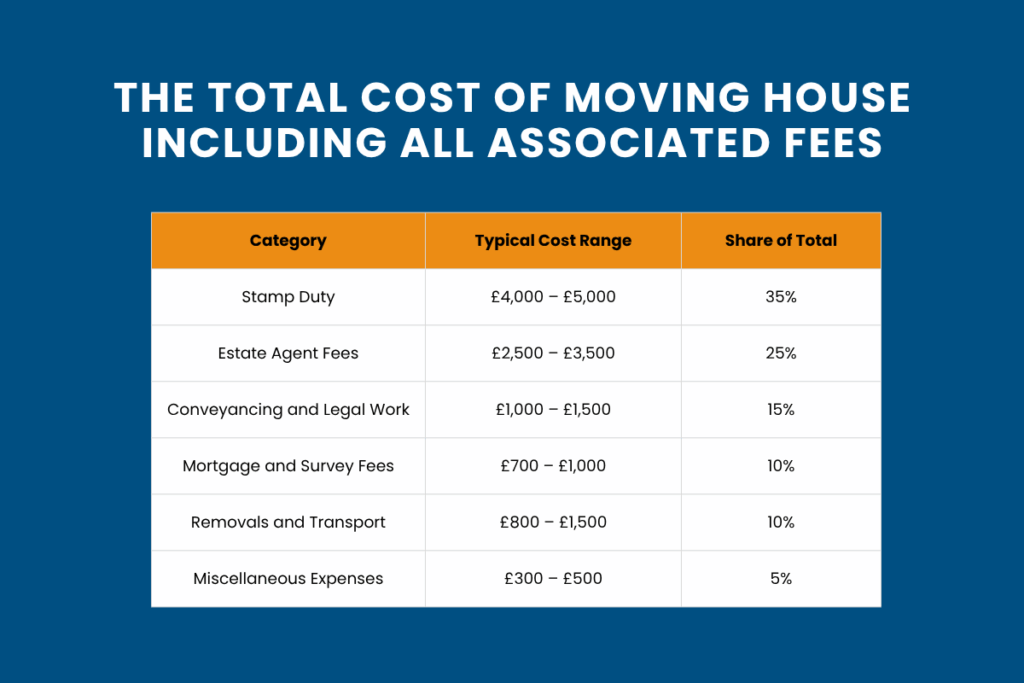
In total, a full house move in 2025 generally costs between £13,000 and £15,000. London and the South East exceed this average because of higher property values and tax thresholds. In northern regions, the overall cost tends to fall closer to ten thousand pounds.
Summary of United Kingdom Removal Costs
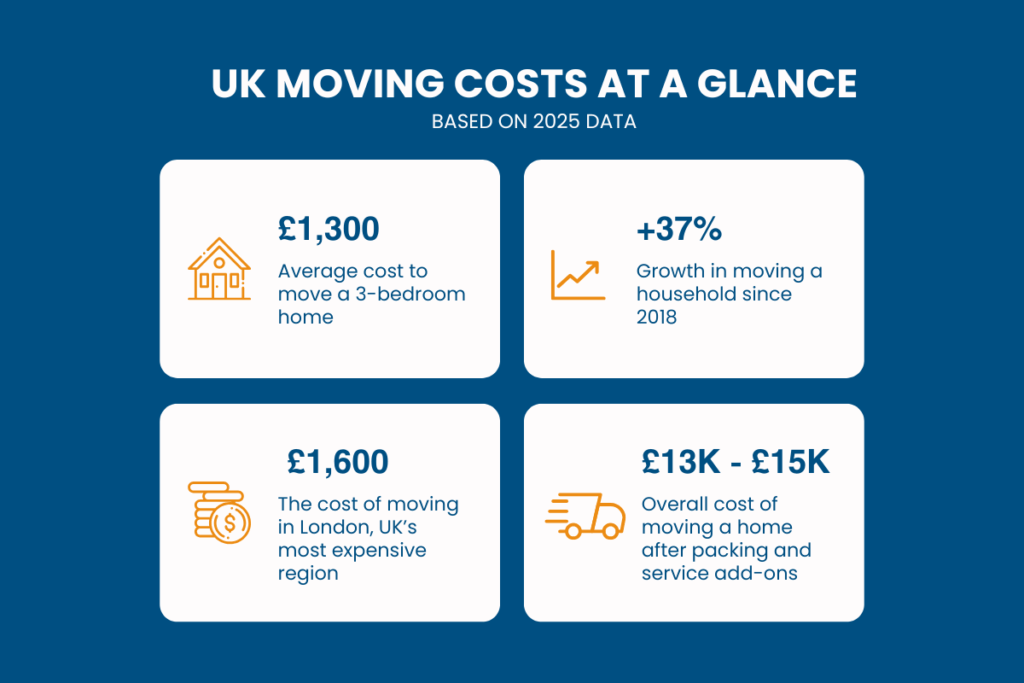
The cost of moving home in the United Kingdom has reached its highest level in recent years, reflecting steady inflation across transport, fuel, and labour. A typical three-bedroom household now spends around £1,300 on removals alone, and the total expense of buying and selling a property commonly ranges between £13,000 and £15,000. London and the South East remain the most expensive regions, while the North East and parts of Scotland continue to offer lower averages.
The overall pattern shows gradual, sustained growth rather than sudden spikes. Rising vehicle costs, higher wages, and increased demand for full-service removals have all contributed to this trend. The data suggests that costs are unlikely to fall in the near term, especially as inflation in logistics and housing persists
Despite this upward movement, proactive planning still makes a clear difference. Movers who compare quotes, reduce volume, and choose flexible dates consistently pay less than those who book late or request full-service packages.
Get Competitive Moving Quotes Through Shiply
If you are planning a move this year, let Shiply help you find a fair price. Thousands of rated transport providers use Shiply to fill spare vehicle space, which means you can save up to 75 percent compared with standard removal rates.
Enter your details once, receive multiple quotes within minutes, and choose the mover that best fits your budget and timing. Every provider is feedback-rated, so you can book with confidence knowing your belongings are in reliable hands.
Start your move the smart way. Get free moving quotes on Shiply today!
Sources: Compare My Move, Zoopla, Sirelo, HomeOwners Alliance (HOA), Pickfords, Yopa, Halifax