

 Kate Margallo
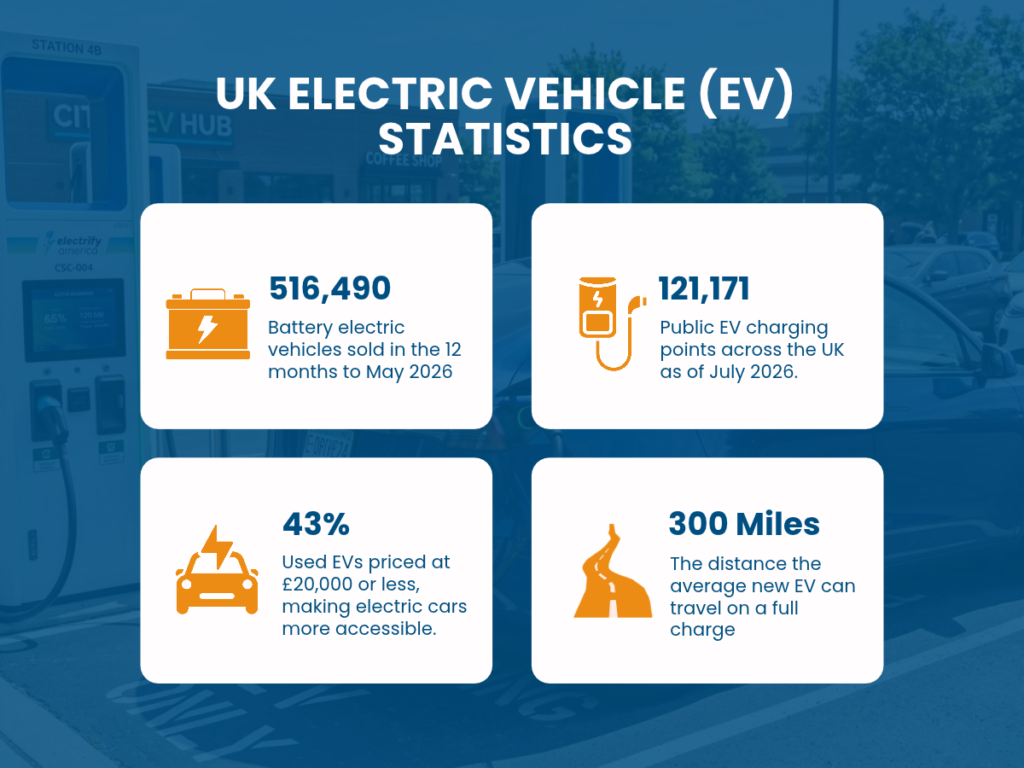
Electric vehicles are becoming an increasingly significant part of the UK car market. In fact, the latest UK electric vehicle statistics show that 516,490 new battery electric vehicles (BEVs) were sold during the 12 months to May 2026, overtaking the 504,010 new petrol cars sold during the same period for the first time. UK Electric Vehicle (EV)
The UK’s EV charging network is expanding alongside vehicle adoption. By July 2026, there were more than 121,000 public EV chargers, including almost 29,000 capable of rapid charging or faster. Electric cars are also becoming more accessible in the used market, with one in five second-hand EVs available for less than £15,000.
This article explores the latest UK electric vehicle statistics, including EV sales, market share, charging infrastructure, regional differences, prices, driving range, battery performance, and breakdown data.
Key UK Electric Vehicle Statistics
- 516,490 new BEVs were sold in the 12 months to May 2026, compared with 504,010 petrol cars.
- 355,746 BEVs were registered between January and August 2026.
- BEV registrations increased by 28.6% year-on-year during this period.
- Fully electric vehicles accounted for 25.62% of new-car registrations year to date.
- Plug-in hybrid registrations increased by 37.9% year-on-year.
- The UK had 121,171 public EV chargers as of 1 July 2026.
- There were 174.9 public EV chargers per 100,000 people.
- 28,887 public EV chargers were rated rapid or above at 50kW+.
- There was approximately one public EV charger for every 17 BEVs.
- 24% of public EV chargers were rapid or ultra-rapid.
- London had 345.1 public EV chargers per 100,000 people, the highest regional rate.
- Scotland had 59.1 rapid-or-faster chargers per 100,000 people.
- One in five used EVs on Auto Trader were priced below £15,000.
- 43% of used EVs were priced at £20,000 or less.
- More than 46 new EV models had an RRP below £30,000.
- The average range of a new electric vehicle is around 300 miles.
- Britons drive an average of 127 miles per week.
- Running out of charge accounts for just 1.6% of EV breakdown call-outs in the latest figures included in the research.
How Many Electric Cars Are Sold in the UK?
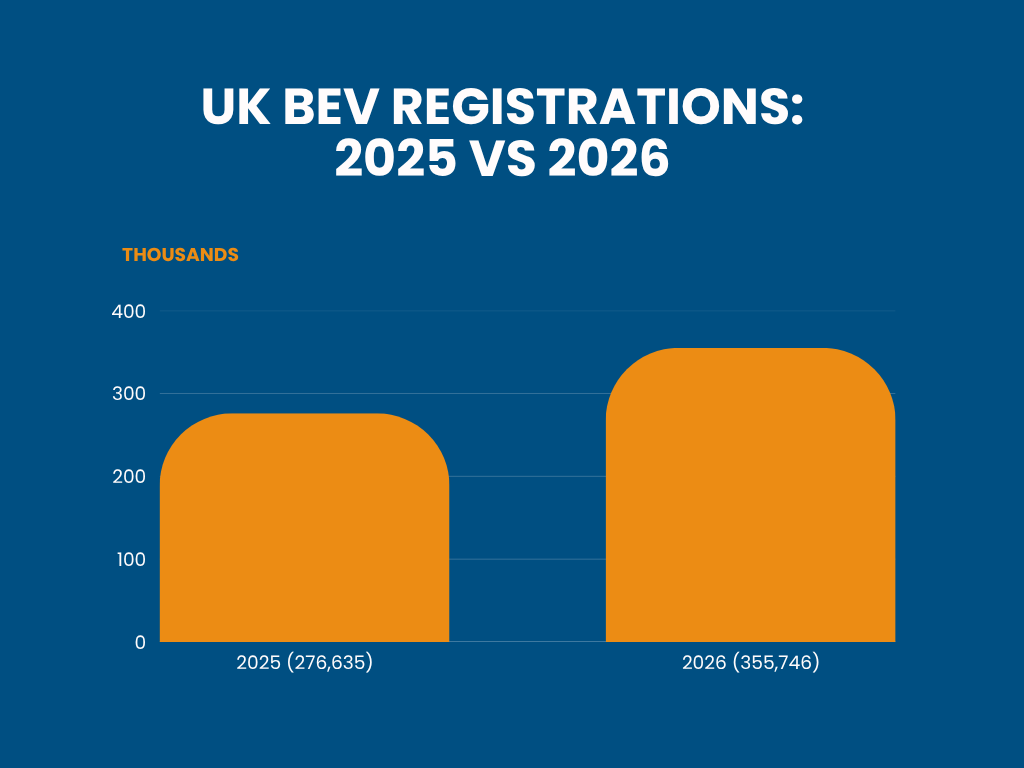
Electric car sales have continued to grow strongly in 2026, with 355,746 new battery electric cars registered between January and August.
This compares with 276,635 registrations during the same period in 2025, representing year-on-year growth of 28.6%. BEVs accounted for 25.62% of all new-car registrations over the period, up from 21.86% a year earlier.
August also recorded strong growth. A total of 28,063 battery electric cars were registered during the month, up from 21,969 in August 2025. This represents an increase of 27.7% in just one year.
What Percentage of New Cars in the UK Are Electric?
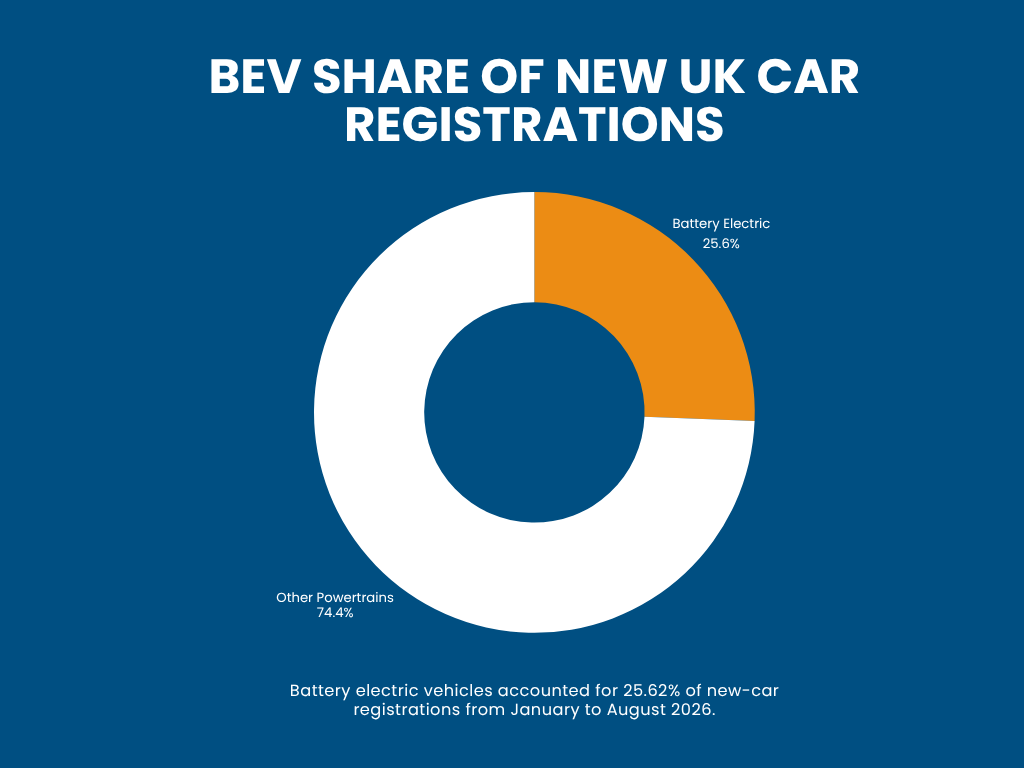
Battery electric vehicles accounted for 25.62% of UK new-car registrations between January and August 2026, meaning approximately one in four new cars registered during the period was fully electric.
This represents an increase from 21.86% during the equivalent period in 2025. The monthly figure is even higher. In August 2026, BEVs accounted for 29.8% of new registrations, compared with 26.5% in August 2025.
Plug-in hybrids accounted for another 14.5% of registrations during August, while conventional hybrids represented 12.7%.
Are Electric Cars Outselling Petrol Cars in the UK?
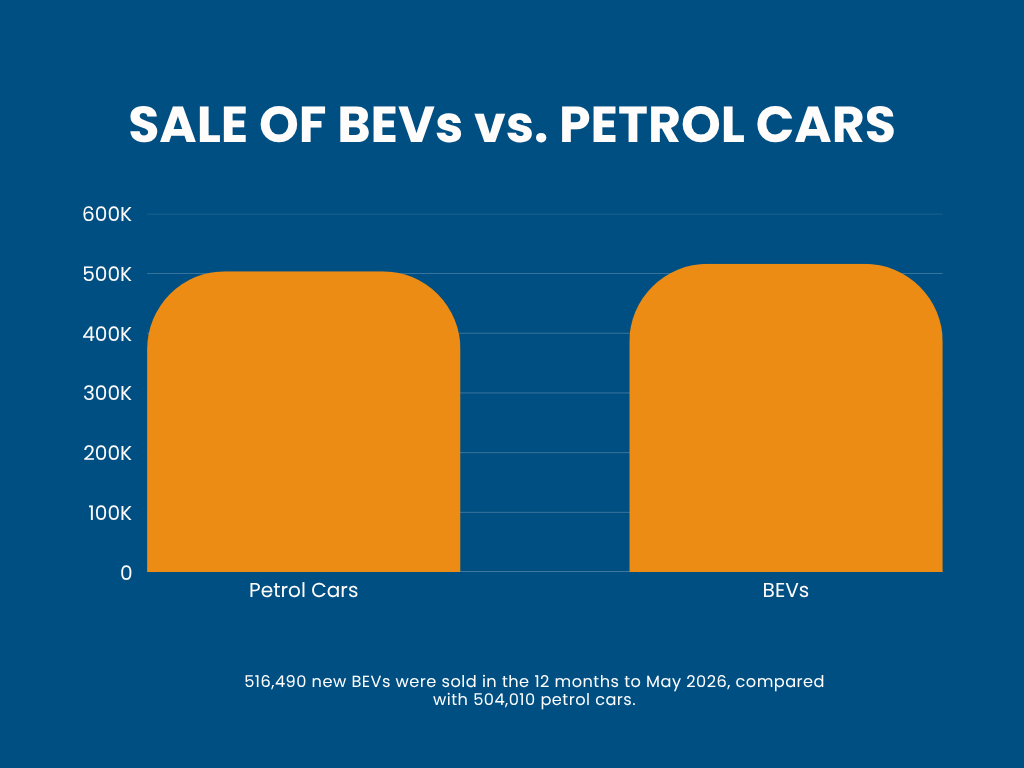
For the first time, more battery electric vehicles were sold in the UK over a 12-month period than petrol cars.
During the 12 months to May 2026, UK consumers bought 516,490 new BEVs, compared with 504,010 new petrol cars.
The UK first recorded more BEV than petrol sales in an individual month in December 2022. However, this pattern has become increasingly consistent, culminating in electric cars moving ahead across an entire rolling 12-month period.
May 2026 illustrates this change particularly clearly. BEV sales increased 34% year-on-year to 43,931, while petrol-car sales declined 14% to 35,068.
How Fast Are Electric Vehicle Sales Growing in the UK?
Battery electric vehicle registrations increased by 28.6% year-on-year during the first eight months of 2026.
However, plug-in hybrids grew even faster. PHEV registrations increased from 134,331 to 185,198, representing a growth of 37.9%.
Conventional hybrid registrations increased by a more modest 11.2%, from 174,784 to 194,327.
August 2026 followed a similar pattern:
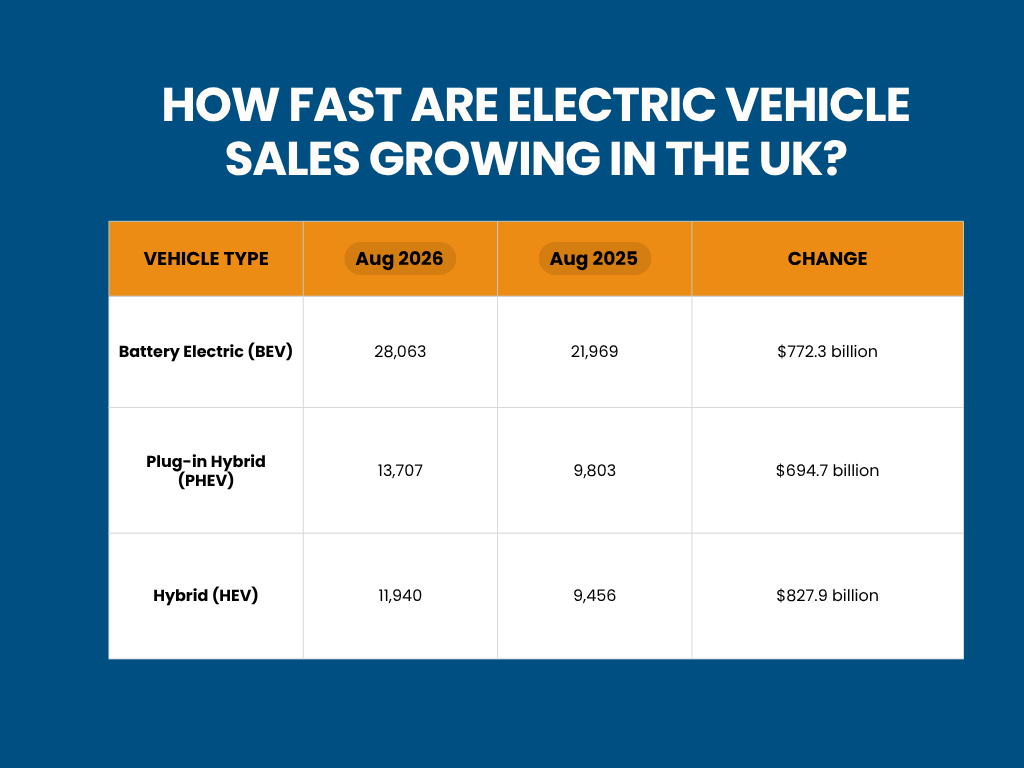
The continued growth across all three categories shows that electrification is extending beyond fully electric cars to other forms of electrified vehicle technology.
How Many EV Charging Points Are There in the UK?
The UK had 121,171 public EV chargers as of 1 July 2026, equivalent to 174.9 chargers for every 100,000 people.
The public charging network continues to expand as electric vehicle ownership increases. During the first half of 2026, 5,119 public chargers were added to the network.
For comparison, 13,281 chargers were added during the whole of 2025.
The charging statistics changed methodology from January 2026, with the official series now measuring publicly available EV chargers rather than the previous measure of charging devices. This means care should be taken when directly comparing current totals with older figures.
Which UK Region Has the Most EV Charging Points?
London has the highest number of public EV chargers relative to its population, with 345.1 chargers per 100,000 people.
This is almost twice the UK average of 174.9 chargers per 100,000 residents.
The regional figures are:
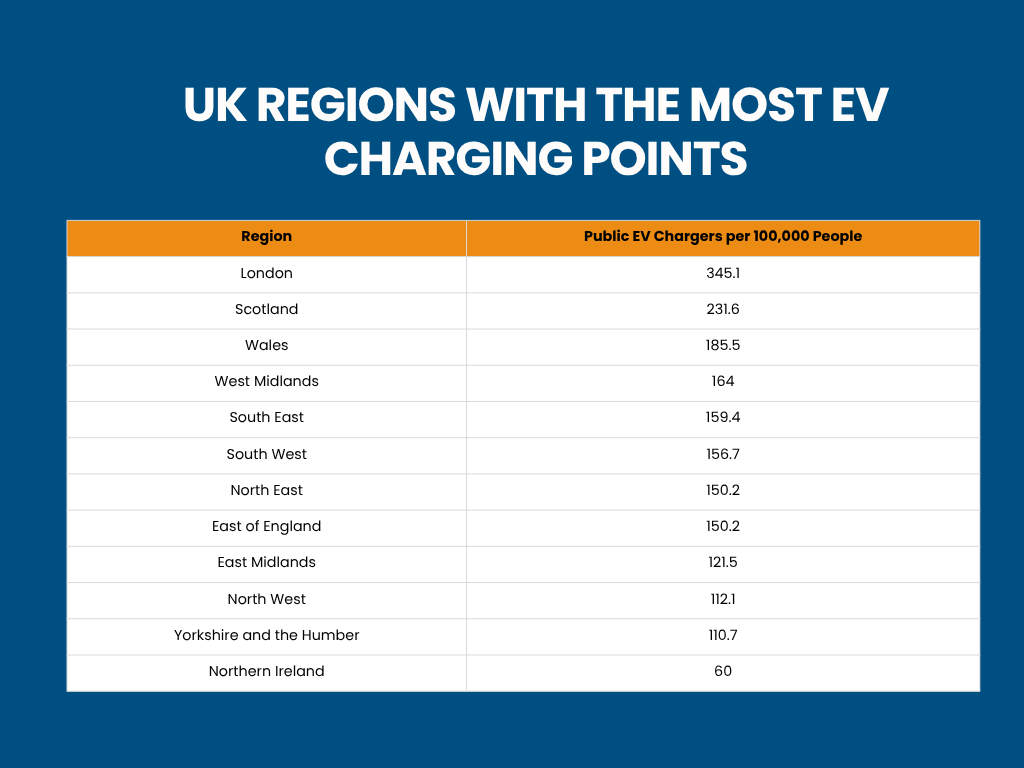
Northern Ireland has the lowest rate in the data, with just 60 public chargers per 100,000 residents.
This means London has approximately 5.8 times as many public EV chargers per person as Northern Ireland.
oses, from overnight residential charging to rapid top-ups during long-distance travel.
How Much Does a Used Electric Car Cost in the UK?
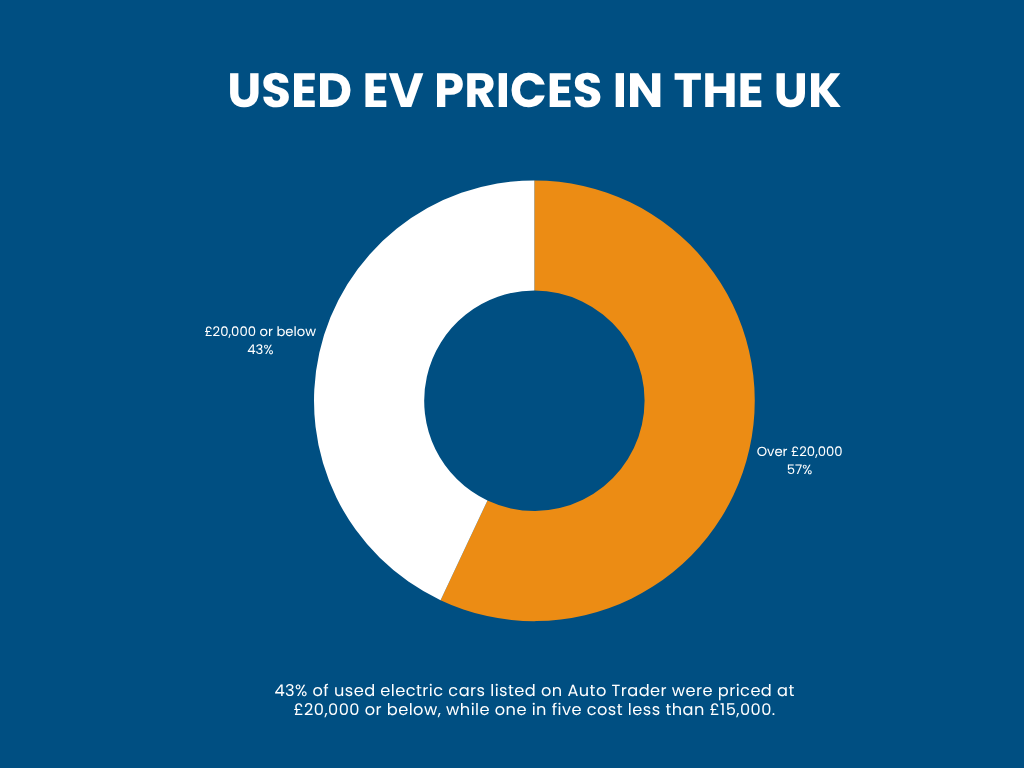
The growing second-hand EV market is making electric vehicles accessible at lower price points.
One in five used electric cars on Auto Trader were available for less than £15,000, while 43% were priced at £20,000 or below.
At the lowest end of the market, used electric cars could be found for less than £2,000.
Older models such as the Nissan Leaf and Renault Zoe are among the more affordable options available to drivers who mainly need a vehicle for shorter local journeys.
As greater numbers of EVs move from their first owners into the second-hand market, used electric vehicles are likely to play an increasingly important role in making electric motoring accessible to a wider range of buyers.
What Is the Average Range of an Electric Car?
The average range of a new electric vehicle is around 300 miles on a full charge.
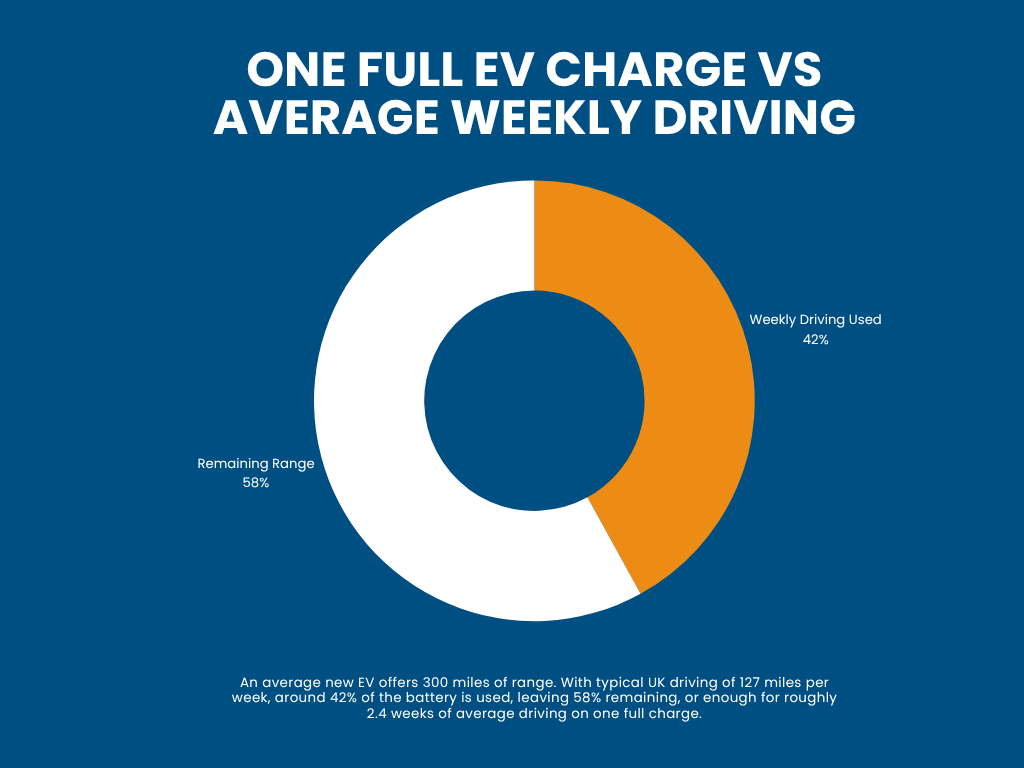
For comparison, Britons drive an average of 127 miles per week. Based purely on these averages, a new EV could theoretically cover around 2.4 weeks of typical UK driving on one full charge.
A 300-mile range is also sufficient to complete many major intercity journeys without recharging.
For example, the distances from London include approximately:
- Cardiff — 149 miles
- Exeter — 195 miles
- Manchester — 200 miles
- York — 211 miles
- Liverpool — 212 miles
Actual electric vehicle range varies depending on the model, battery size, driving speed, weather, temperature, and driving style.
How Often Do Electric Cars Need Charging?
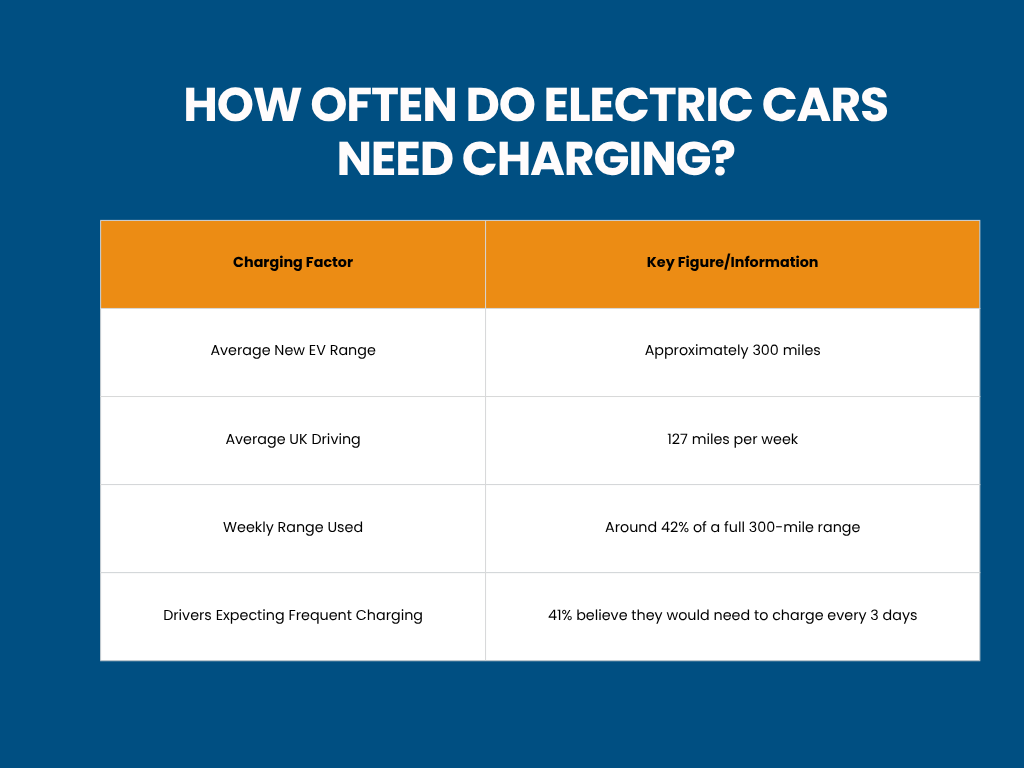
With an average new EV range of approximately 300 miles and average UK driving of 127 miles per week, typical weekly mileage represents around 42% of a full battery’s range.
Despite this, 41% of drivers believe they would need to charge an electric car every three days.
For motorists with access to home charging, vehicles can also be charged overnight rather than requiring dedicated trips to a public charging station.
Individual charging requirements will still vary significantly depending on mileage, vehicle efficiency, battery capacity, and driving conditions.
Are Electric Cars More Likely to Break Down?
The roadside assistance data shows similar repair rates between electric and internal-combustion vehicles.
The latest EV roadside repair rate stands at 88.9%, compared with 87.5% for petrol and diesel vehicles.
Wheels and tyres are the most common breakdown category for both EVs and internal-combustion cars.
Other common EV breakdown issues include high-voltage drive and charging problems, 12V batteries, locks and immobilisers, and electrical or wiring faults.
How Long Do Electric Car Batteries Last?
Many electric vehicles come with battery warranties lasting at least eight years or 100,000 miles.
The available battery performance data suggests that EV batteries generally lose capacity gradually rather than suddenly becoming unusable after a fixed number of years.
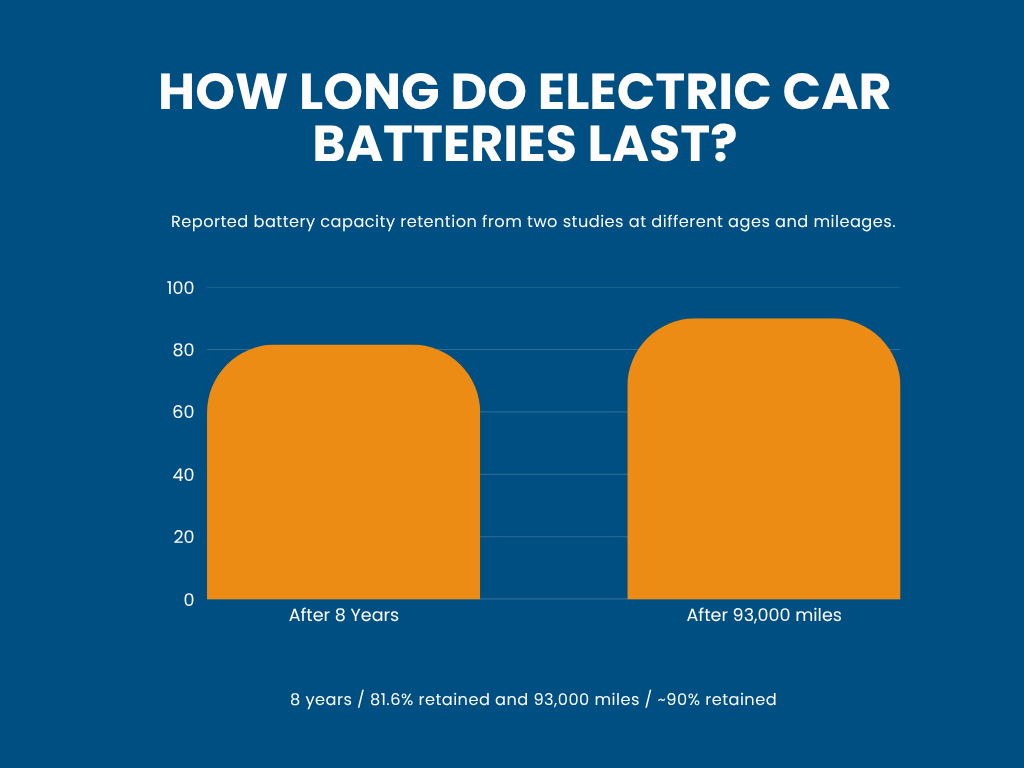
One study found the average EV still retained 81.6% of its original battery capacity after eight years.
Another found that most used electric vehicles retained around 90% of their original usable battery capacity after 150,000 kilometres, equivalent to approximately 93,000 miles.
How Long Do EV Batteries Last After 100,000 Miles?
Electric vehicle batteries can retain a substantial proportion of their original capacity even after covering more than 100,000 miles.
EVs exceeding this mileage frequently recorded 88–95% battery state of health in the battery-performance data included in the research.
This suggests mileage alone may not provide a complete indication of the condition of a used electric vehicle.
As the second-hand EV market develops, battery health information could therefore become an increasingly important consideration for buyers, dealers, fleets, and insurers.
Are Electric Cars Better for the Environment?
Electric cars produce no tailpipe emissions, although manufacturing the vehicle and battery still creates greenhouse gas emissions.
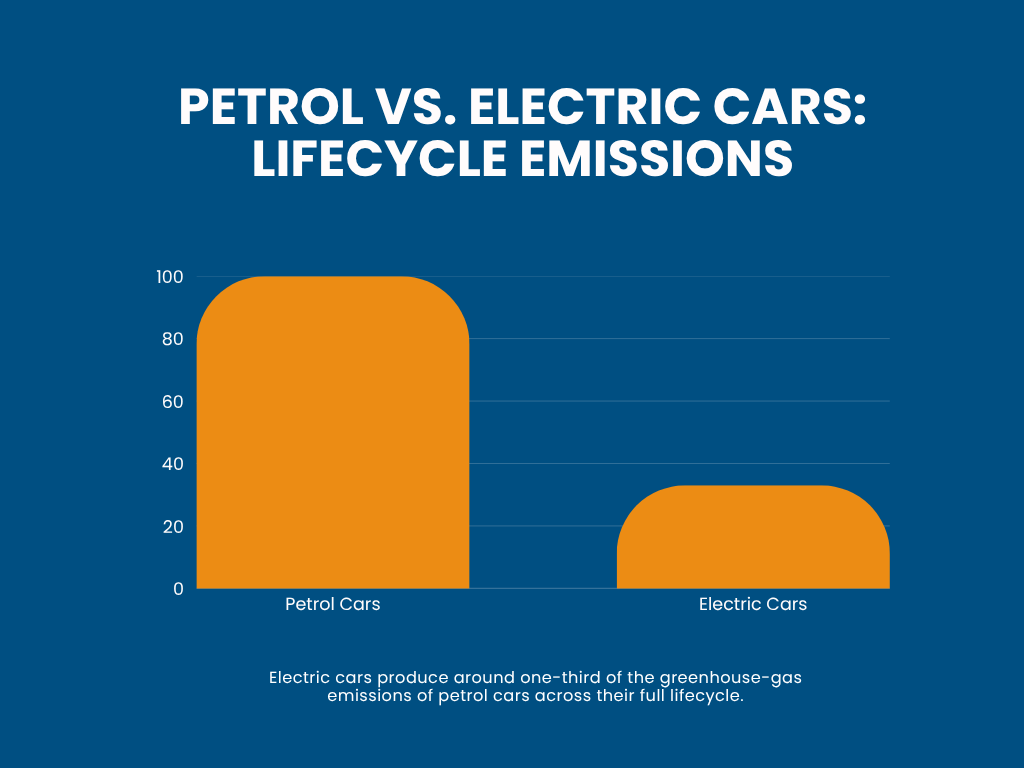
Across their full lifecycle, electric cars typically produce around one-third of the greenhouse-gas emissions of petrol cars in the research reviewed for this article. UK Electric
The additional emissions involved in manufacturing a new electric vehicle mean there is an initial environmental cost before its lower operating emissions begin to provide an overall advantage.
The estimated climate break-even point for replacing an older vehicle with a new electric car is approximately 20,000 to 32,000 miles of driving.
The overall environmental impact of an EV can vary depending on factors such as battery production, electricity generation, and how long the vehicle remains in use.
What Are the Latest UK Electric Vehicle Trends?
The UK electric vehicle market continues to evolve as manufacturers introduce more models, charging infrastructure expands, and greater numbers of EVs enter the second-hand market.
Several major trends are shaping the UK EV market in 2026:
- Electric cars are taking a larger share of new registrations, with BEVs accounting for more than one in four registrations year to date.
- BEVs have overtaken petrol cars across a rolling 12-month sales period for the first time.
- Plug-in hybrids are growing particularly quickly, with registrations up 37.9% year-on-year.
- Public charging infrastructure continues to expand, with more than 121,000 public chargers now available.
- Rapid and ultra-rapid charging is becoming more widespread, with almost 29,000 chargers rated at 50kW or above.
- Used EVs are becoming more affordable, with one in five priced below £15,000 on Auto Trader.
- New EV choice is expanding at lower price points, with more than 46 models carrying an RRP below £30,000.
- Battery longevity data is becoming increasingly important as greater numbers of electric cars enter the used market.
Taken together, these trends show an EV market moving beyond early adoption and becoming an increasingly established part of Britain’s wider automotive sector.
Transport an Electric Vehicle with Shiply
Electric vehicles are becoming an increasingly important part of the UK’s automotive landscape. As these UK electric vehicle statistics show, EV registrations are growing, charging infrastructure is expanding, nd both new and used electric cars are becoming available across a wider range of price points.
As more electric vehicles are bought and sold across the country, there is also a growing need to move cars between dealerships, auctions, sellers, buyers, and homes.
When you need to arrange car transport, Shiply makes it simple to compare quotes from transport providers across the UK. Whether you’re transporting a newly purchased electric car, moving an EV between locations, or arranging delivery of a vehicle bought online, you can compare transport quotes in one place and find a service suited to your requirements.
Sources: SMMT · GOV.UK · New Automotive · Auto Trader · Carbon Brief · Statista