

 Kate Margallo
Online shopping has become a major part of everyday life in the United States. From clothing and electronics to groceries and household essentials, millions of Americans use online retailers to compare products, find deals, and arrange home delivery.
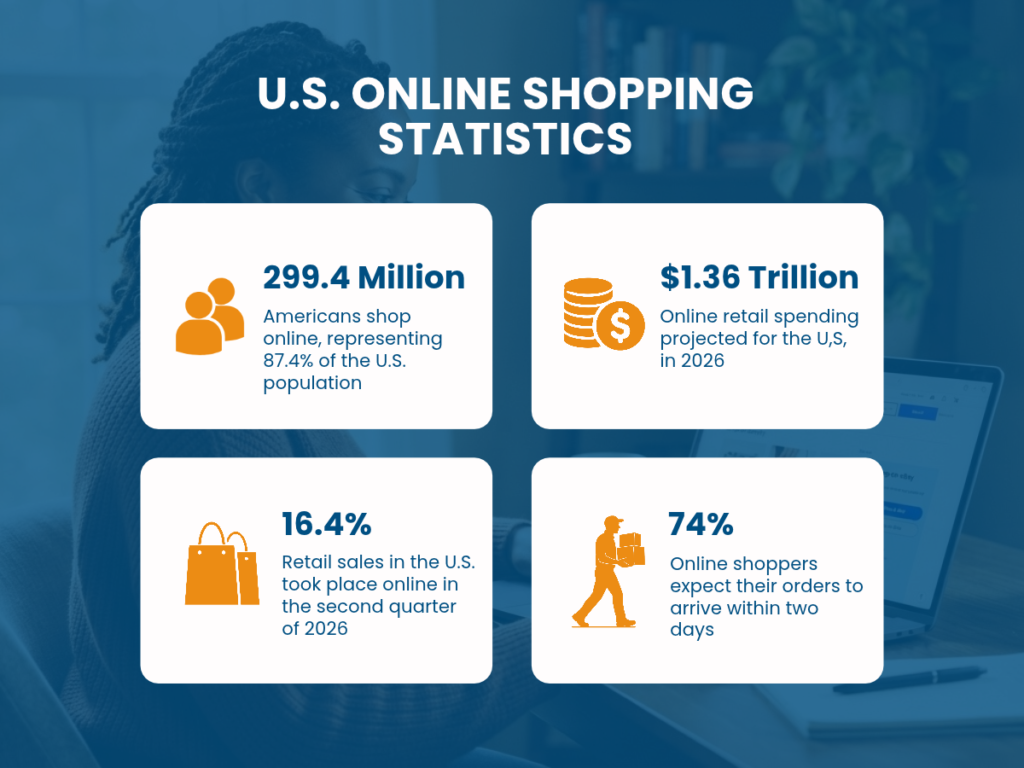
In 2026, an estimated 299.4 million Americans shop online, representing approximately 87.4% of the U.S. population. Online retail spending is projected to reach $1.36 trillion by the end of the year, reflecting the continued growth of the American e-commerce market.
But how much do Americans actually spend online? What percentage of shopping happens on the internet? And which products are most popular?
What Are the Latest U.S. Online Shopping Statistics for 2026?
The American online shopping market continues to grow, with hundreds of millions of consumers making purchases through websites, marketplaces, and mobile devices.
Here are some of the key U.S. online shopping statistics:
- 299.4 million Americans shop online, representing 87.4% of the population.
- $1.36 trillion in U.S. online retail spending is projected for 2026.
- $1.28 trillion was spent online in the United States in 2025.
- $329.53 billion in online retail sales was recorded during Q2 2026.
- 16.4% of U.S. retail sales took place online in Q2 2026.
- $759.63 billion was spent online during the first seven months of 2026.
- 74% of online shoppers expect their orders to arrive within two days.
- 68% of online consumers expect free delivery on orders below $50.
- 82% of American households have purchased groceries online.
- 43% of U.S. consumers purchased clothing online over a 12-month period.
These figures demonstrate the scale of online shopping in the United States and the growing importance of convenience, product availability, competitive pricing, and reliable delivery.
How Many Americans Shop Online?
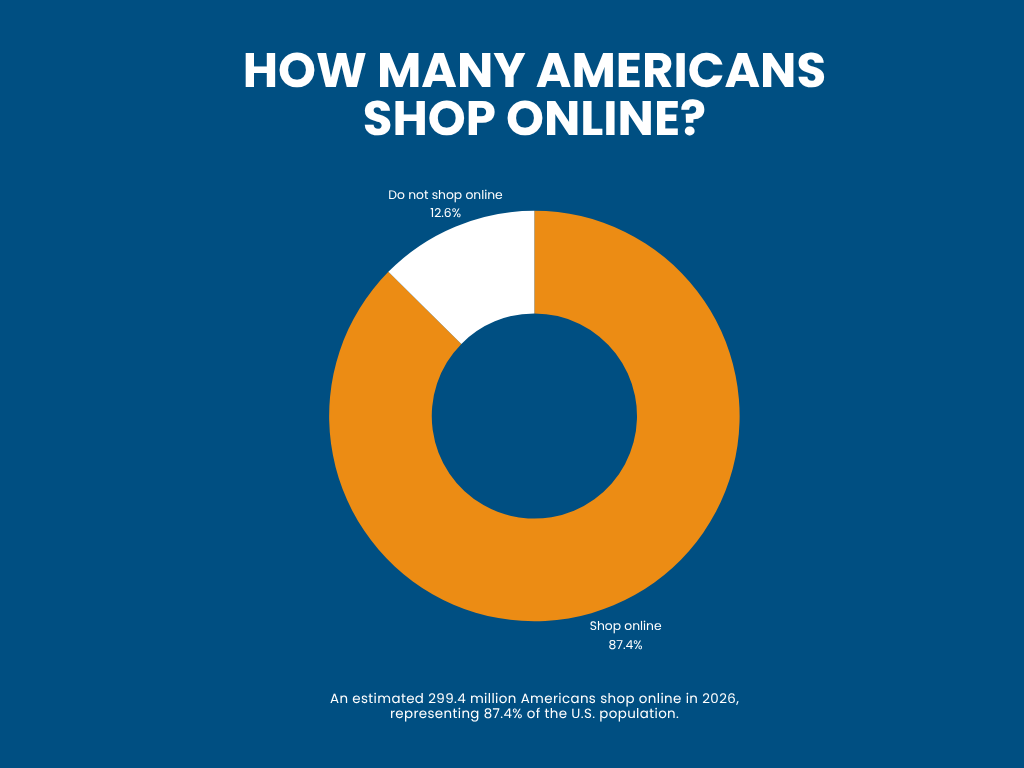
Approximately 299.4 million Americans shop online in 2026, equivalent to 87.4% of the U.S. population. That means nearly nine in ten Americans make purchases online.
Online shopping is no longer limited to occasional purchases or specific product categories. Consumers increasingly use e-commerce platforms for everyday essentials, including groceries, clothing, electronics, beauty products, and household goods.
The United States also represents approximately 10.8% of the world’s online shoppers, making it one of the largest individual consumer markets for e-commerce.
With online shopping already widely adopted, future growth will increasingly depend on how frequently consumers purchase online, how much they spend, and which product categories continue moving from physical stores to digital platforms.
How Much Money Do Americans Spend Online?
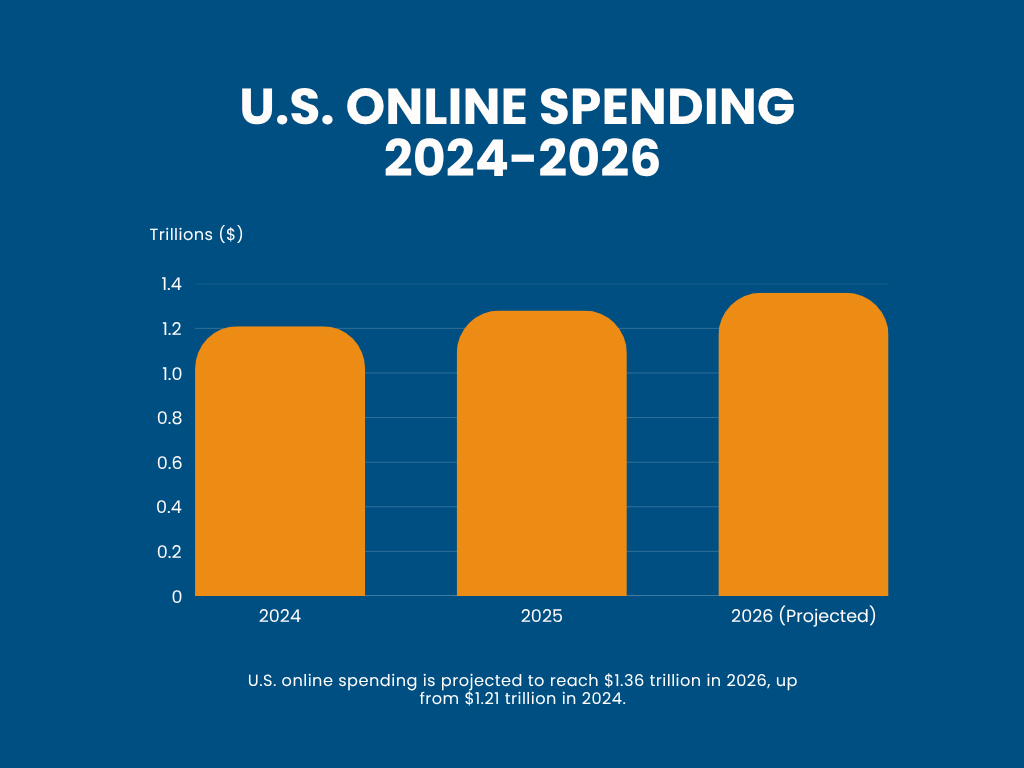
American consumers spent approximately $1.28 trillion shopping online in 2025, compared with $1.21 trillion in 2024. Online spending is projected to reach $1.36 trillion in 2026.
During the first seven months of 2026 alone, U.S. consumers spent $759.63 billion online, averaging approximately $3.58 billion per day.
The fourth quarter of 2025 was particularly significant, with online retail spending reaching $365.16 billion as consumers increased their purchases during the holiday shopping season.
What Do Americans Buy Online the Most?
Clothing, shoes, groceries, electronics, and household products are among the most popular online shopping categories in the United States.
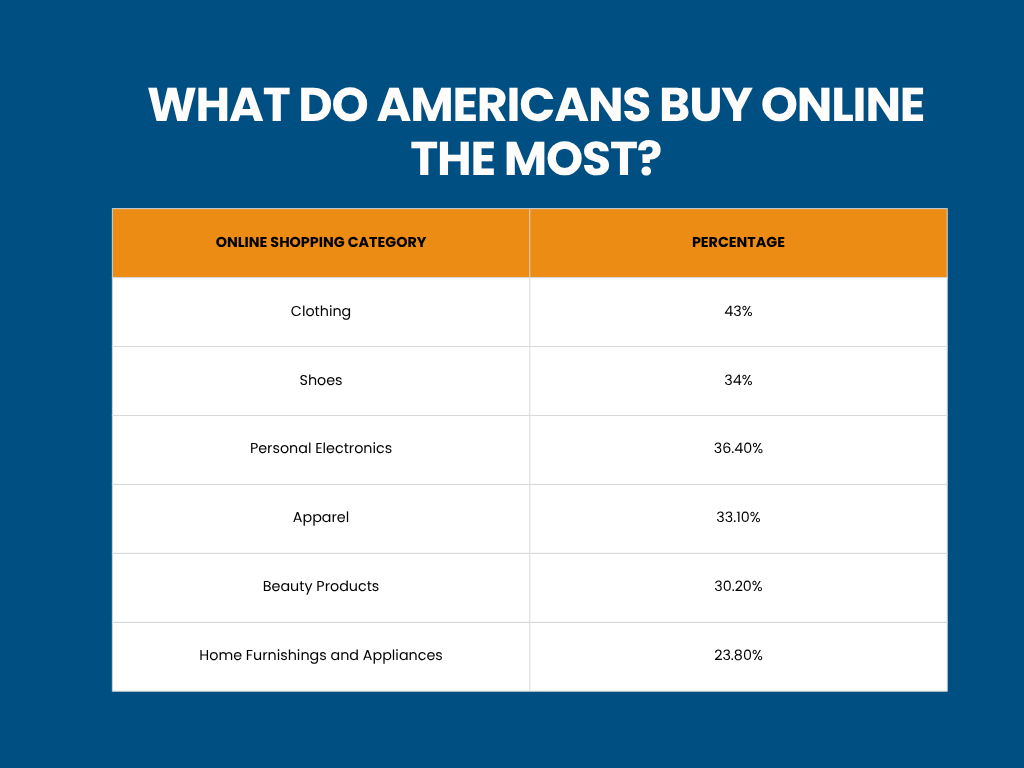
Over a 12-month period, here’s what US consumers have purchased:
- 43% purchased clothing online.
- 34% purchased shoes online.
- 36.4% preferred buying personal electronics online when possible.
- 33.1% preferred buying apparel online.
- 30.2% preferred buying beauty products online.
- 23.8% preferred buying home furnishings and appliances online.
Clothing and footwear remain popular because consumers can easily compare styles, prices, brands, and sizes across multiple retailers.
Electronics also perform strongly online, with shoppers able to research specifications, compare reviews, and identify competitive prices before purchasing.
Furniture and home furnishings represent another important category, particularly as online
Do Americans Prefer Shopping Online or In-Store?
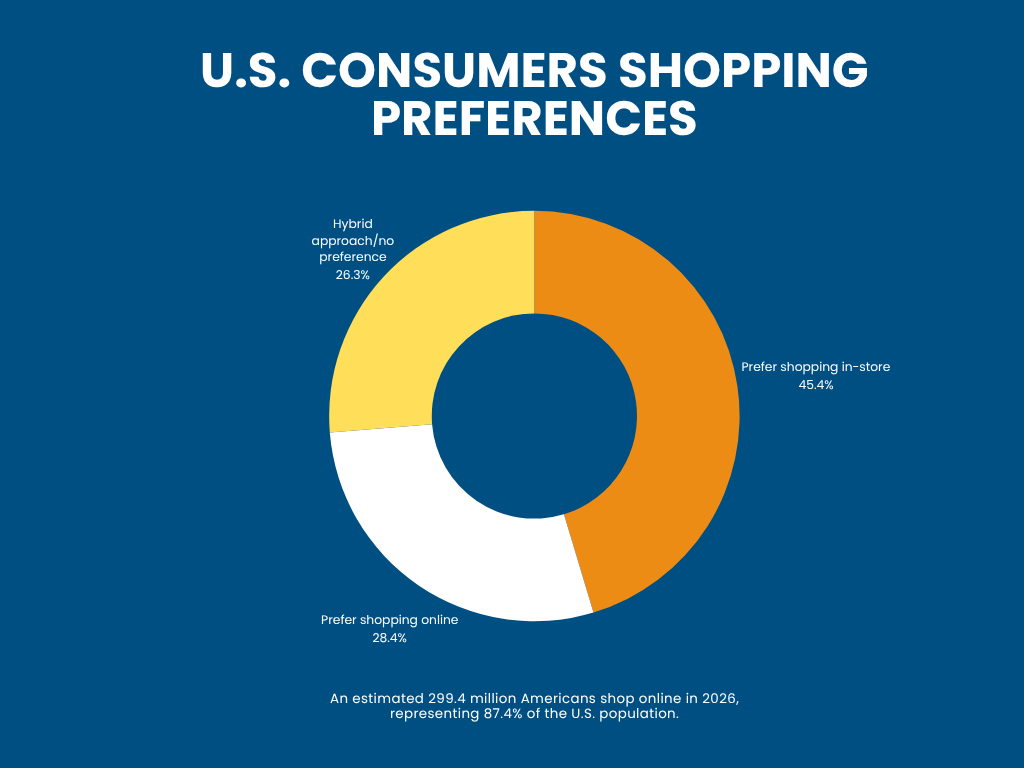
Physical stores remain the most preferred shopping method overall, although online shopping continues to attract a substantial share of American consumers.
During 2025, an average of:
- 45.4% of Americans preferred shopping in-store.
- 28.4% preferred shopping online.
- 26.3% preferred a hybrid approach or had no particular preference.
These preferences vary depending on the products being purchased.
Consumers may prefer buying clothing, electronics, and beauty products online because of wider selection and convenient price comparisons.
However, in-store shopping remains attractive when customers want to inspect products, try on clothing, or take their purchases home immediately.
Hybrid shopping, which combines online research with physical store visits or collection, also plays an important role in modern American retail.
Which Age Group Shops Online the Most in the United States?
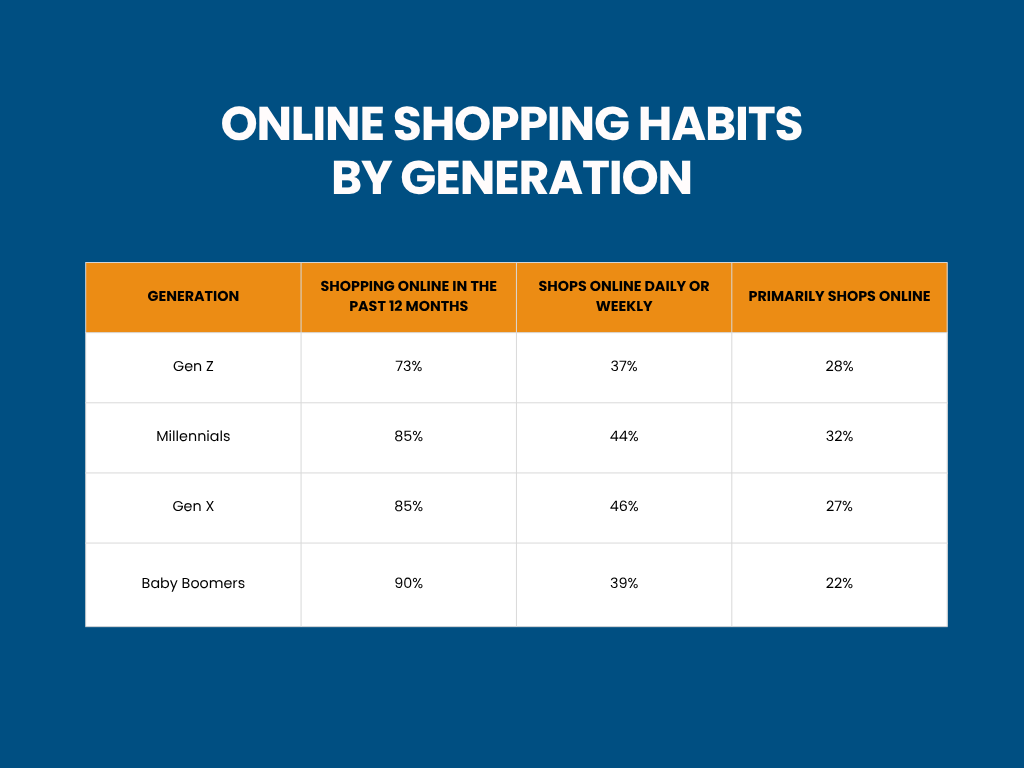
Millennials and Gen X are particularly active online shoppers. Around 46% of Gen X consumers shop online daily or weekly, making them the most frequent online shoppers among the generations compared. Meanwhile, 32% of Millennials primarily shop online, followed by Gen Z at 28%, Gen X at 27%, and Baby Boomers at 22%.
Gen Z consumers are also notable for their hybrid shopping habits. They often use social media, mobile applications, and online marketplaces to discover products, compare prices, and research purchases before deciding whether to buy online or in physical stores.
Older generations participate in e-commerce as well. Baby Boomers may be less likely to rely primarily on online shopping, but they continue to use digital platforms to purchase products and access convenient delivery options.
Do Men or Women Prefer Online Shopping More?
Approximately 53% of male shoppers prefer browsing retail products online rather than in physical stores, compared with 44% of female shoppers.
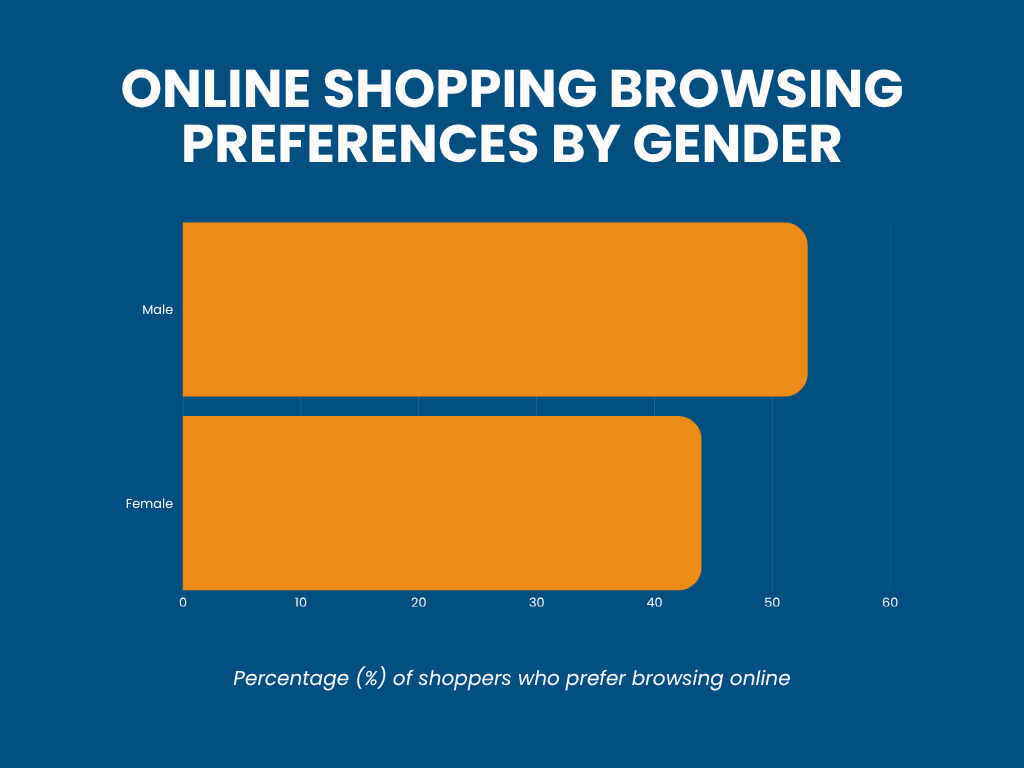
These figures relate specifically to browsing preferences and do not necessarily indicate that men make more online purchases or spend more money online.
Shopping habits can also differ depending on product categories, household responsibilities, purchasing frequency, and personal preferences.
How Important Is Fast Delivery to American Online Shoppers?
Approximately 74% of online shoppers expect their orders to arrive within two days.
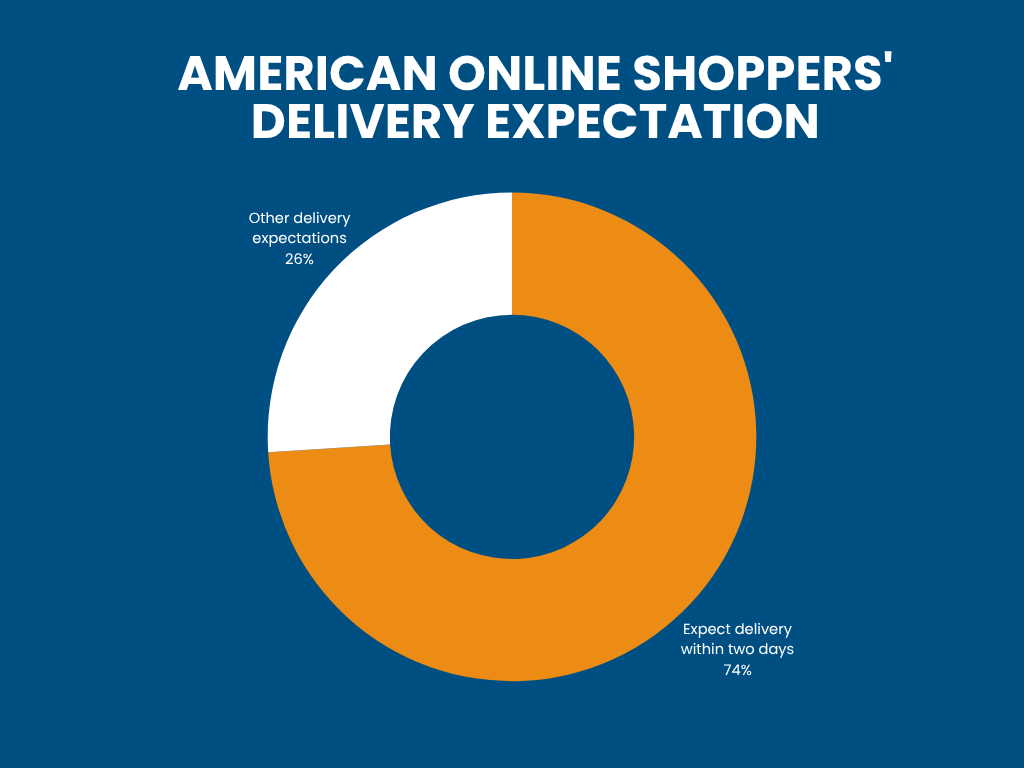
Consumers have become accustomed to fast fulfillment, particularly when purchasing from major retailers and established online marketplaces.
Delivery speed can influence whether customers complete a purchase, return to a retailer, or choose a competing website.
Home delivery is particularly popular, with consumers considerably more likely to choose shipping to their homes than collecting purchases from a physical store.
For online retailers, providing clear delivery estimates and reliable shipping services can be an important part of maintaining customer satisfaction.
How Many Americans Expect Free Shipping?
Approximately 68% of online consumers expect free delivery on orders worth less than $50.
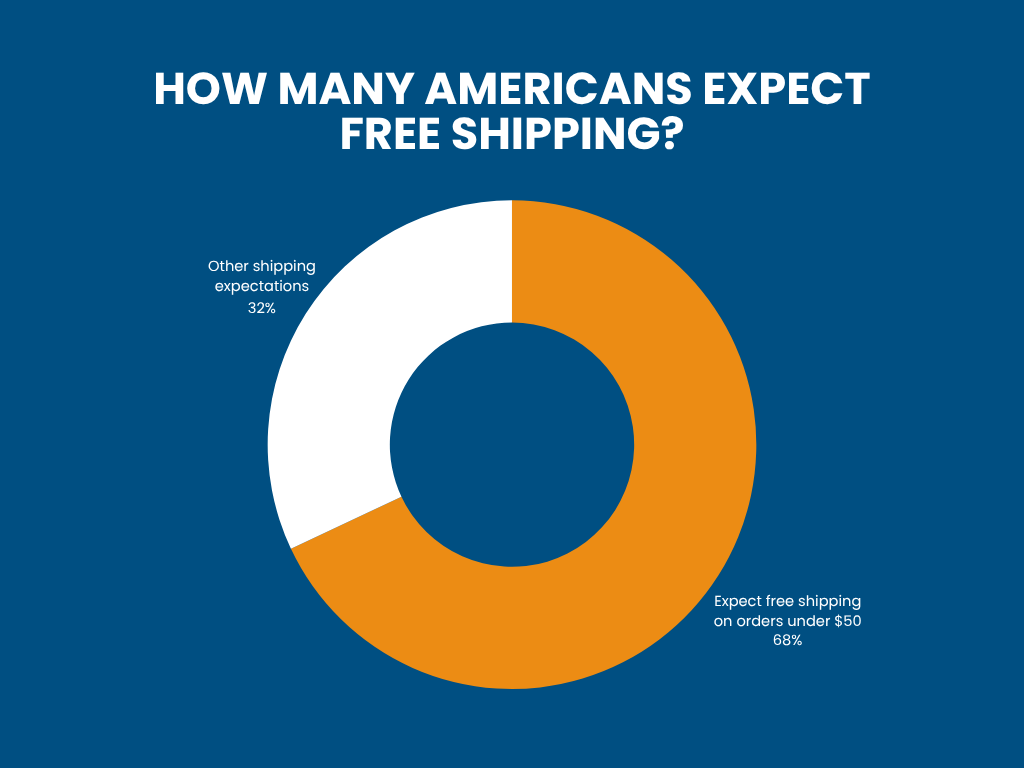
This demonstrates how strongly delivery costs influence purchasing expectations.
Even when products are competitively priced, additional shipping charges can affect the perceived value of an order.
Retailers may respond by offering free shipping thresholds, subscription-based delivery benefits, or incorporating shipping costs into product pricing.
For shoppers purchasing multiple products, delivery charges can also influence whether they place one larger order or several smaller purchases.
How Do Americans Return Online Purchases?
Third-party drop-off locations are among the most commonly used return methods.
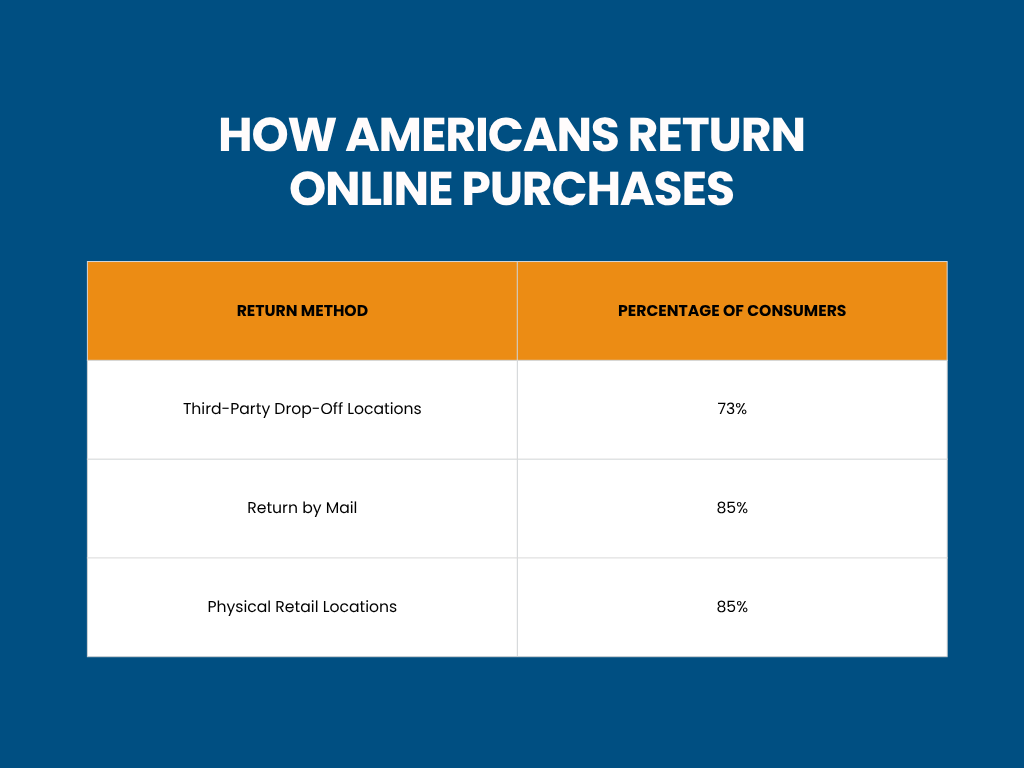
Over a 30-day period:
- 45% of consumers making returns used third-party drop-off services.
- 43% returned items by mail.
- 35% returned purchases to a physical retail location.
These percentages can overlap because shoppers may use more than one return method.
Convenient returns are especially important for categories such as clothing and footwear, where sizing and product expectations may lead to exchanges or refunds.
Delivery delays can also influence returns. For each additional day an e-commerce delivery is late, the likelihood of a return increases by approximately 1.1%.
Which Online Shopping Website Is the Most Popular in the United States?
Amazon remains the leading online retailer in the United States. Its online gross merchandise value reached approximately $847.4 billion in 2025, making it one of the largest e-commerce marketplaces serving American consumers.
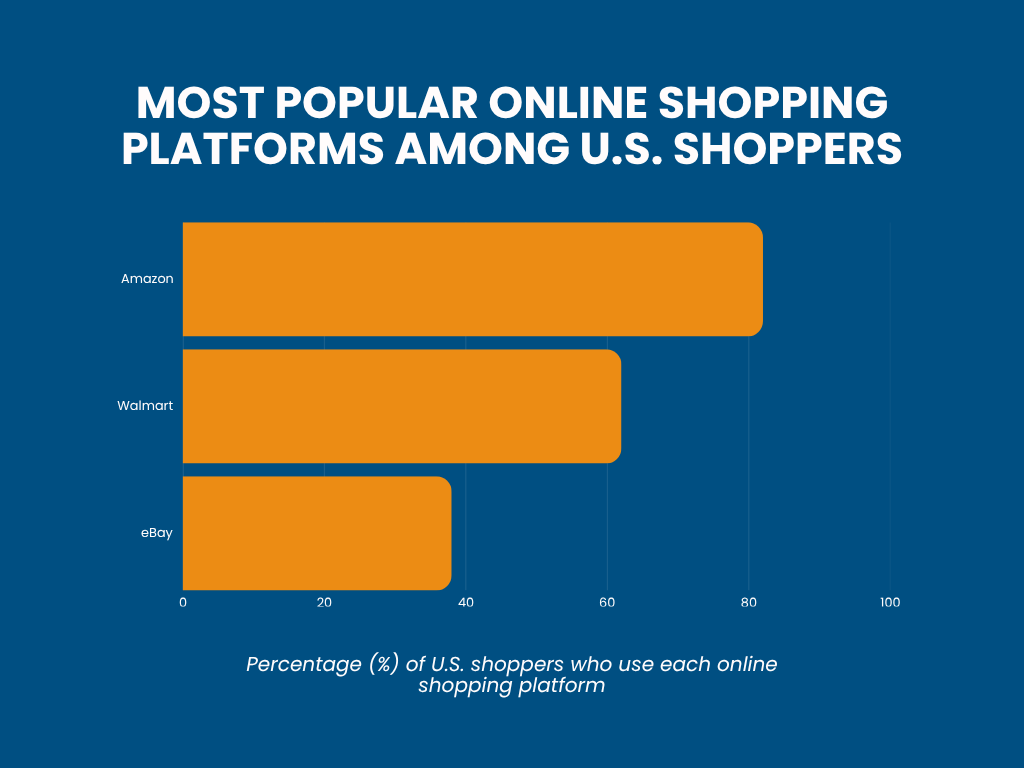
Amazon, Walmart, and eBay are among the most prominent online shopping platforms in the country.
These retailers attract shoppers through extensive product selections, familiar purchasing experiences, competitive prices, and established delivery networks.
International platforms, including Temu and Shein, have also increased their visibility among American consumers.
In 2025, China accounted for 43% of the most recent cross-border online purchases made by U.S. shoppers.
This reflects the increasingly international nature of online shopping, with American consumers purchasing products from both domestic and overseas retailers.
Shop Online, Deliver Smarter with Shiply
With nearly nine in ten Americans shopping online and spending on track to reach $1.36 trillion in 2026, e-commerce is now part of everyday life. Shoppers expect fast delivery, free shipping, and easy returns, but those expectations become harder to meet when the item is big, bulky, or awkward to move. Furniture, appliances, sports equipment, and vintage finds often don’t suit standard parcel services, and delivery costs can quickly cancel out a good deal.
That’s where Shiply comes in. Shiply is a delivery marketplace where you list what you need moved and verified transporters compete to deliver it, so you can compare quotes and choose the option that suits your budget and timeline. Shiply is also eBay-compatible, making it easy to arrange delivery whether you’ve just won an item on eBay or are selling one to a buyer. Post your delivery on Shiply today and see what transporters are offering.
Sources: Statista · Capital One Shopping – Online Shopping Statistics · Capital One Shopping – Online Shopping Demographics · SellersCommerce · Landmark Global · Forbes Advisor · Tidio · Custom Market Insights · Marketplace Pulse · DHL