

 Kate Margallo
Online shopping in the United Kingdom has become a fundamental part of modern consumer behaviour, with millions of people relying on digital platforms for everything from everyday essentials to high-value purchases. As internet access, mobile usage, and logistics infrastructure continue to improve, the UK remains one of the most advanced e-commerce markets in the world.
These UK online shopping statistics for 2026 provide a clear, data-led view of how consumers in the UK shop online, how much they spend, and what influences their decisions. From delivery expectations to purchasing behaviour, these insights highlight the key trends shaping the future of online retail across the United Kingdom.
What Percentage of UK Retail Sales Are Online?
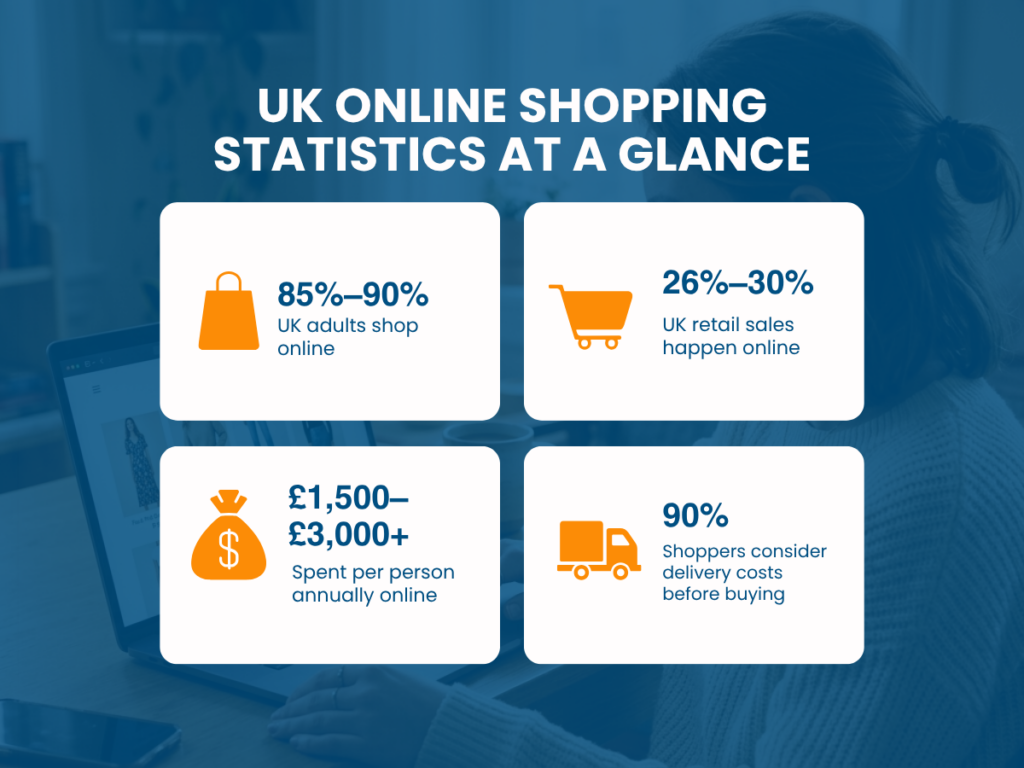
Online shopping accounts for approximately 26% to 30% of total retail sales in the UK.
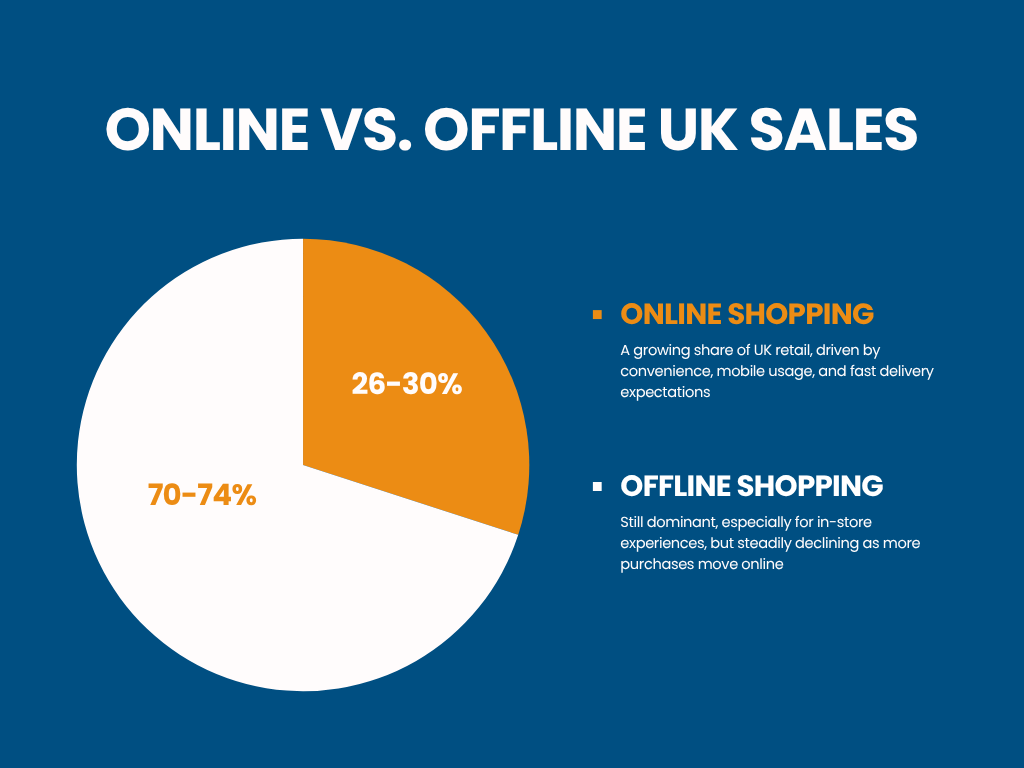
This makes the United Kingdom one of the most e-commerce-driven markets globally. While growth accelerated rapidly during the pandemic, the share has now stabilised at a high level, indicating that online shopping is a long-term structural shift rather than a temporary trend. Retailers across the UK are now fully integrating online and offline experiences to meet consumer expectations.
How Many People Shop Online in the UK?
Around 85% to 90% of adults in the UK shop online.
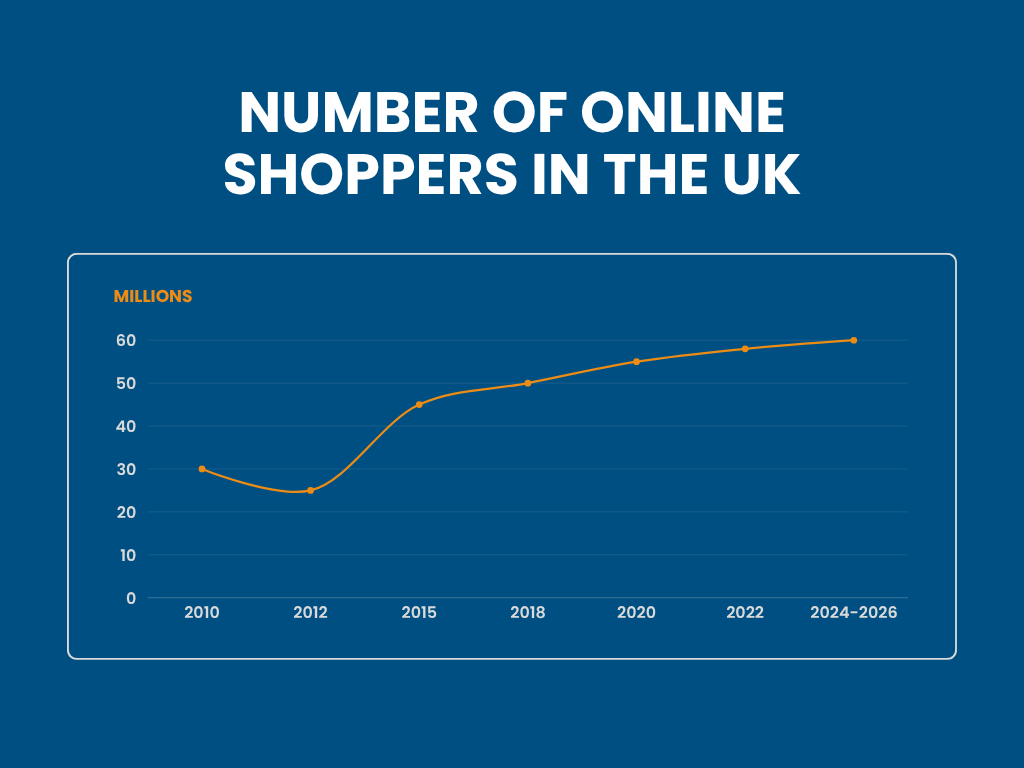
This level of adoption means online shopping is now almost universal across the United Kingdom. Consumers of all age groups are comfortable making purchases online, and many shop multiple times per month. What was once driven primarily by younger users is now standard behaviour across the population.
Over the past decade, this shift has accelerated dramatically. The number of online shoppers in the UK has roughly doubled compared to ten years ago, reflecting how quickly digital commerce has moved from optional to essential. Today, there are over 60 million e-commerce users in the UK, representing one of the highest adoption rates globally. Even older demographics have caught up, with online shopping among adults aged 55+ rising significantly in recent years.
How Much Do UK Consumers Spend Online Each Year?
UK consumers spend approximately £1,500 to £3,000+ per person annually on online shopping.
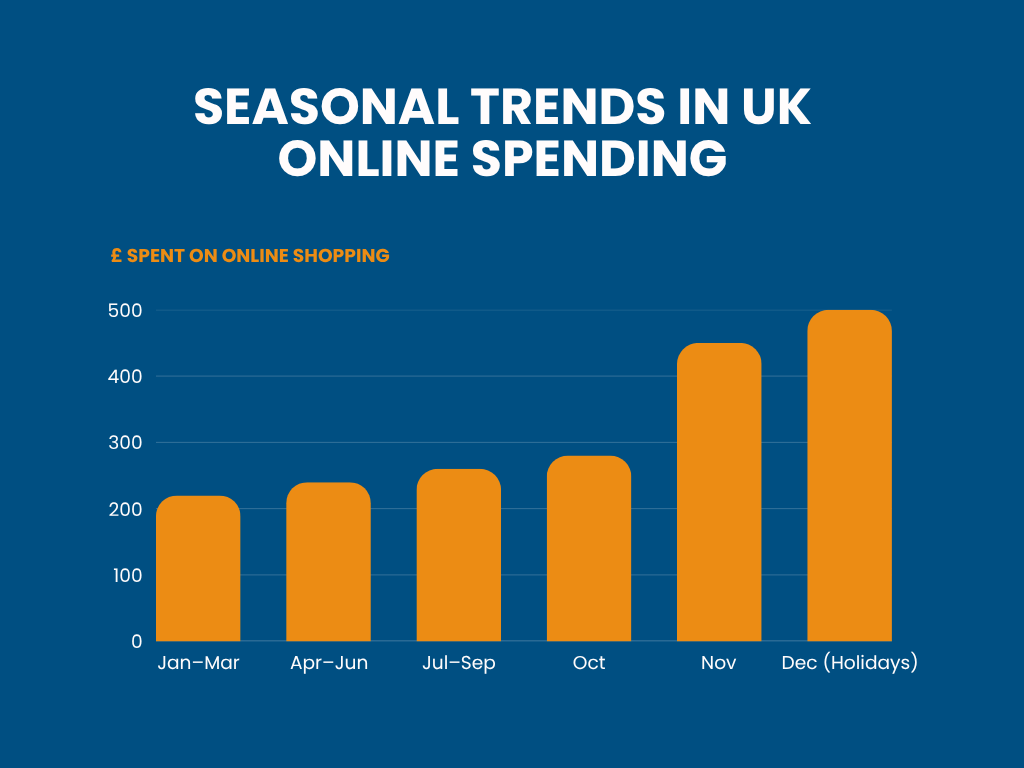
Spending peaks during major retail events like Black Friday and Christmas, with more consumers making higher-value purchases online, including furniture, appliances, and electronics.
Overall, the scale is significant. UK online retail spending exceeds £100 billion annually, while the average shopper spends around £ 3,000 per year (roughly £250–£300 per month). Online transactions have also increased sharply since 2019, indicating that consumers are not just spending more but also shopping more frequently.
What Are the Most Popular Online Shopping Categories in the UK?
Clothing, electronics, home goods, and beauty products are the most popular online shopping categories in the United Kingdom
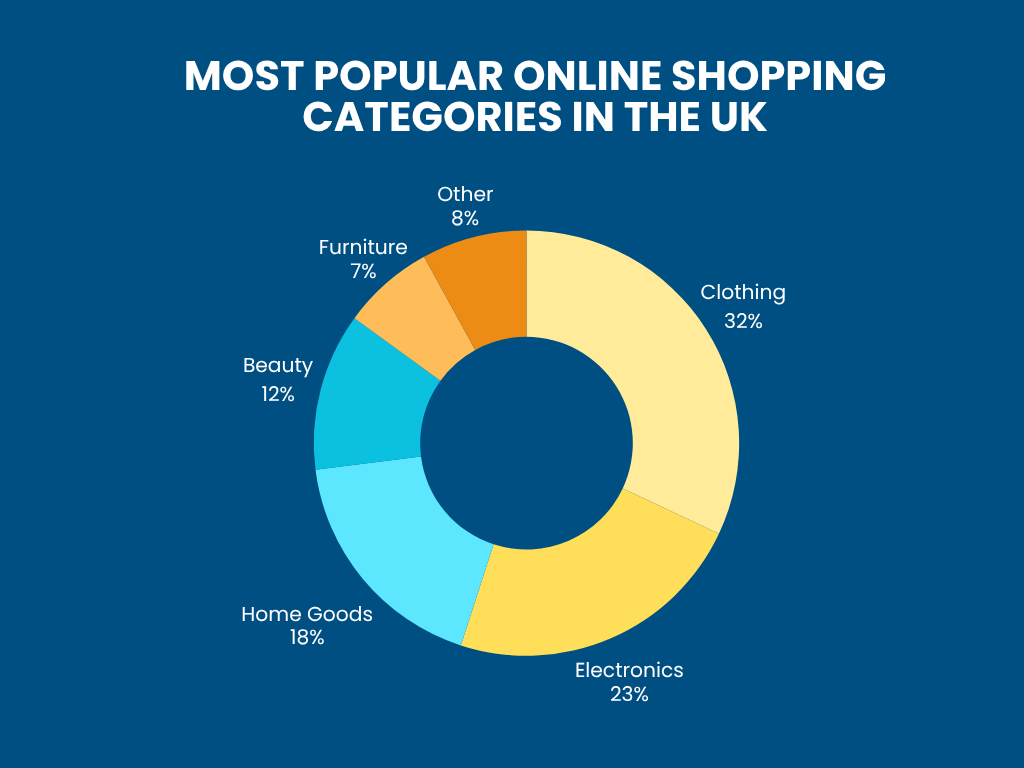
Fashion continues to dominate due to ease of browsing and flexible return policies. Electronics and home goods also perform strongly, while beauty products benefit from subscription models and repeat purchases. Larger categories, such as furniture, are growing steadily, although they require more complex delivery arrangements.
How Important Is Delivery in Online Shopping Decisions?
Around 90% of UK consumers consider delivery costs before completing an online purchase.
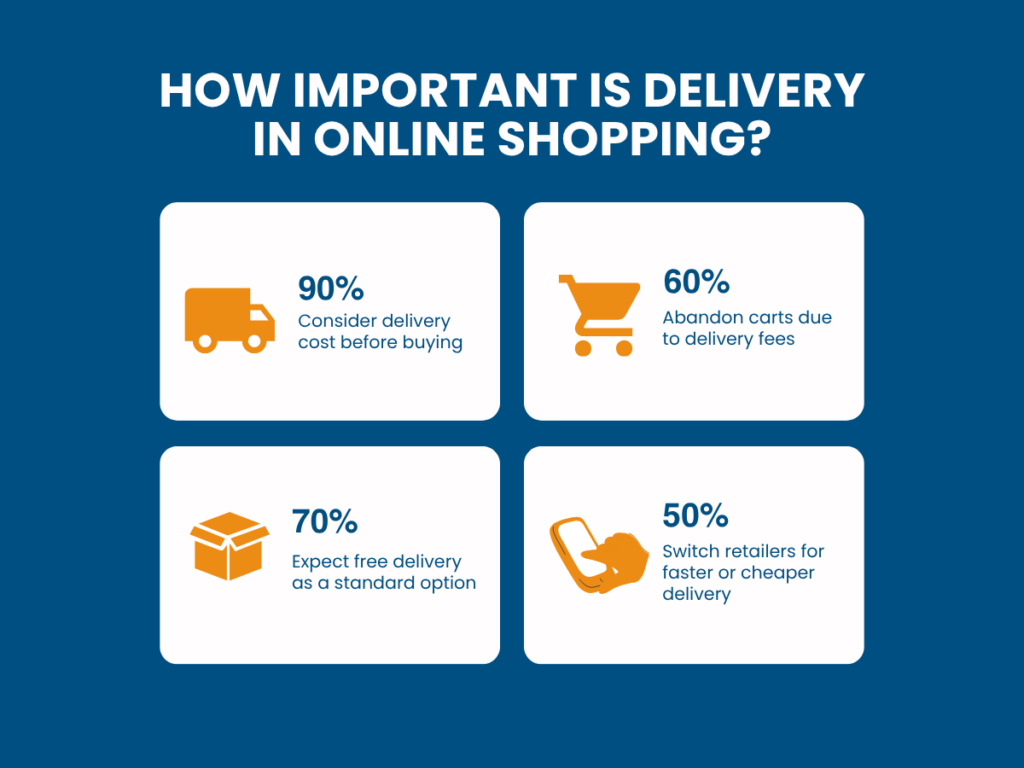
Delivery plays a decisive role in whether a transaction is completed. Free delivery remains one of the strongest conversion drivers, while high delivery costs are a leading cause of cart abandonment. Speed and reliability are also becoming increasingly important as consumer expectations continue to rise.
What Percentage of Online Orders Are Returned?
Online return rates can reach 30% in fashion, while larger items have lower return rates.
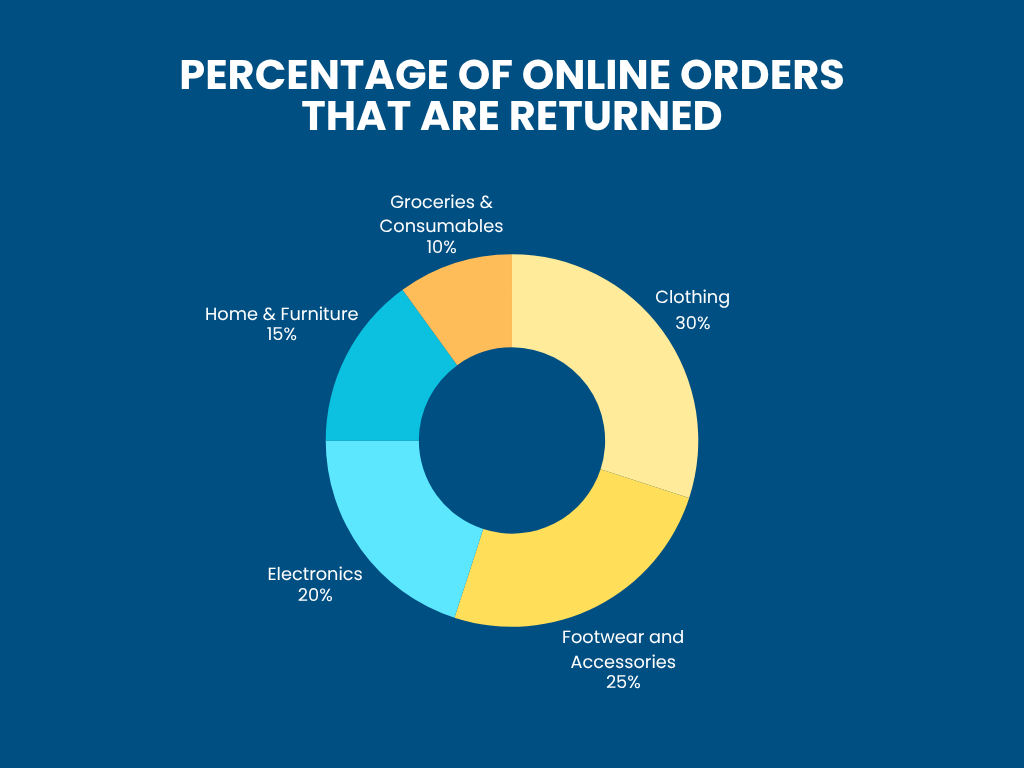
This aligns closely with how online shopping is distributed across categories. Fashion, which makes up 30% of online purchases, also sees the highest return rates due to sizing issues and style preferences. Similarly, footwear and accessories (25%) tend to experience higher-than-average returns for the same reasons.
In contrast, categories such as electronics (20%) and home and furniture (15%) generally have much lower return rates, as purchases are more considered and items are less convenient to send back. Meanwhile, groceries and consumables (7%) and other categories (3%) typically see minimal returns due to their nature.
What Devices Do UK Consumers Use for Online Shopping?
Mobile devices account for 60% to 70% of online shopping traffic in the UK.
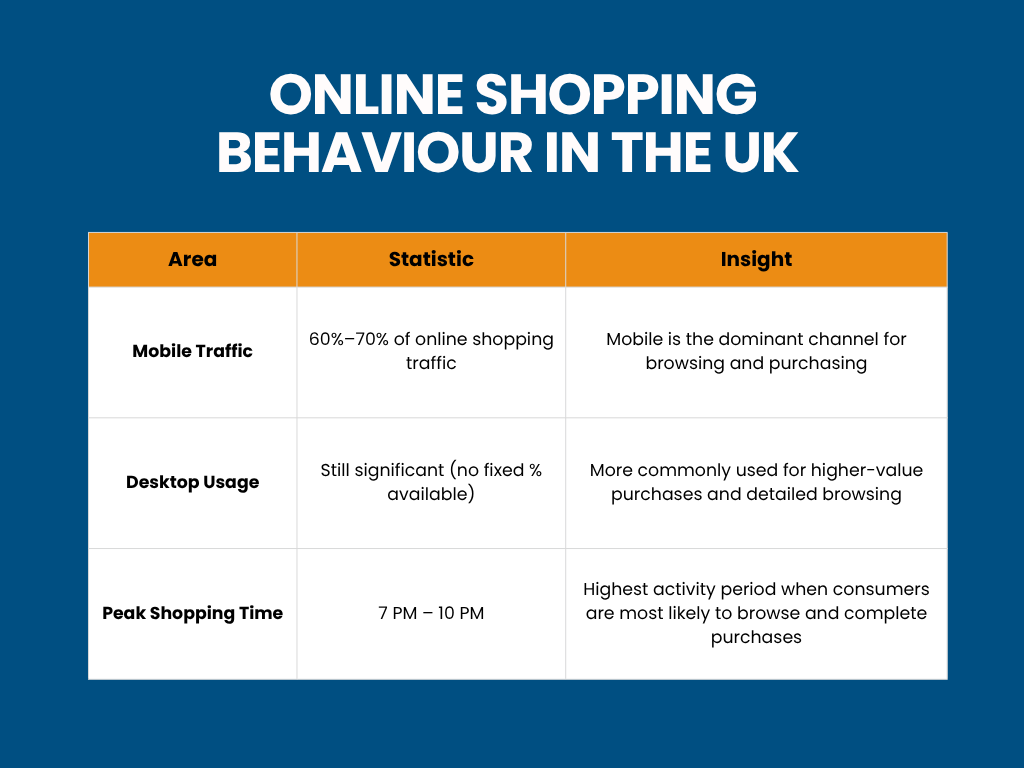
Mobile has become the dominant channel for browsing and purchasing, although desktop remains important for higher-value transactions. Shopping activity typically peaks in the evening, between 7 PM and 10 PM, when consumers have more time to browse and complete purchases.
Easier Delivery for Large Online Orders
As online selling continues to grow across the UK, handling delivery for large or bulky items can often be one of the most challenging parts of the process for sellers.
Shiply helps make this easier by connecting online sellers with transport providers who already have spare space on their routes. This creates more flexible and cost-effective delivery options compared to traditional courier services.
Whether you’re selling furniture, appliances, or other oversized items on platforms like eBay, Shiply helps you get items delivered efficiently across the United Kingdom.
So once you’ve made the sale, don’t forget to ship your items with Shiply. Simply post your delivery and receive multiple quotes from transport providers, then choose the option that works best for you.
Sources: Statista, Office for National Statistics, GWP Group, International Trade Administration, Forbes, Space & Time