
 Kate Margallo
Moving home is one of the biggest life decisions people make, but how far do Brits actually move?
Despite headlines about city exoduses and coastal relocations, the reality is far more grounded. The average moving distance in the UK depends on how it is measured, but the typical move is much shorter than most people expect.
The latest national data shows:
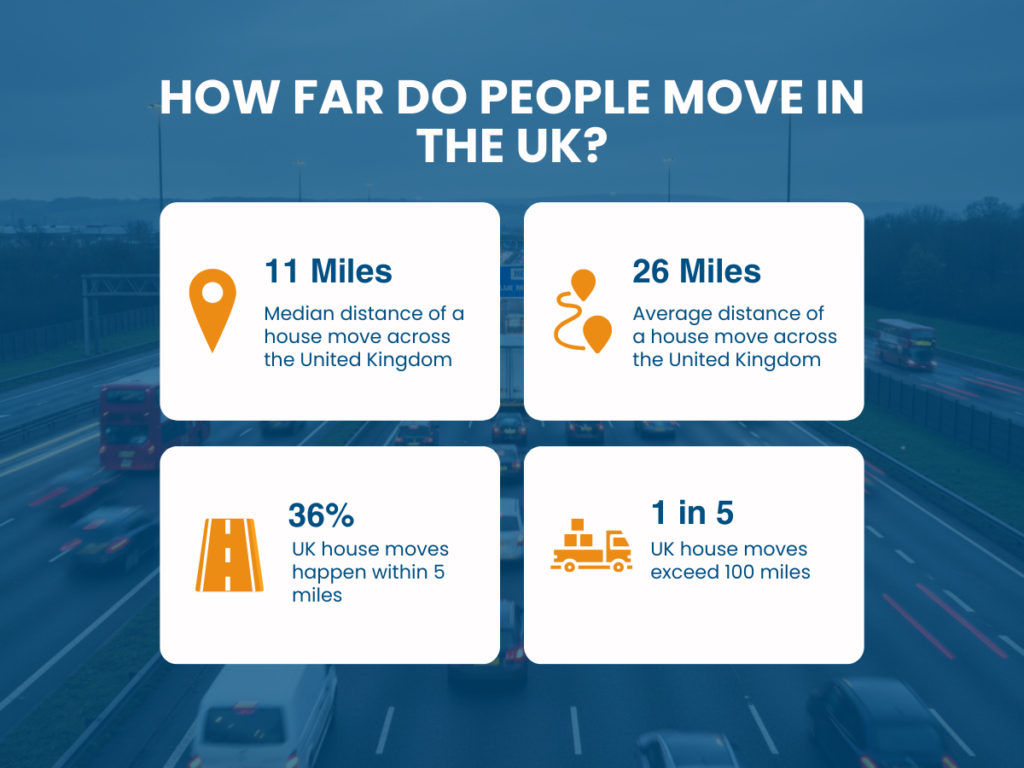
- The median moving distance in the UK is around 11 miles
- The mean (average) distance rises to 26 miles
- 36% of moves happen within five miles
- Nearly 1 in 5 moves exceed 100 miles
In other words, while some households relocate across the country, the majority move locally, often within the same town or postcode area.
This report breaks down exactly how far people move, how distance varies by region, and what it means for relocation and transport costs.
Median vs Mean Moving Distance: What’s the Difference
When discussing moving distance in the UK, it’s important to understand why different figures appear in different reports.
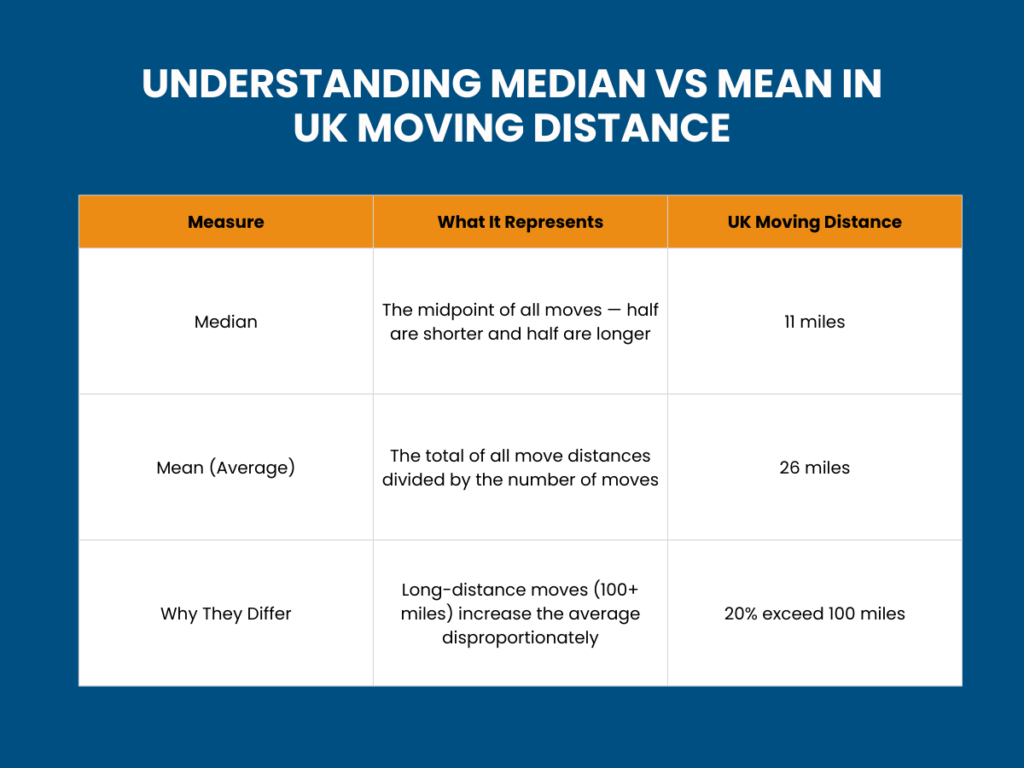
The median represents the middle point of all moves. Half of the people move less than this distance, and half move further. It gives the clearest picture of a “typical” move.
The mean (average) adds all distances together and divides by the total number of moves. This figure is heavily influenced by long-distance relocations, for example, moves from Scotland to London or from the South East to the North West.
That’s why:
- The median UK move is often reported between 3 and 11 miles
- The average UK move is closer to 26 miles
A relatively small number of 100+ mile relocations pushes the average up significantly. For understanding everyday moving behaviour, the median is more representative.
UK Moving Distance Trends Since 2020
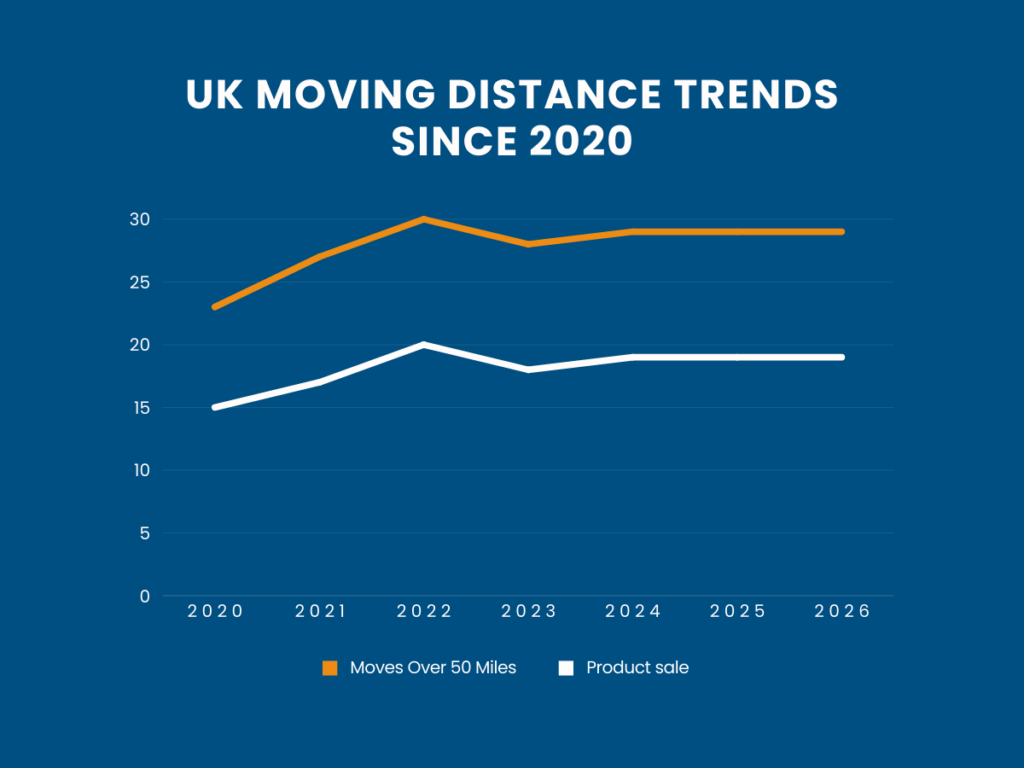
Moving distances increased slightly after 2020, mainly due to remote working flexibility. However, most moves still remain local.
Since 2020:
- 50+ mile relocations increased
- Rural and coastal moves became more common
- City outbound migration rose
- Ultra-local mobility remained dominant
Despite temporary shifts, the structure of UK mobility has not fundamentally changed. The majority of households still relocate within 10 miles.
Average Moving Distance by Region (England, Scotland, and Wales)
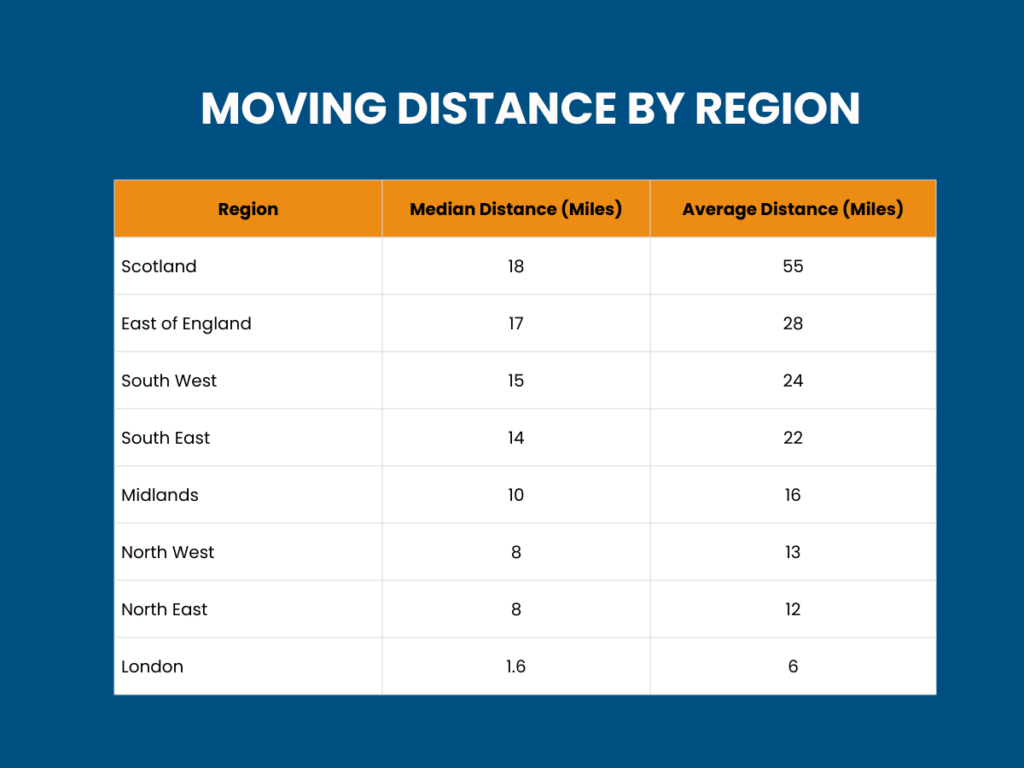
Scotland records the longest average relocation distances, while London records the shortest. Northern regions generally show shorter moves than southern regions.
Regional breakdown:
- Scotland: ~55 miles average
- East of England: ~17 miles median
- South East: ~14 miles median
- South West: ~15 miles median
- Midlands: ~10 miles median
- North East & North West: ~8 miles median
- London: ~1.6 miles median
Southern regions tend to show longer relocation distances due to housing affordability pressures and wider commuting zones. Northern regions show stronger localised movement.
Average Moving Distance by Major UK Cities
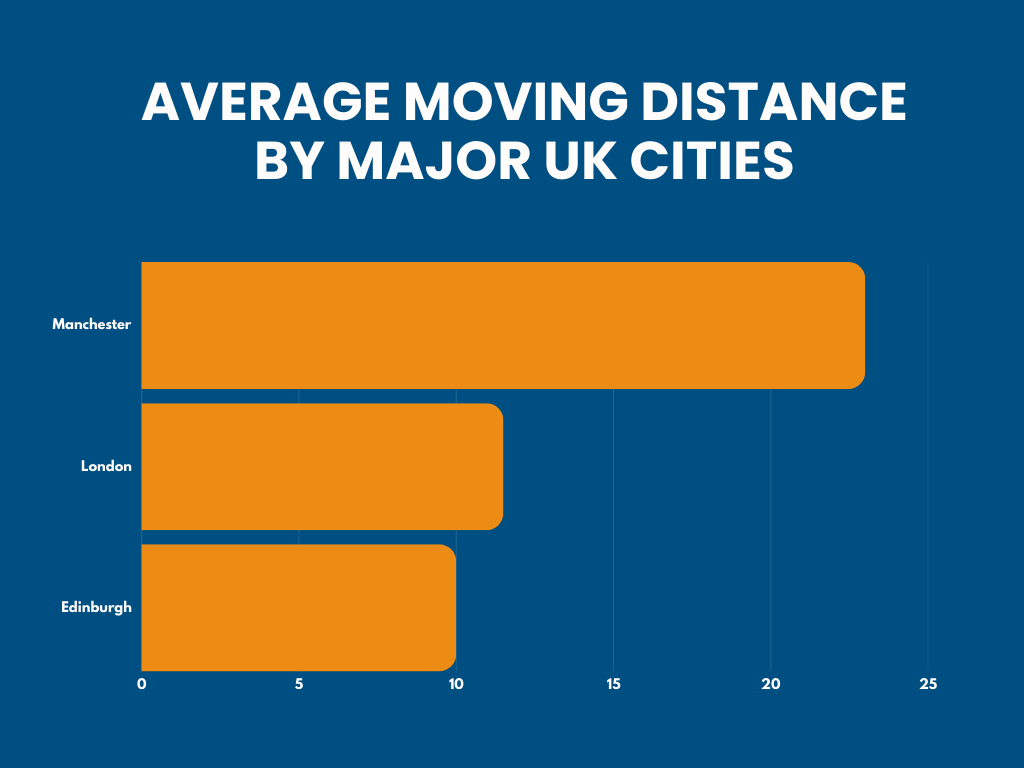
City-level data shows how housing type and availability influence relocation behaviour.
For example:
- Buyers in Manchester searching for detached houses expand their radius to an average of 23 miles
- In London, detached-house buyers typically look 11.5 miles away
- In Edinburgh, buyers searching for houses move roughly 10 miles
In cities where specific property types are scarce, search radii expand significantly. Supply constraints directly increase relocation distance.
Most Popular Relocation Routes in the UK
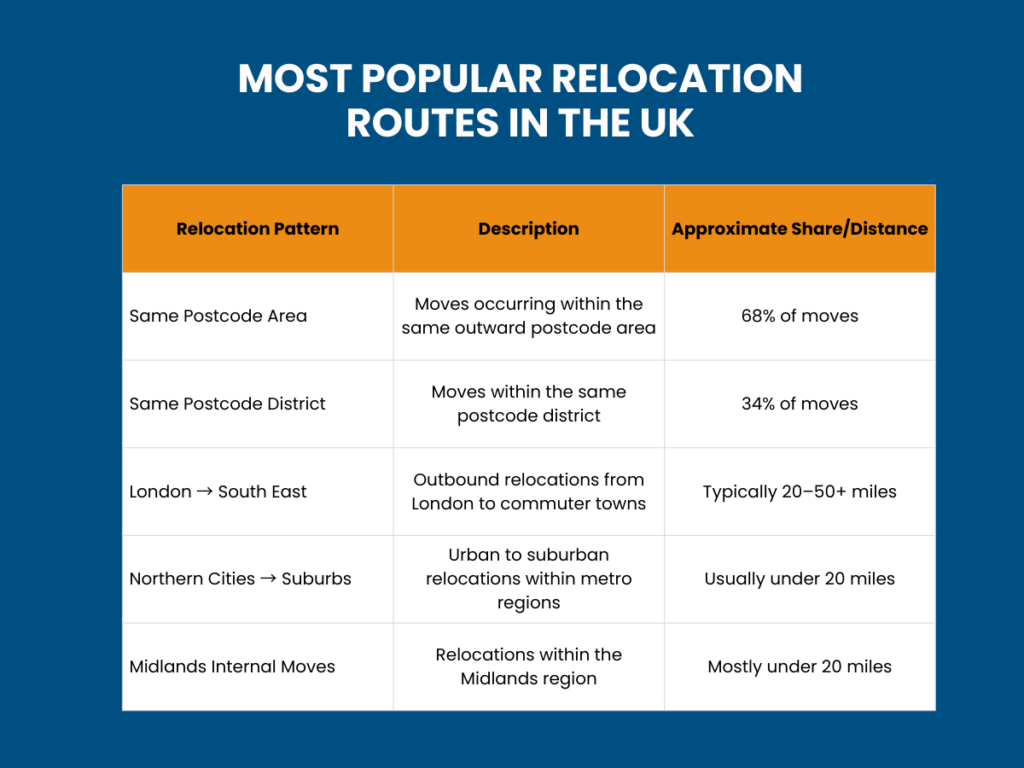
Most UK relocations are short-range and regional. Cross-country moves are less common than media narratives suggest.
Common patterns include:
- 68% of moves within the same postcode area
- 34% within the same postcode district
- London → South East commuter towns
- Northern cities → surrounding suburbs
- Midlands internal relocations under 20 miles
Neighbourhood continuity remains the dominant trend.
What Counts as a Long-Distance Move in the UK?
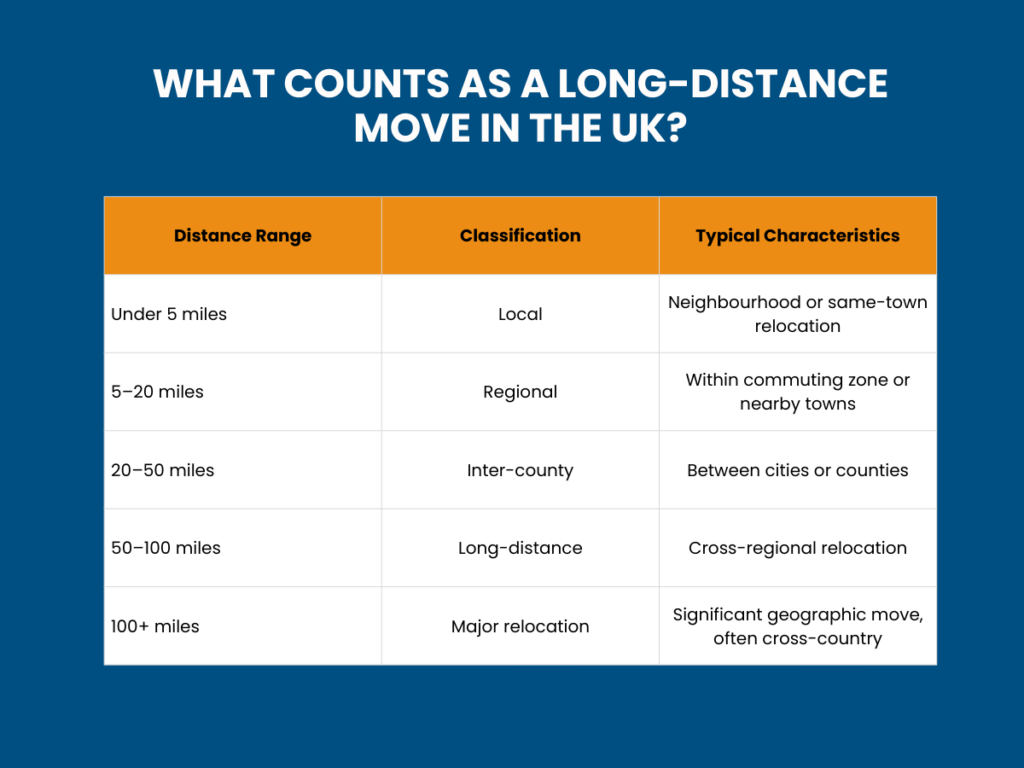
A long-distance move typically begins at around 50 miles, while 100+ miles represents a major relocation. Distance categories often fall into:
- Under 5 miles — Local
- 5–20 miles — Regional
- 20–50 miles — Inter-county
- 50+ miles — Long-distance
- 100+ miles — Major relocation
Nearly 20% of UK house moves exceed 100 miles. Older homeowners are significantly more likely to undertake these longer relocations.
What This Means for Movers in 2026
The data is clear: most UK moves are short, local relocations, but a significant minority involve major distance, and those longer moves drive disproportionate cost and logistical complexity.
Understanding how far people actually move matters.
It affects:
- Removal pricing
- Vehicle transport quotes
- Courier and bulky item delivery costs
- Driver availability and scheduling
At Shiply, we see these distance patterns reflected in thousands of transport requests every week. Whether it’s a sofa moving three miles across town or a car relocating 200 miles between regions, pricing is fundamentally shaped by mileage and route efficiency.
Because transport providers on Shiply compete for work, often filling empty return journeys, customers can access more competitive pricing, particularly on longer-distance relocations where route matching makes the biggest difference.
As the data shows, most people don’t move far. But when they do, choosing the right transport solution becomes even more important. Get a quote from Shiply today!
Sources: MovePlaces, Beacon Financial Training, Consumer Data Research Centre, UK Metric Association, GOV.UK (Department for Levelling Up, Housing & Communities), Office for National Statistics, Ellis Brooke