

 Kate Margallo
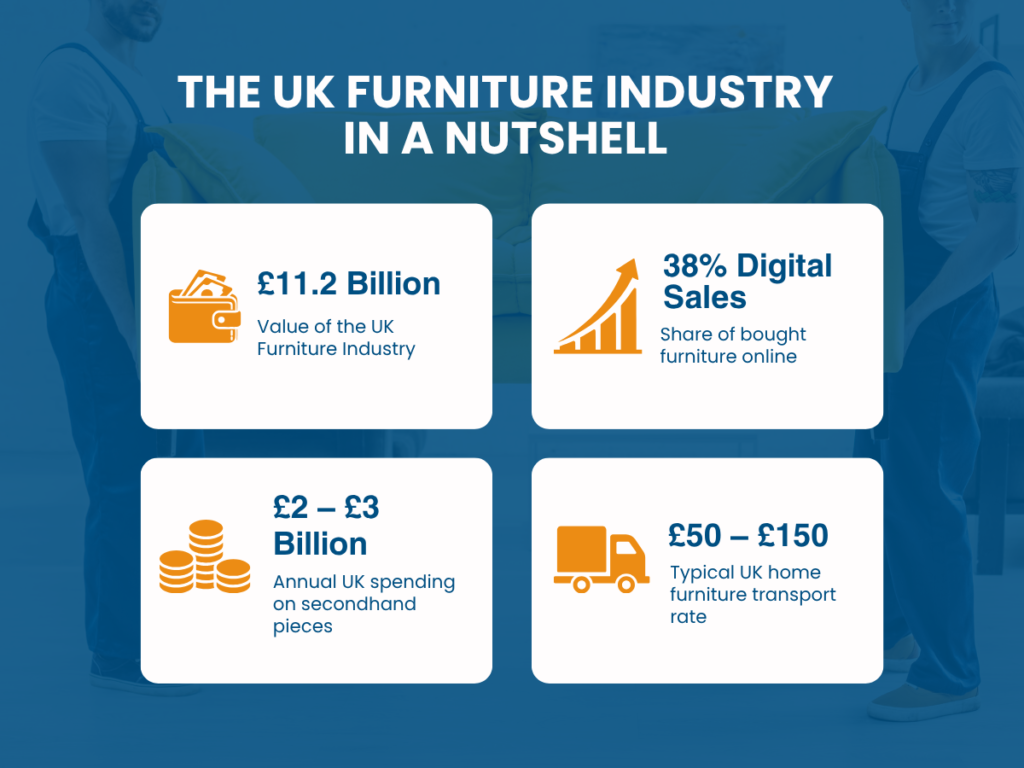
The UK furniture market continues to grow. Consumers invest in their homes, embrace online shopping, and prioritize sustainable products more than ever. Recent UK furniture industry statistics indicate the sector will stay on an upward path. In fact, the market should reach approximately £11.2 billion in 2026 and grow at an annual rate of around 3% through 2031.
Rising e-commerce adoption helps drive this growth. So does increased spending on home improvements and growing demand for sustainable furniture. Below, we examine the latest figures on market size, consumer spending, online sales, key product categories, and the future outlook for the UK furniture industry.
Key UK Furniture Industry Statistics
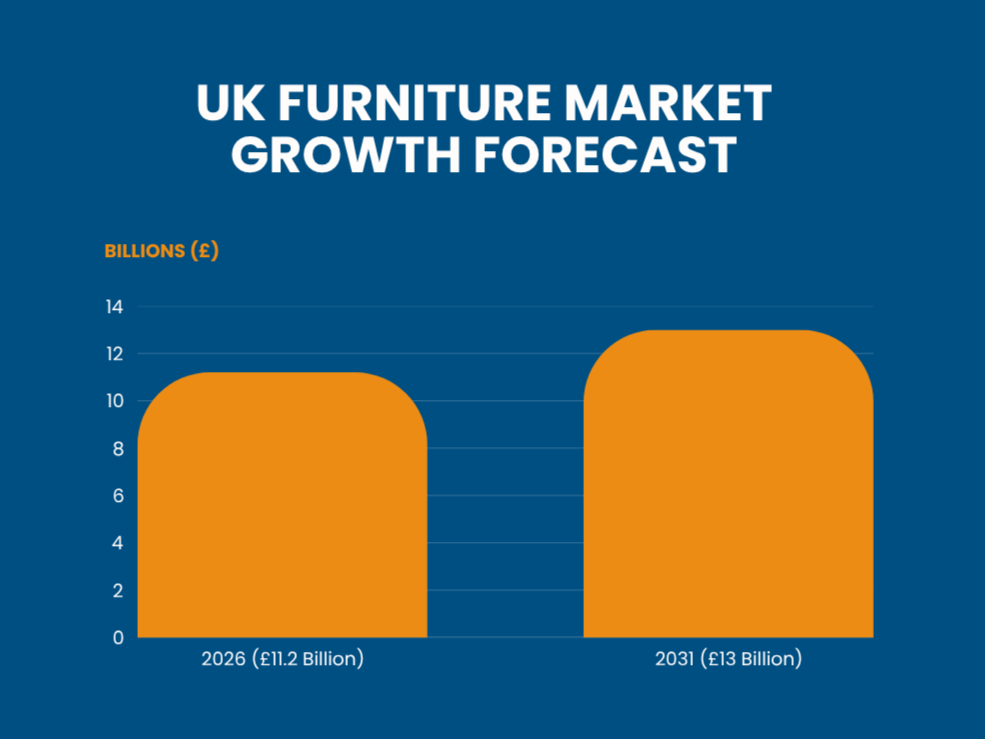
- The UK furniture market should reach approximately £11.2 billion in 2026.
- The market will likely hit £13 billion by 2031.
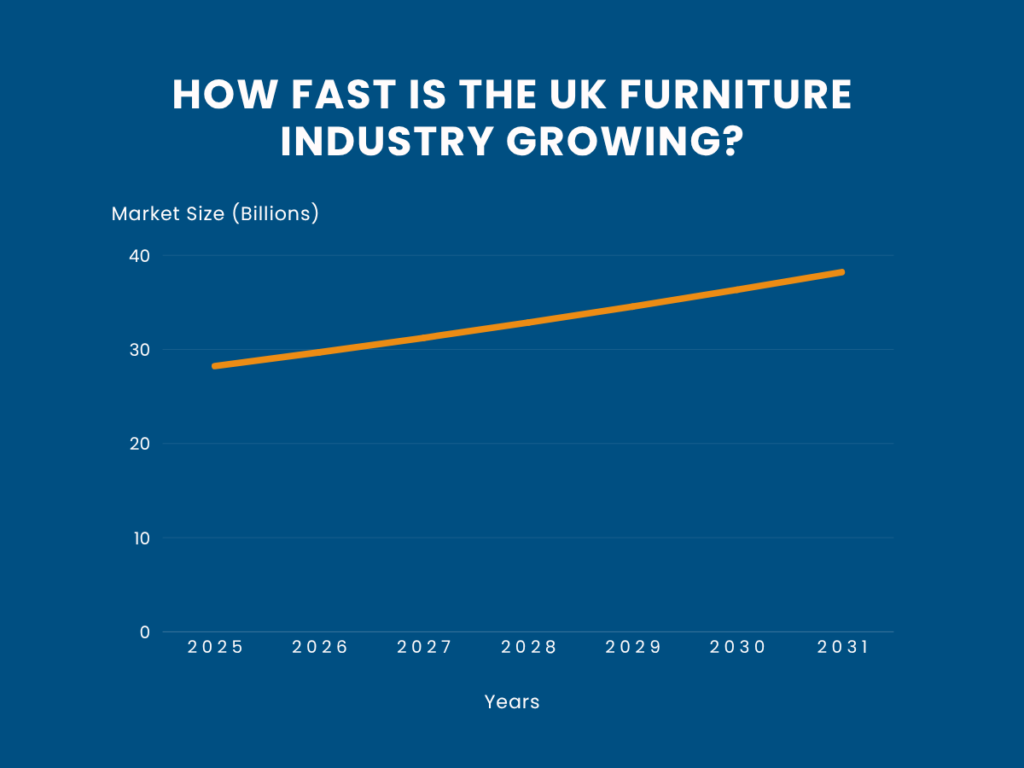
- The UK furniture industry should grow at a compound annual growth rate (CAGR) of 2.98% between 2026 and 2031.
- Some estimates value the broader UK furniture market at more than $38 billion annually.
- Market revenues could exceed $62 billion by 2030, according to long-term forecasts.
- Wood furniture holds the largest share of the UK furniture market.
- Living room and dining room furniture generate the most revenue of any furniture category.
- Online furniture sales continue to gain market share as more consumers shop online.
- Demand for sustainable and eco-friendly furniture keeps increasing across the UK.
- The second-hand furniture market continues to expand, as consumers seek more affordable and environmentally friendly alternatives.
What Is the Value of the UK Furniture Market?
The UK furniture industry has generated approximately £11.2 billion in 2026 and will grow to £13 billion by 2031, according to current projections. This makes furniture one of the UK’s largest consumer goods markets, generating billions of pounds in sales each year.
Strong demand for home furnishings, home improvement projects, and online furniture shopping continues to support the industry’s growth. As consumers invest more in their living spaces, the furniture market is expected to remain a major contributor to the UK’s retail economy.
How Fast Is the UK Furniture Industry Growing?
The UK furniture industry is expected to grow at a compound annual growth rate (CAGR) of 2.98% between 2026 and 2031. By the end of the forecast period, the market is projected to be approximately 16% larger than it is today, reflecting steady expansion across the sector.
While these growth rates are modest compared to emerging industries, they are typical of a mature consumer market. The furniture sector benefits from recurring demand, as households regularly replace, upgrade, and purchase new furnishings throughout different life stages, helping to maintain consistent growth over time.
How Much Do UK Consumers Spend on Furniture Each Year?
UK consumers spend more than £40 billion annually on furniture and furnishings, making it one of the country’s largest retail categories. Household spending on furniture remains closely tied to housing activity, home renovations, and changing lifestyle needs.
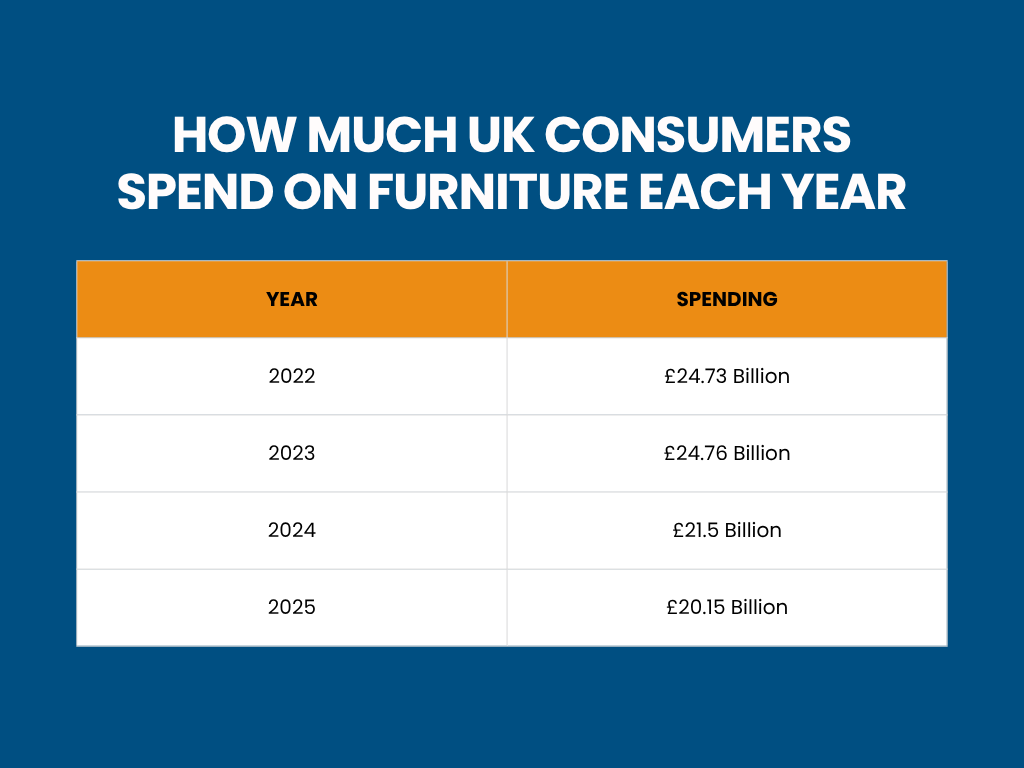
Furniture purchases tend to increase during major life events such as moving home, renovating a property, or furnishing a new space. Living room, bedroom, and dining room furniture account for a significant share of consumer spending, while home office furniture continues to benefit from the rise of hybrid working.
What Are the Most Popular Furniture Categories in the UK?
The most popular furniture categories in the UK include:
- Living Room Furniture: Sofas, armchairs, coffee tables, and TV units remain the largest furniture category by sales.
- Bedroom Furniture: Beds, wardrobes, bedside tables, and dressers continue to be among the most purchased furniture items.
- Dining Room Furniture: Dining tables, chairs, and sideboards remain popular, particularly among homeowners and growing families.
- Home Office Furniture: Desks, office chairs, and storage solutions have seen increased demand since the rise of hybrid working.
- Storage Furniture: Bookcases, shelving units, and cabinets are increasingly popular as consumers look to maximise space.
- Outdoor Furniture: Garden seating, dining sets, and patio furniture continue to perform well, especially during the spring and summer months.
Consumer preferences continue to evolve, but living room and bedroom furniture consistently account for the largest share of furniture spending in the UK.
What Percentage of Furniture Sales in the UK Occur Online?
Online channels account for an estimated 38% of furniture sales in the UK, making e-commerce one of the industry’s fastest-growing segments. As more consumers research and purchase furniture online, digital sales continue to capture a larger share of the market.
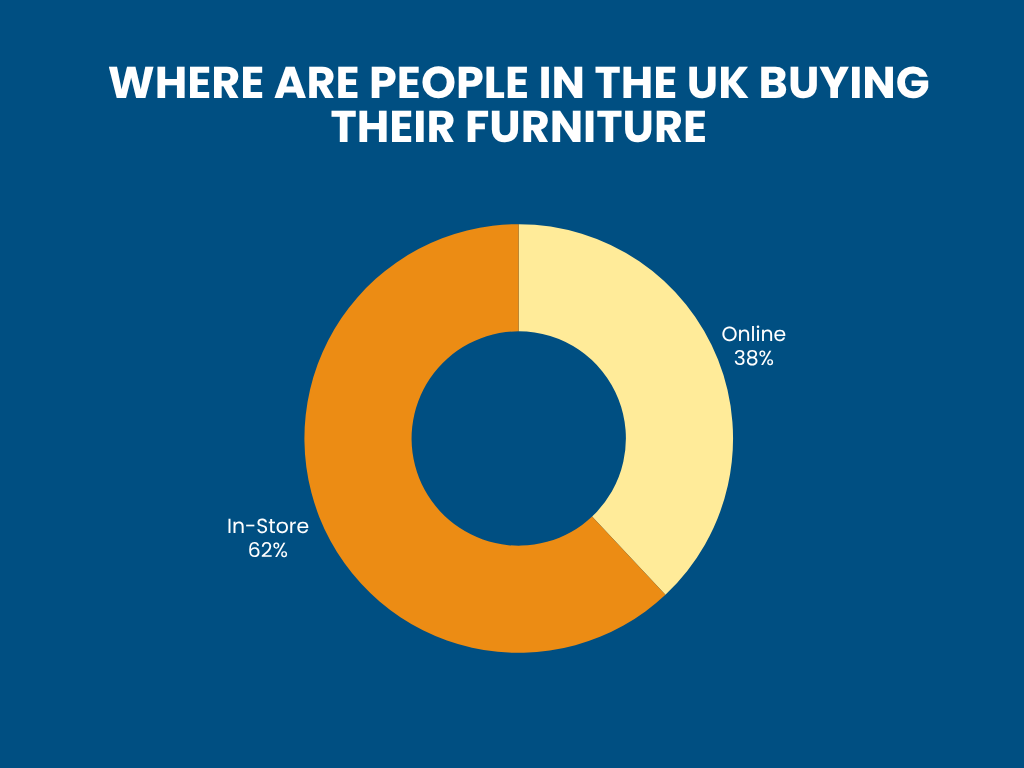
The shift toward online shopping has changed how consumers buy furniture. Retailers now invest heavily in digital storefronts, virtual product visualisation tools, and delivery services to improve the online buying experience. As a result, e-commerce will likely remain a key driver of growth across the furniture industry.
How Large Is the UK Second-Hand Furniture Market?
The UK second-hand furniture market is worth an estimated £2 billion to £3 billion annually, with demand continuing to grow as consumers seek more affordable and sustainable alternatives to buying new. Millions of used furniture items are bought and sold across online marketplaces, charity shops, auctions, and peer-to-peer platforms each year.
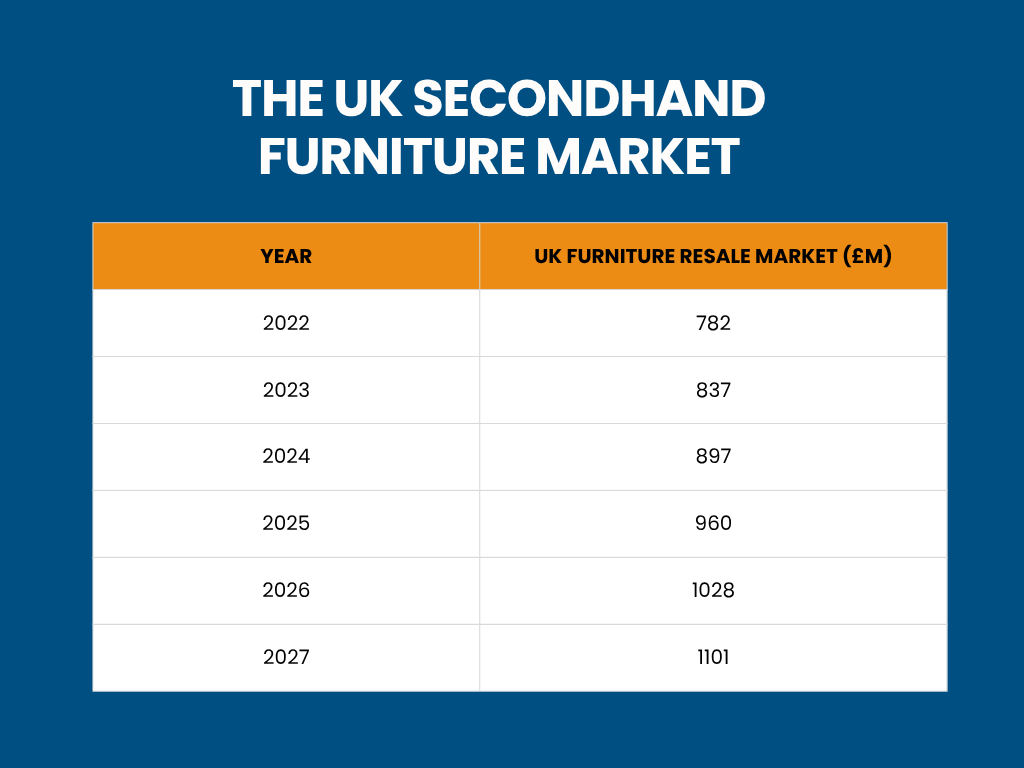
The market has expanded rapidly in recent years, driven by rising living costs and growing environmental awareness. Sofas, dining tables, wardrobes, and beds remain among the most popular second-hand furniture purchases, while online marketplaces make it easier than ever for consumers to buy and sell pre-owned items locally and nationwide.
Which UK Cities Have the Highest Demand for Furniture?
The UK cities with the highest demand for furniture include the following:
- London
- Manchester
- Birmingham
- Leeds
- Glasgow
- Liverpool
- Bristol
- Sheffield
- Edinburgh
- Nottingham
These cities have large populations, active housing markets, and strong levels of consumer spending, making them key centres for furniture sales and deliveries. Major urban centres also generate significant demand for second-hand furniture through online marketplaces and local resale platforms.
How Much Does Furniture Delivery Cost in the UK?
Furniture delivery in the UK typically costs between £50 and £150, depending on the size of the item, delivery distance, and service level required. Smaller items can often be delivered for less than £50, while larger or specialist items such as sofas, wardrobes, and pianos can cost several hundred pounds to transport.
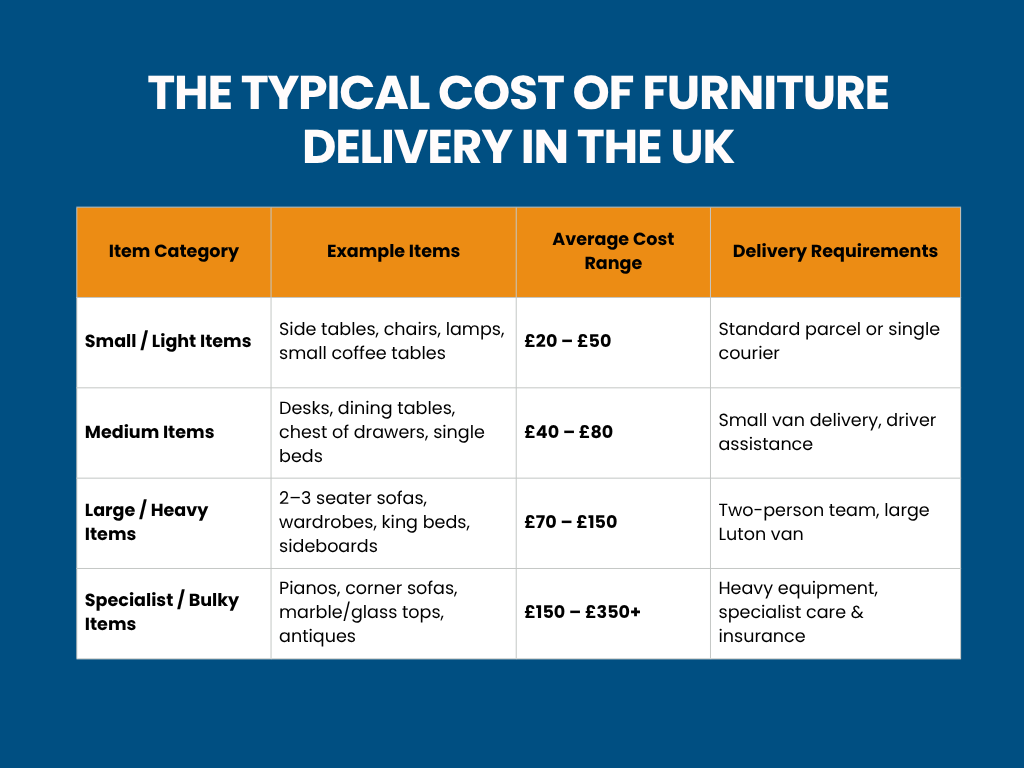
Delivery costs vary considerably based on the item’s dimensions, weight, and destination. Long-distance deliveries, same-day services, and two-person delivery teams generally command higher prices, while marketplace and backloading services can help reduce costs for consumers.
Moving or Buying Furniture? Compare Delivery Quotes with Shiply
Whether you’re furnishing a new home, buying a second-hand sofa from across the country, or need a large item collected and delivered, getting the right price for furniture delivery makes a real difference. Shiply lets you post your delivery job for free and receive competing quotes from trusted couriers and delivery companies across the UK, so you can compare prices and choose the option that best fits your budget and timeline, rather than paying a single fixed rate. It’s a simple way to save money on exactly the kind of large, bulky, or long-distance furniture deliveries covered in this report.
Sources: Mordor Intelligence · Statista · Grand View Research · British Furniture Confederation · Yahoo Finance · Expert Market Research · ECDB