

 Kate Margallo
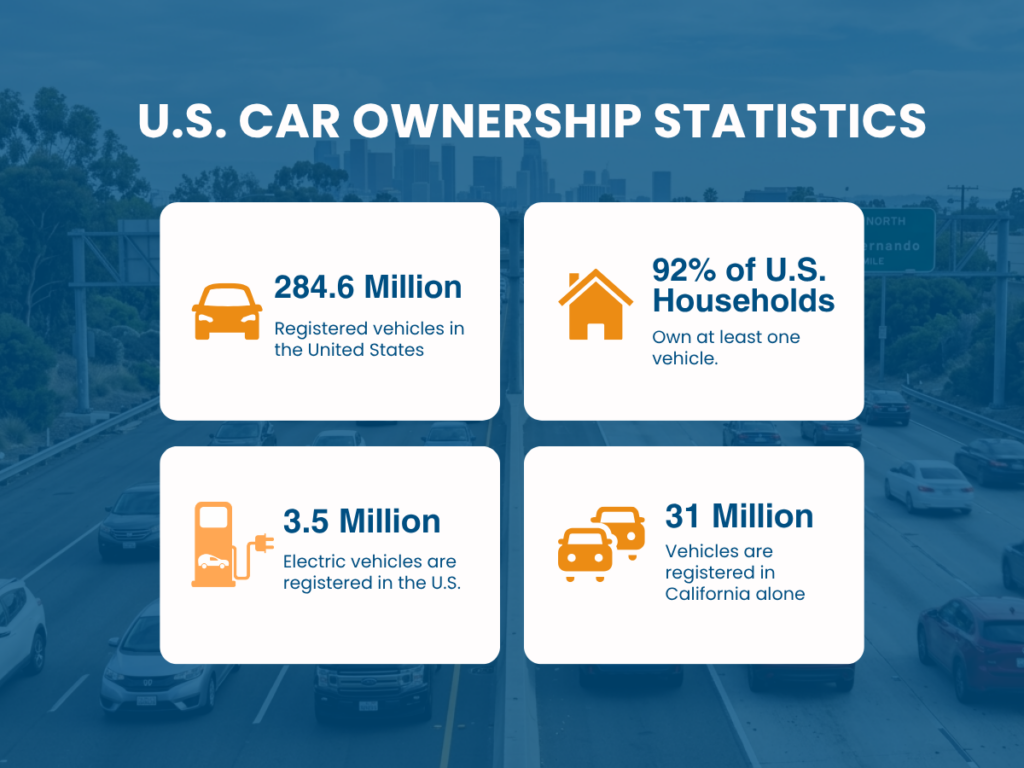
Car ownership remains a major part of daily life in the United States. Although remote work and public transportation options continue to grow, most Americans still depend on personal vehicles for commuting, errands, and long-distance travel. Recent car ownership statistics show that 92% of U.S. households own at least one vehicle. Meanwhile, the country now has more than 284 million registered vehicles across all categories, including cars, trucks, buses, and motorcycles.
This guide breaks down the latest U.S. car ownership statistics, including vehicle ownership by state, the most popular vehicle types, electric vehicle growth, and changing transportation trends.
Key U.S. Car Ownership Statistics
- There are 284.6 million registered vehicles in the United States as of 2023.
- About 92% of American households own at least one vehicle.
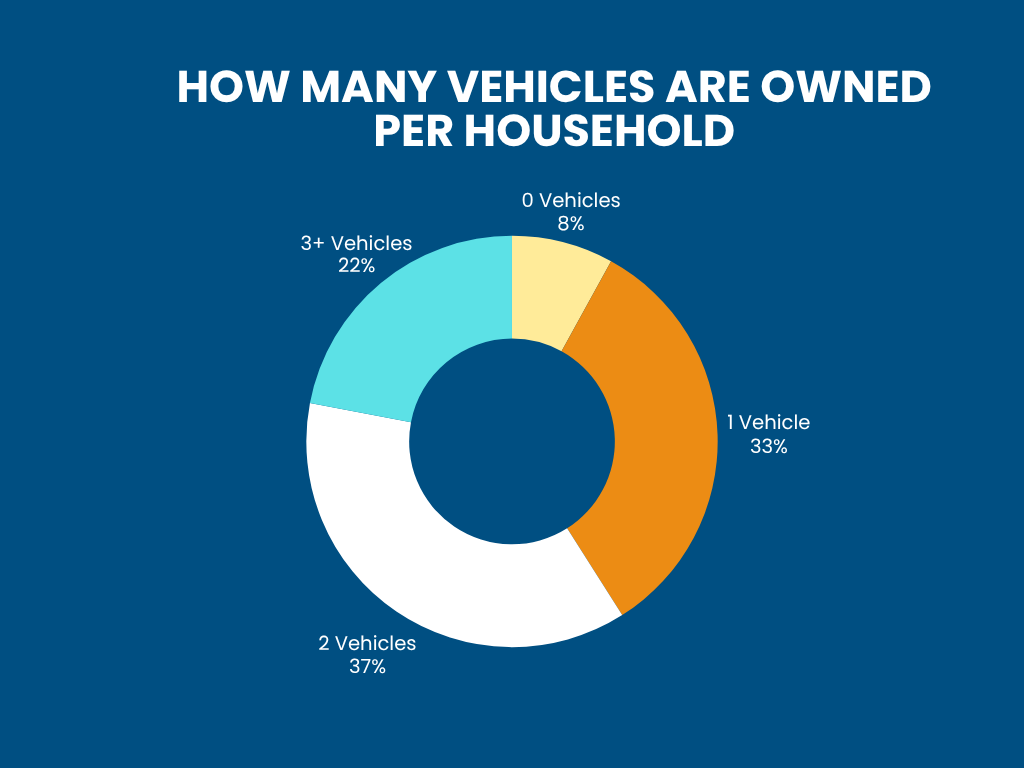
- Roughly 37% of households own two vehicles.
- California has the most registered vehicles at more than 31 million.
- Montana has the highest number of vehicles per resident.
- Trucks are the most common vehicle type in the U.S.
- White is the most popular car color in America.
- More than 3.5 million electric vehicles are registered nationwide.
- The Ford F-Series remains the bestselling vehicle in the country.
How Many Americans Own Cars?
According to the latest U.S. Census data, 121.6 million households own at least one vehicle. About 92% of American households own at least one vehicle, making car ownership a standard part of daily life across the United States.
Vehicle ownership also varies by household size and lifestyle. Families living in suburban and rural areas often own multiple vehicles because public transportation options remain limited.
How Many Vehicles Are Owned Per Household
Most American households own either one or two vehicles. Around 33% of households have one vehicle available, while 37% own two vehicles. Meanwhile, 22% of households have three or more vehicles. Only 8% of households report having no vehicle access at all.
Total Registered Vehicles in the U.S.
In 1990, the country had around 193 million registered vehicles. By 2023, that figure had climbed to more than 284 million. That figure includes privately owned and commercially registered cars, trucks, buses, and motorcycles.
Vehicle registrations briefly declined during the 2008 financial crisis. However, registrations recovered quickly in the following years.
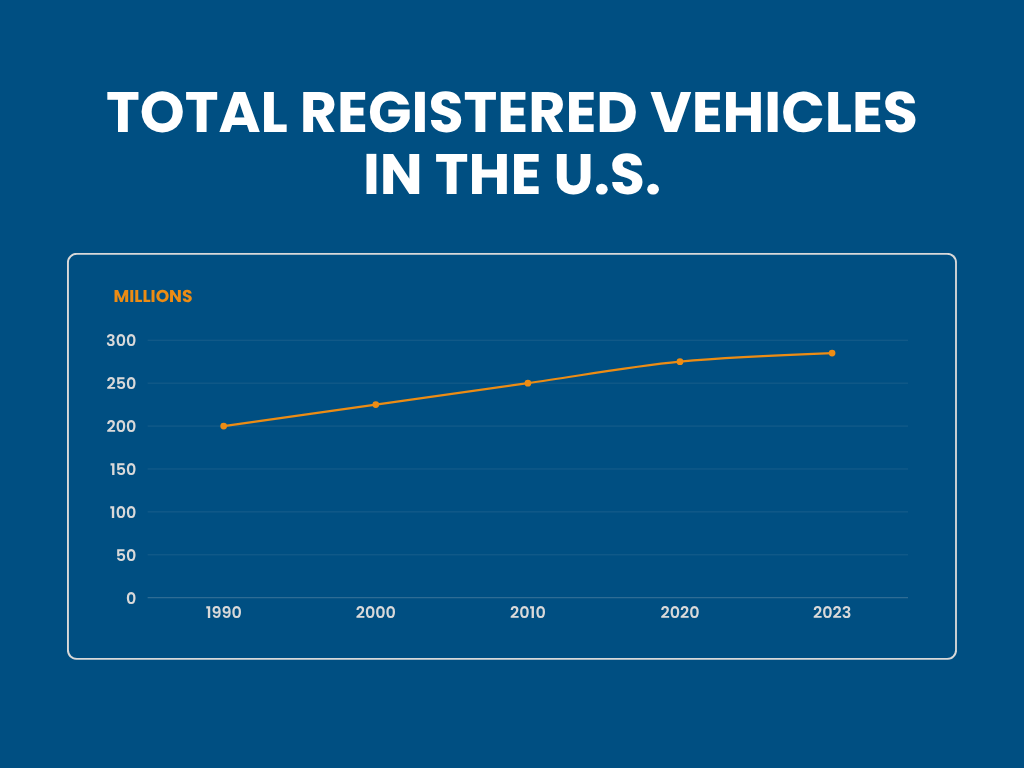
The total number of registered vehicles has increased steadily for decades. Since 1990, the United States has added more than 90 million registered vehicles.
States With the Most Registered Vehicles
California leads the nation with more than 31 million registered vehicles. Texas ranks second with over 23 million registrations, while Florida follows with roughly 19.5 million.
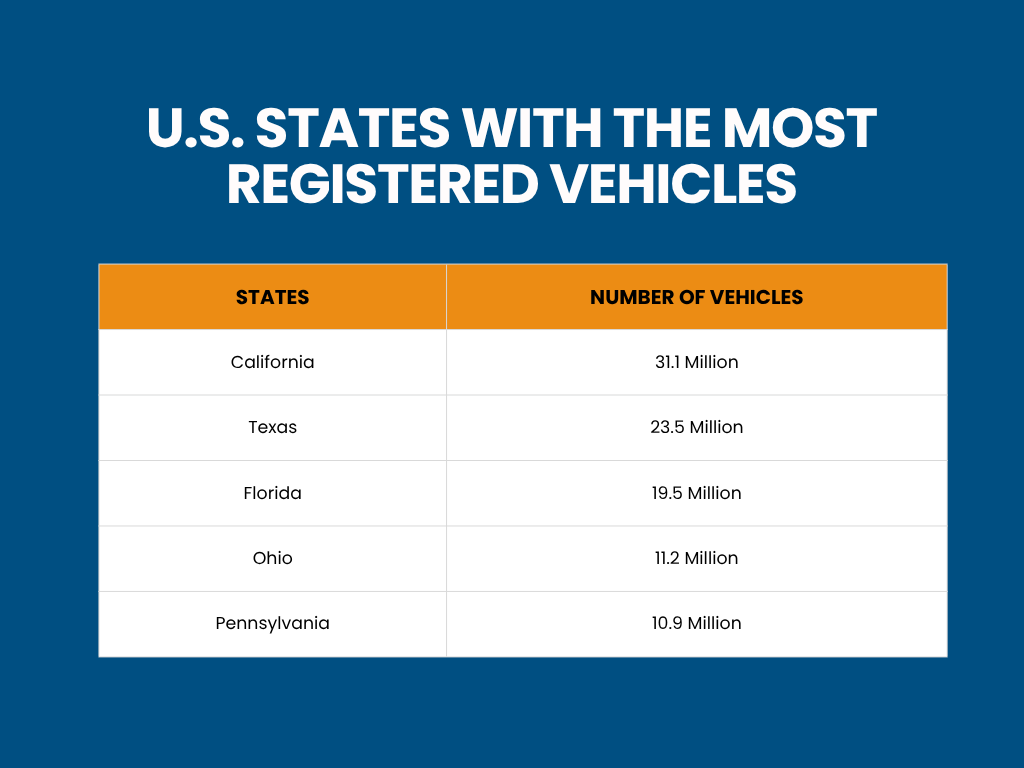
Population size plays a major role in vehicle ownership totals. Therefore, larger states naturally report the highest number of registered vehicles.
States With the Fewest Registered Vehicles
Washington, D.C. reports the fewest registered vehicles in the country. Delaware, Vermont, Alaska, and Rhode Island also rank near the bottom.
Smaller states and territories report significantly lower registration totals. Dense urban environments and strong public transportation systems contribute to lower vehicle ownership in some regions.
States With the Most Vehicles Per Resident
Montana ranks first for vehicles per resident, with roughly 2.1 vehicles per person. Wyoming and South Dakota also report extremely high ownership rates.
Vehicle ownership looks very different when measured per resident instead of the total population. Rural states tend to have the highest number of vehicles per person. Residents in these areas often travel longer distances and rely heavily on personal transportation.
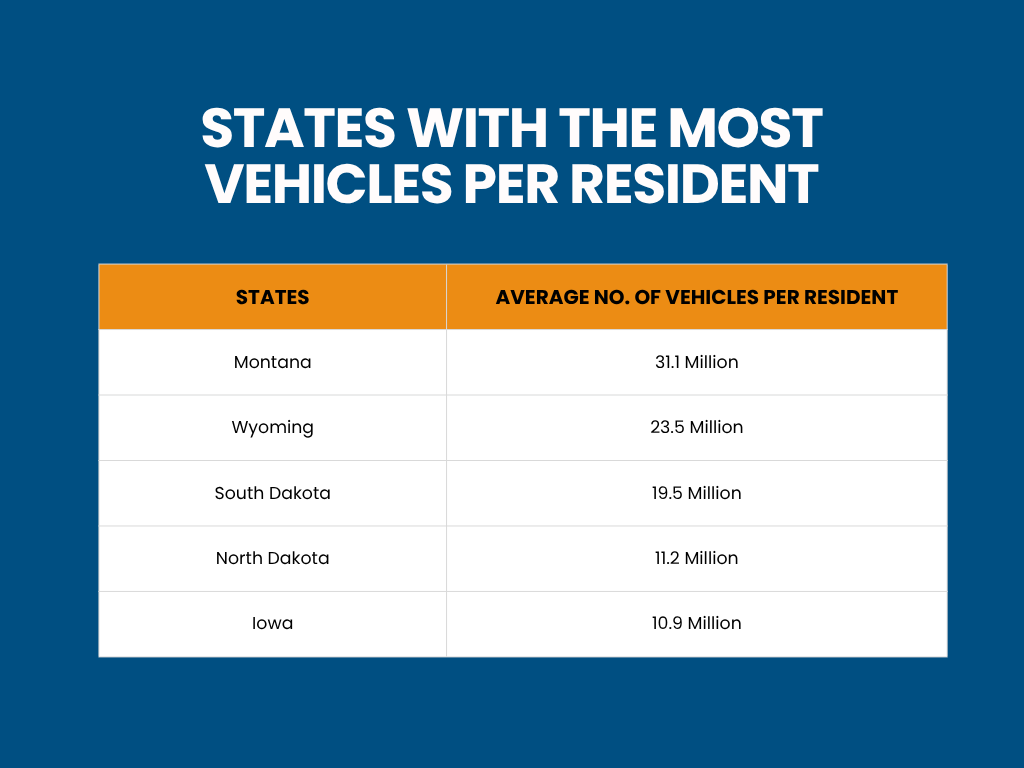
Across the nation, the average stands at roughly 0.8 registered vehicles per resident.
Most Common Vehicle Types in America
Trucks dominate the U.S. vehicle market. They now account for nearly two-thirds of all registered vehicles nationwide. Americans continue to prefer pickup trucks and larger utility vehicles because they offer cargo space, towing capability, and versatility.
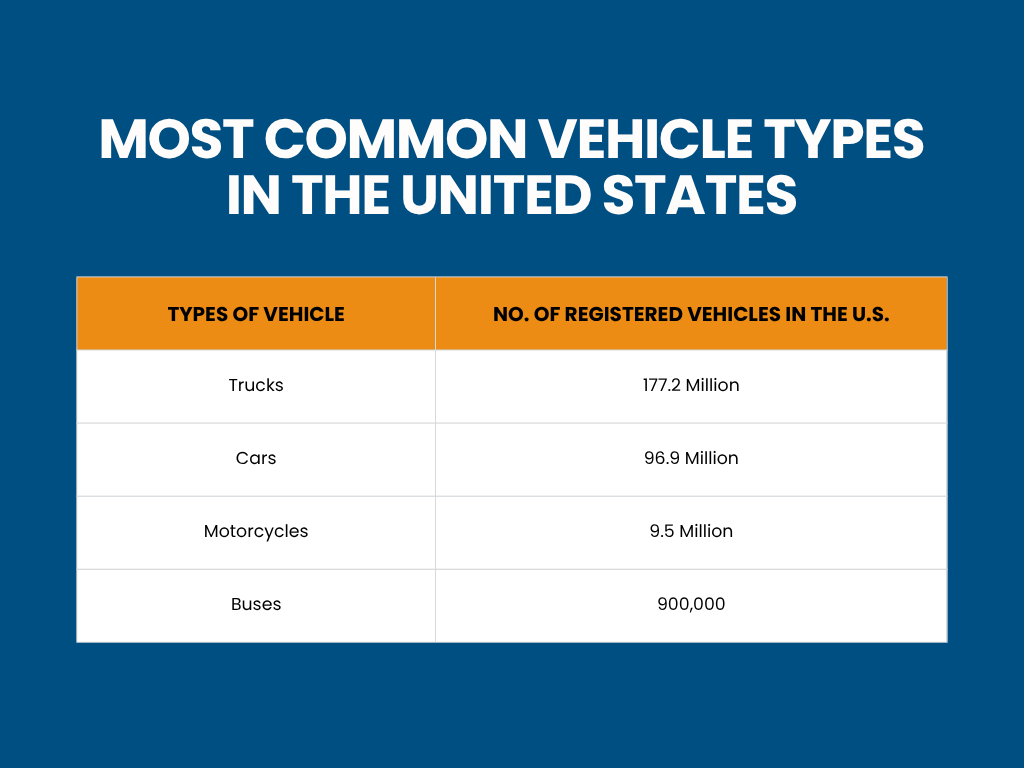
Large pickups and SUVs continue to drive truck registrations higher every year.
Bestselling Vehicles in the U.S.
The Ford F-Series continues to lead U.S. vehicle sales. Chevrolet Silverado and Toyota RAV4 also remain extremely popular. Pickup trucks continue to dominate sales charts. However, SUVs and crossover vehicles have also gained major market share over the past decade.
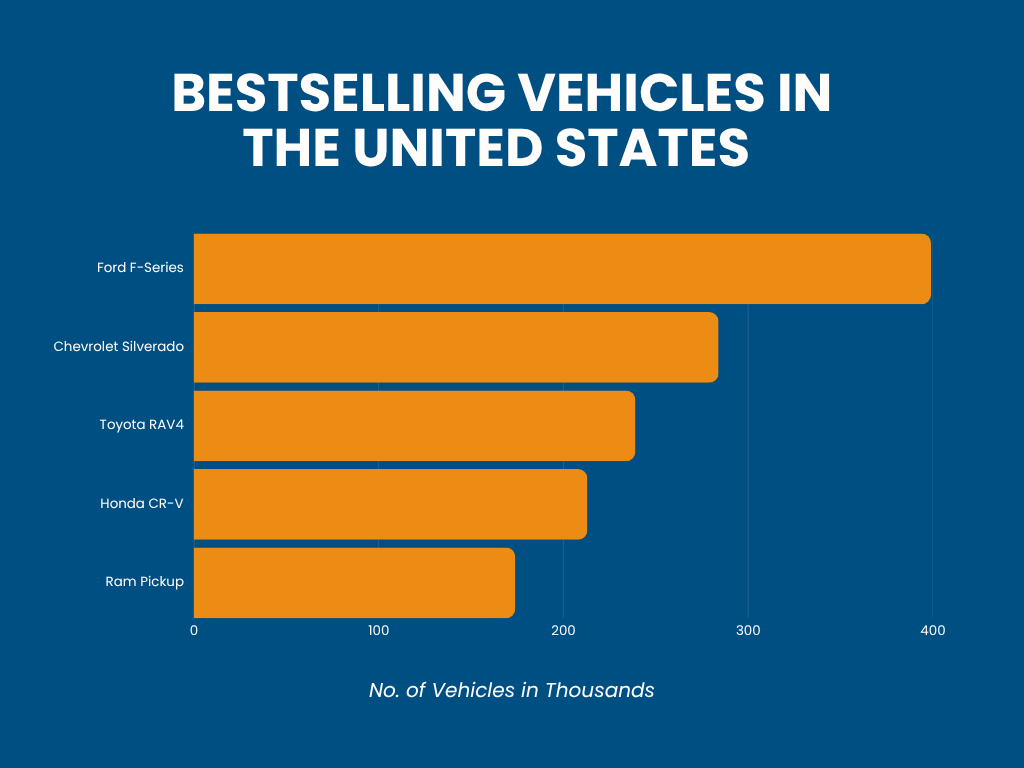
The Tesla Model Y remains the only electric vehicle among the top bestselling models.
Most Popular Car Colors in America
White remains the most popular vehicle color in America. Black and gray continue gaining market share because buyers often prefer neutral tones.
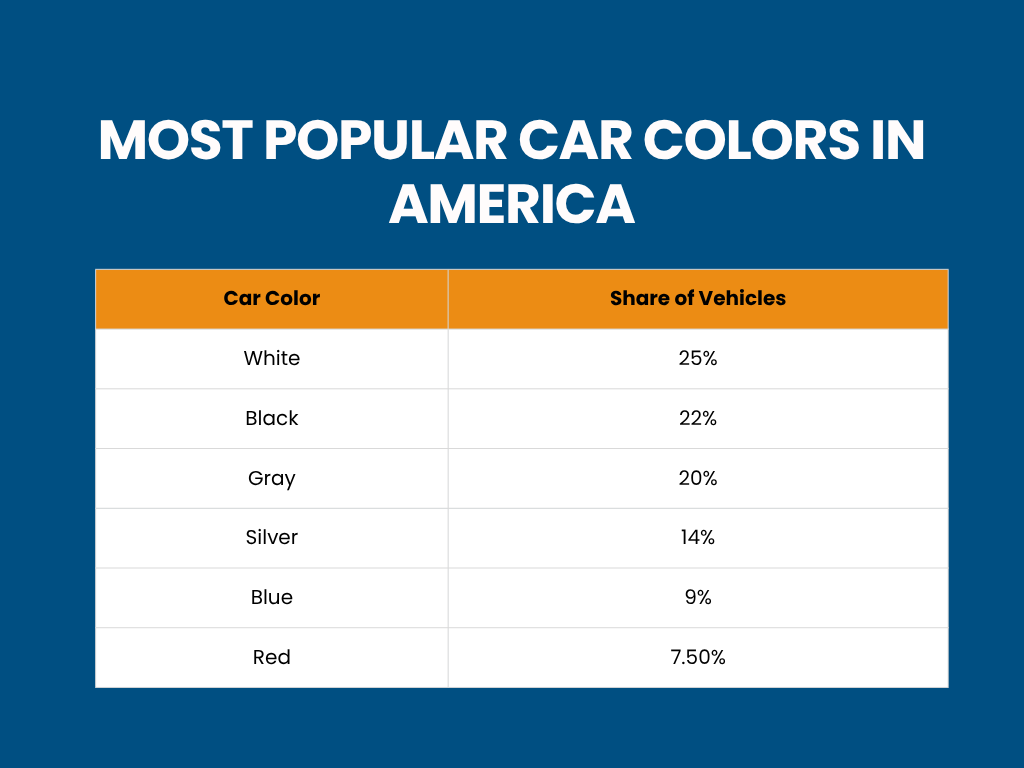
Bright colors such as yellow, orange, and purple remain extremely rare.
Electric Vehicle Ownership Statistics
More than 3.5 million electric vehicles are now registered across the United States.
Electric vehicle adoption continues to accelerate across the country.
As of 2023, the United States had more than 3.5 million registered electric vehicles. That represented a 45.6% increase compared to the previous year.
California leads EV adoption by a significant margin. The state accounts for roughly one-third of all electric vehicles nationwide. Florida and Texas follow far behind, although both states continue recording strong EV growth.
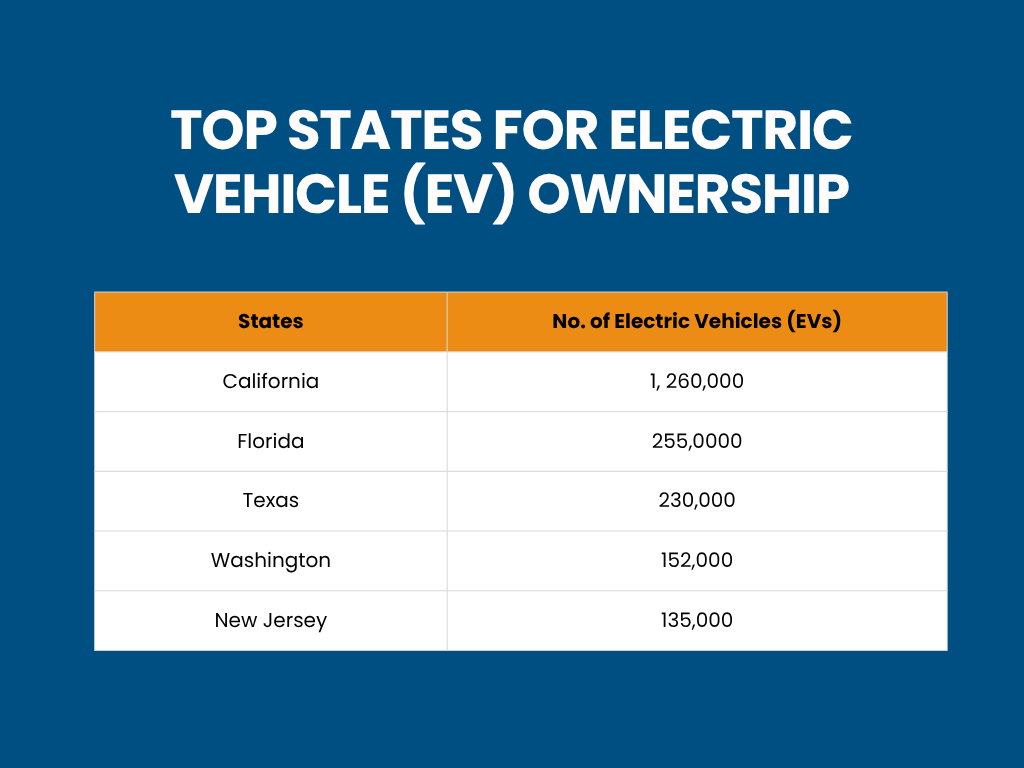
Meanwhile, North Dakota, Wyoming, and South Dakota currently report the fewest registered EVs.
EV Market Share by Manufacturer
Tesla controls nearly half of the U.S. electric vehicle market. However, Ford, Chevrolet, Hyundai, and Rivian continue expanding their presence.
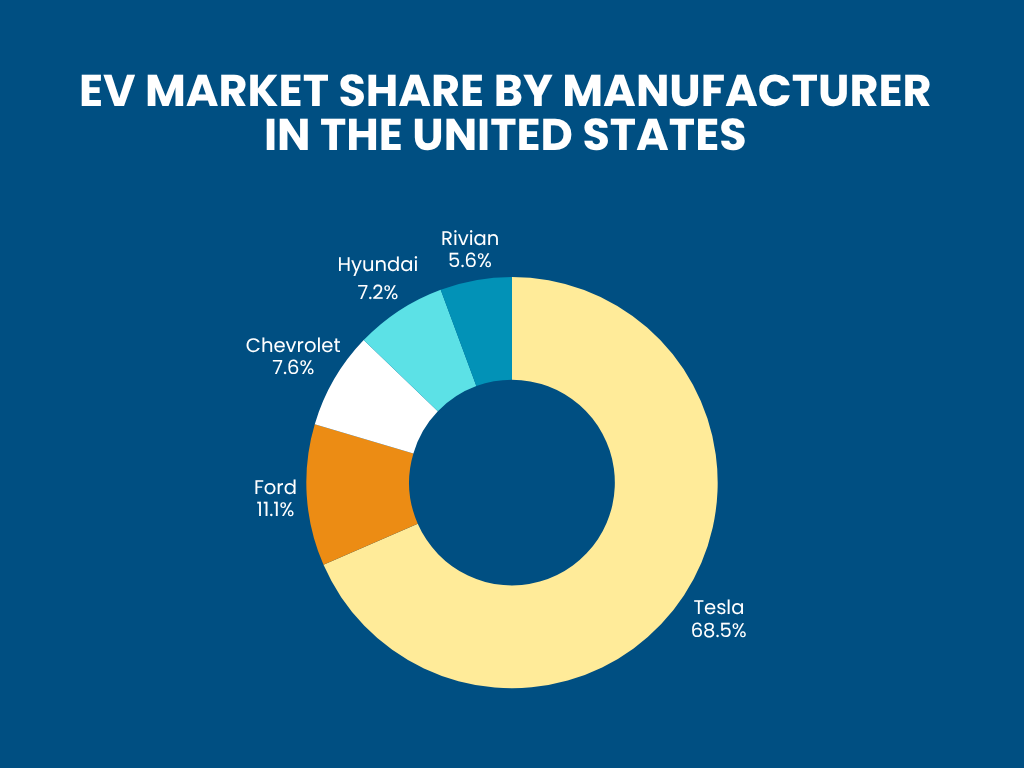
Traditional automakers continue investing heavily in electric vehicle production. Therefore, competition in the EV market will likely intensify over the next few years.
Car Ownership by Income
Higher-income households are far more likely to own multiple vehicles. Middle-income and upper-income households are significantly more likely to own multiple vehicles. In contrast, lower-income households are more likely to depend on public transportation.
BMW ranks as the most popular vehicle brand among high-income households. Meanwhile, Chevrolet and Ford remain popular across nearly every income group.
Most Popular Brands by Income Group
High-income households are more likely to drive the following brands:
- BMW
- Ford
- Toyota
- Chevrolet
- Honda
Middle-income households are more likely to drive the following brands:
- Ford
- Chevrolet
- Toyota
- Honda
- Nissan
Lower-income households are more likely to drive the following brands:
- Chevrolet
- Ford
- Toyota
- Dodge
- Honda
Car Ownership by Age
Americans between the ages of 50 and 69 report some of the highest vehicle ownership rates.
Older Americans are more likely to own vehicles than younger adults.
Car ownership generally increases with age because older adults often have higher incomes and more established households.
Adults under 30 report the lowest ownership rates. Meanwhile, Americans between the ages of 50 and 69 represent some of the largest groups of vehicle owners.
Cost of Car Ownership in America
Owning a car in America now costs thousands of dollars per year. Drivers must pay for fuel, insurance, maintenance, repairs, registration fees, parking, depreciation, and monthly loan payments.
The average annual cost of owning and operating a new vehicle in the United States exceeds $12,000 per year. That equals roughly $1,000 per month.
Depreciation represents the largest expense for most drivers. Fuel and insurance also account for a major share of yearly ownership costs.
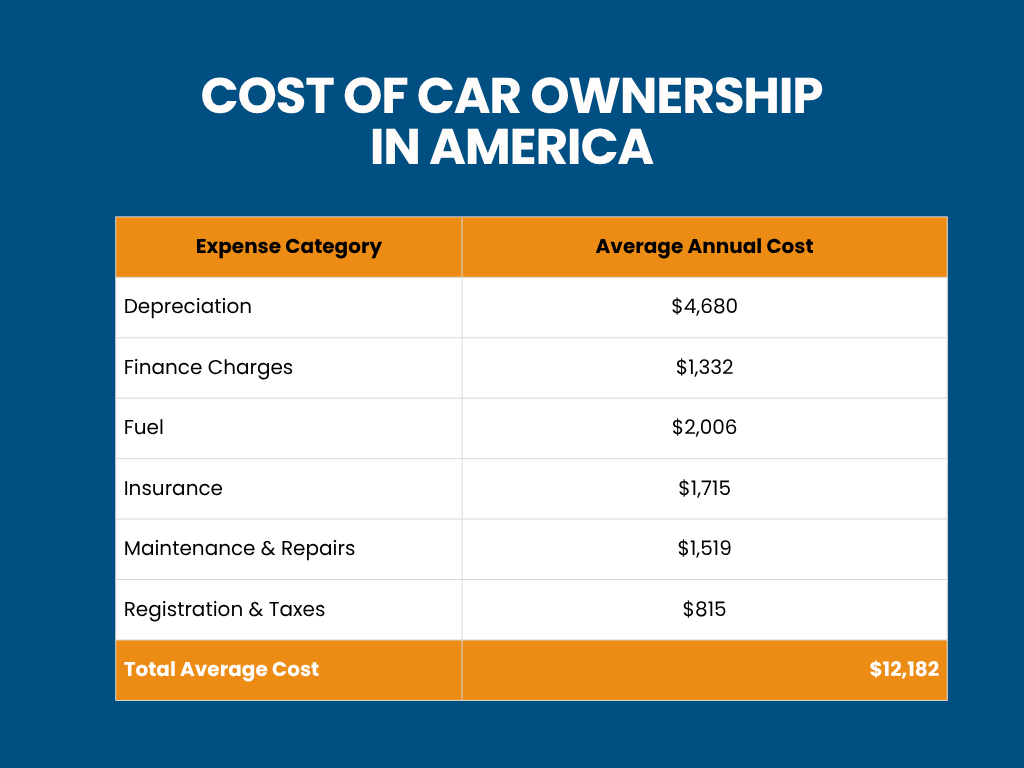
Despite rising ownership costs, most Americans still rely heavily on personal vehicles for commuting, shopping, and everyday transportation.
U.S. Spending on Cars Over Time
Americans now spend dramatically more on vehicles than they did decades ago. Rising vehicle prices and inflation have accelerated that trend.
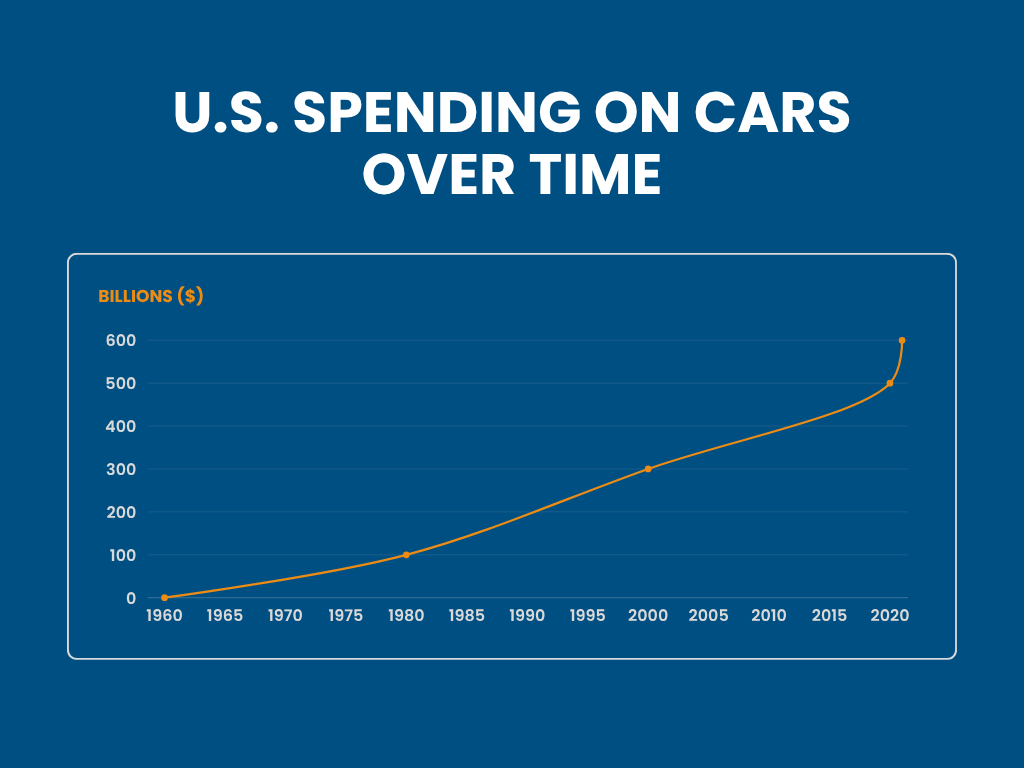
Americans now spend dramatically more on vehicles than they did decades ago. Rising vehicle prices, inflation, supply chain shortages, and higher financing costs have all accelerated that trend. As a result, buying both new and used cars has become significantly more expensive for the average household.
The Future of Car Ownership
Electric vehicles, remote work, and changing commuting habits will continue reshaping transportation in the coming years.
Car ownership patterns may change over the next decade.
Remote work, rideshare services, autonomous vehicles, and subscription-based transportation models could reduce the need for personal vehicle ownership in some cities.
However, personal vehicles will likely remain essential across large parts of the United States, especially in suburban and rural areas.
Electric vehicles will also continue reshaping the automotive industry. As charging infrastructure improves and battery costs decline, EV adoption should continue accelerating nationwide.
Get Instant Vehicle Shipping Quotes Today
That is where Shiply helps simplify the process by connecting customers with trusted transport providers for vehicle shipping, motorcycle transport, furniture delivery, and large-item shipping across the United States. Get instant shipping quotes and compare transport providers in minutes.
Sources: Forbes · Bureau of Transportation Statistics · AutoInsurance · Pew Research Center · ValuePenguin · Road Genius