

 Kate Margallo
Moving costs in the United States are often simplified into averages, but the reality is far more dynamic. In 2026, pricing is influenced not just by distance or home size, but by route demand, regional differences, and how efficiently transport providers can plan their journeys.
This is why two similar moves can have very different costs. Moves along popular routes often benefit from stronger competition and better pricing, while less common routes can be more expensive.
This guide breaks down moving costs in the U.S. in 2026 using real relocation cost statistics, focusing on how distance, state, and route all impact what you actually pay.
How Much Does It Cost to Move in the United States in 2026?
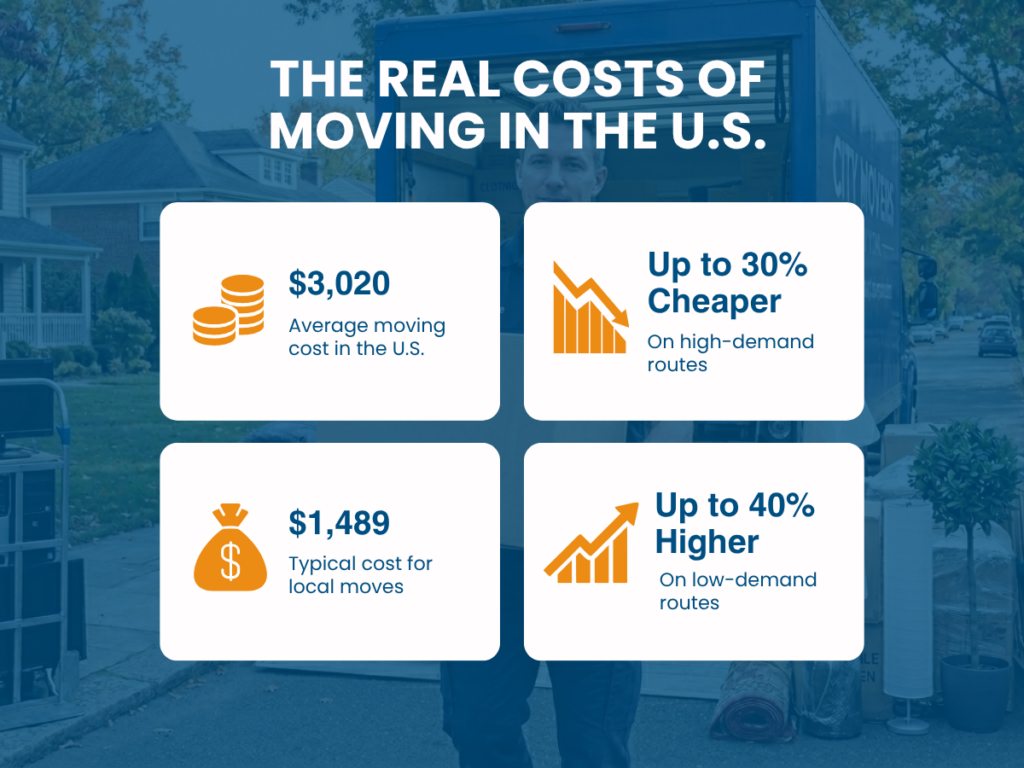
The average cost of moving in the United States is approximately $3,020, but this number only tells part of the story. The cost of a move can vary significantly depending on distance, home size, and how the move is arranged.
Local moves typically cost around $1,489, while long-distance moves average $3,129. However, real-world pricing can fall well outside these ranges. Cross-country moves, for example, can range anywhere from $7,000 to $25,000 depending on the size of the home, services included, and route complexity
Average Moving Cost in the U.S.A Based on Distance
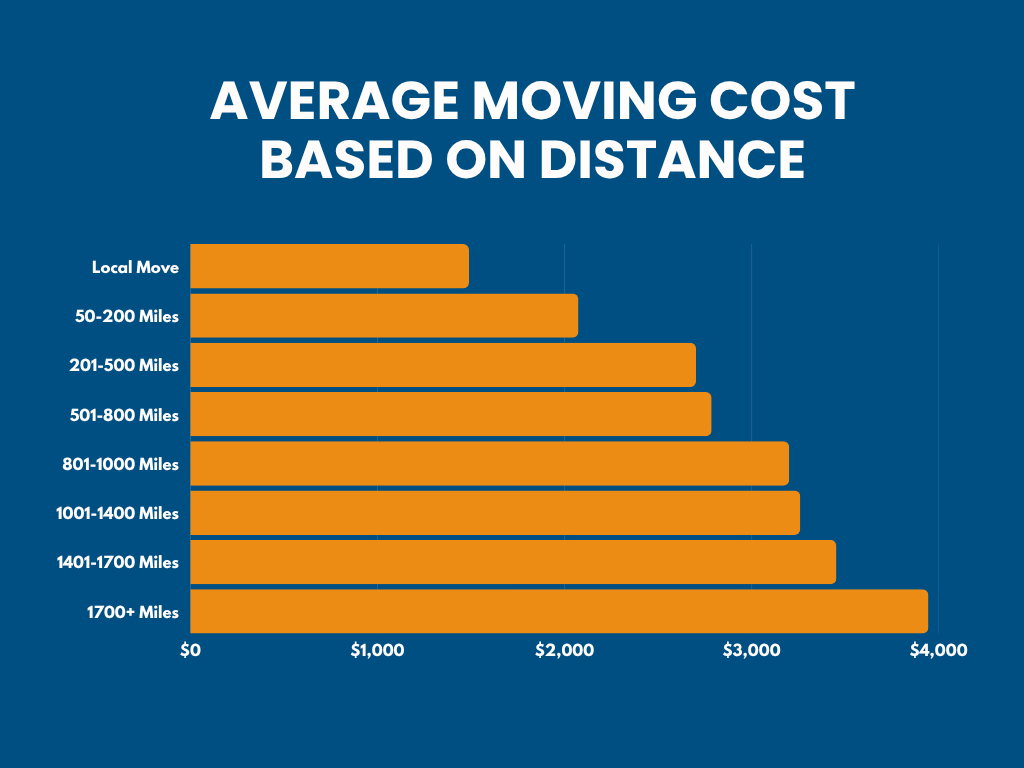
Distance remains the most important factor when estimating moving costs, but pricing does not increase in a straight line. Instead, it reflects both mileage and how efficient a route is for transport providers.
Typical relocation costs by distance:
- Local move: $1,489
- 50 to 200 miles: $2,074
- 201 to 500 miles: $2,703
- 501 to 800 miles: $2,786
- 801 to 1,000 miles: $3,201
- 1,001 to 1,400 miles: $3,260
- 1,401 to 1,700 miles: $3,453
- 1,700+ miles: $3,945
For long-distance moves, especially cross-country, costs increase more gradually after a certain point. This is because long-haul routes are more standardized and often allow transport providers to operate more efficiently.
Relocation Costs in the U.S.A. Based on Home Size
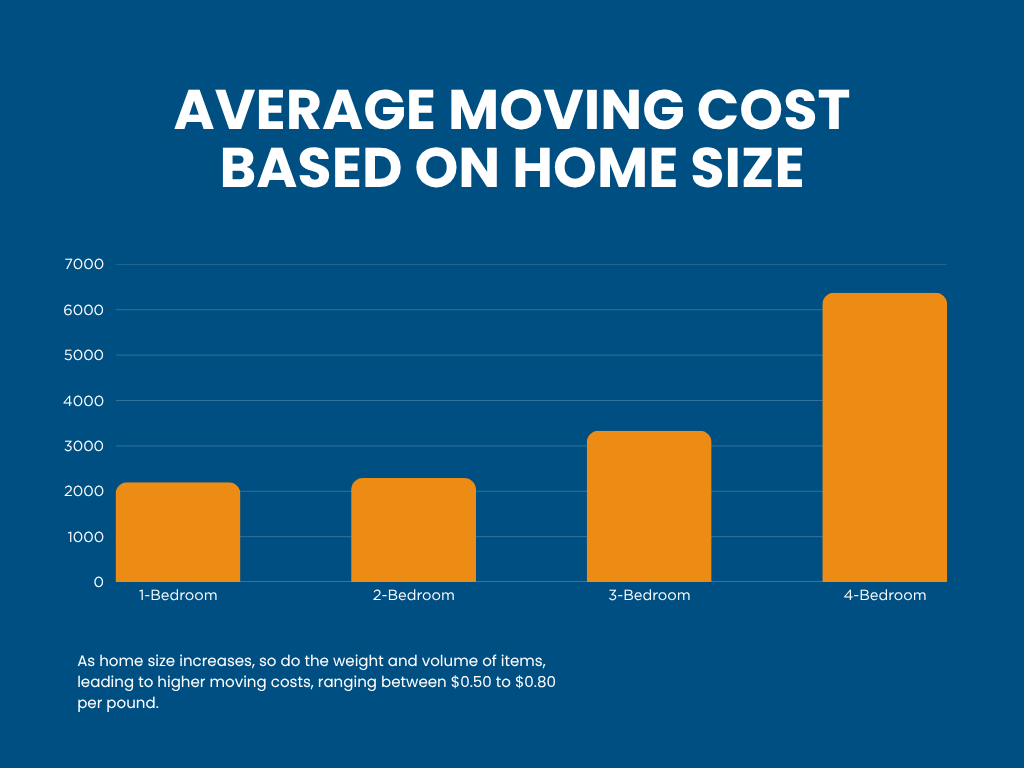
The size of your home directly affects the cost of your move because it determines the total weight and volume of your belongings.
Typical relocation costs based on home size:
- 1-bedroom: Around $2,197
- 2-bedroom: Around $2,290
- 3-bedroom: Around $3,334
- 4-bedroom: Around $6,374
Larger homes require more labor, more packing materials, and often multiple movers or vehicles. This increases both the time required and the overall cost.
Weight is also a key factor. Movers often calculate long-distance costs based on weight, with average pricing ranging between $0.50 to $0.80 per pound
How Much Does Moving Cost by State in the U.S.A?
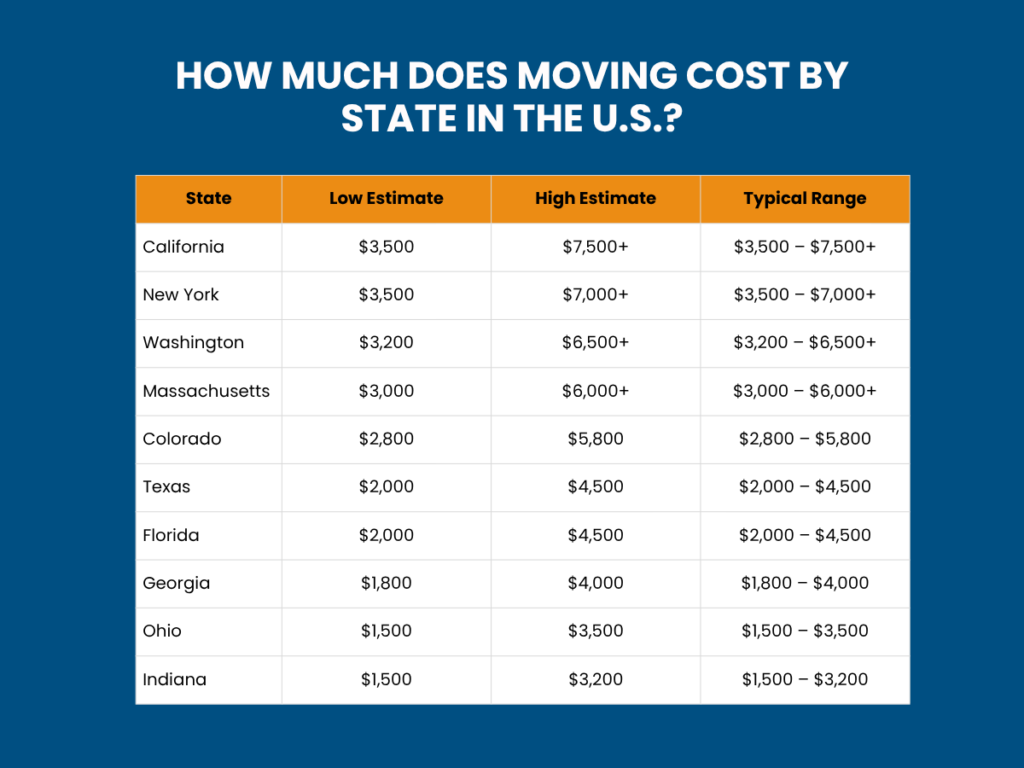
Relocation costs vary significantly by state due to differences in demand, labor costs, and transport availability.
On average, states with higher living costs and stronger inbound demand tend to have higher moving prices, while states with more balanced transport activity are generally more affordable.
Typical relocation costs ranges by state:
- California: $3,500 to $7,500+
- New York: $3,500 to $7,000+
- Washington: $3,200 to $6,500+
- Massachusetts: $3,000 to $6,000+
- Colorado: $2,800 to $5,800
- Texas: $2,000 to $4,500
- Florida: $2,000 to $4,500
- Georgia: $1,800 to $4,000
- Ohio: $1,500 to $3,500
- Indiana: $1,500 to $3,200
Moves between high-demand states can often be up to 30% cheaper than moves of similar distance involving low-demand or rural states.
Why Do Moving Costs Vary by State?
Moving costs are not consistent across the United States. Prices can vary significantly depending on the state you are moving from or to.
States with high population density and strong migration trends tend to offer more competitive pricing because more transport providers operate in those areas. In contrast, moves involving rural or low-demand states can be more expensive due to limited availability.
Key state-level factors include:
- Labor costs and local wages
- Fuel prices and regional transport costs
- Urban versus rural accessibility
- Supply and demand for transport providers
For example, outbound moves from high-demand states may be cheaper due to strong competition, while inbound moves into those same states may cost more due to fewer return trips.
How Much Does Moving Cost by Route in the U.S.?
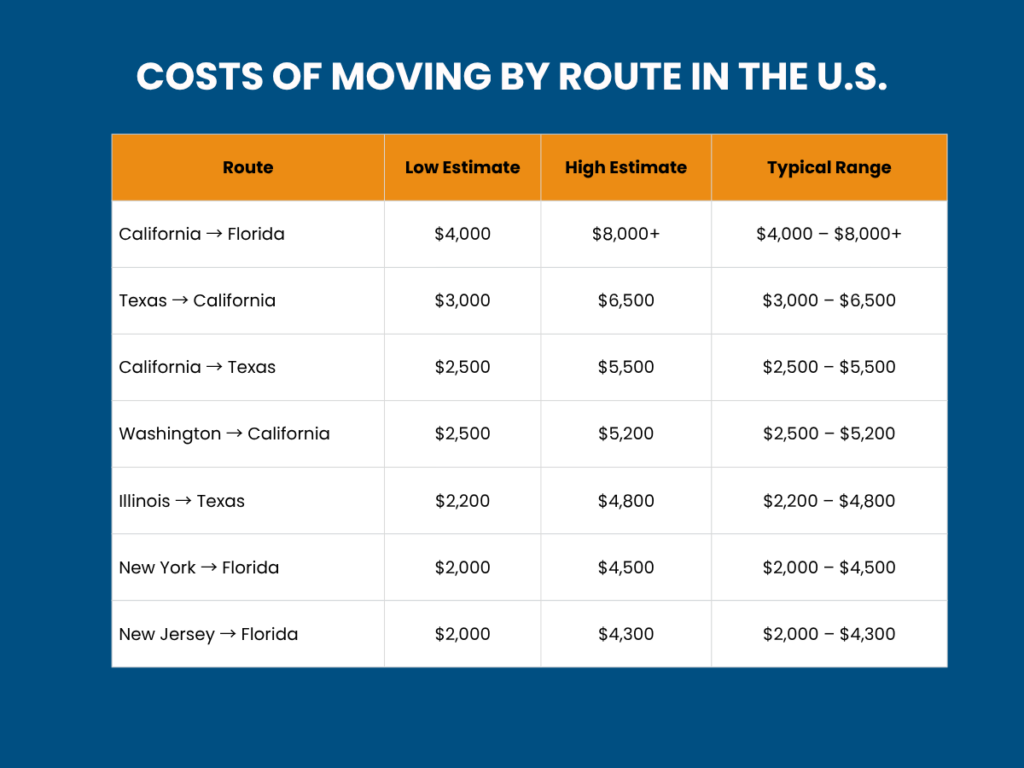
Relocation costs in the U.S.A vary by route depending on demand, distance, and how efficiently transport providers can operate between two locations.
Routes with strong demand in both directions tend to be more competitively priced, while less common routes are usually more expensive.
Typical moving cost ranges by route:
- California to Texas: $2,500 to $5,500
- New York to Florida: $2,000 to $4,500
- Illinois to Texas: $2,200 to $4,800
- Washington to California: $2,500 to $5,200
- New Jersey to Florida: $2,000 to $4,300
- California to Florida: $4,000 to $8,000+
- Texas to California: $3,000 to $6,500
Routes with strong demand in both directions are not just more available, they are often significantly cheaper due to better load matching and reduced empty mileage.
Why Do Some Moving Routes in the U.S. Cost More Than Others?
Route-based pricing is one of the most important factors in determining U.S. relocation costs.
Not all routes are equal. Some are highly active and efficient, while others are less common and harder to service.
- High-Demand Routes: Routes between major cities or popular migration states tend to be more competitive. These routes benefit from higher availability of transport providers, which can lower prices.
- Low-Demand Routes: Moves to or from less populated areas often cost more because transport providers may struggle to find return loads. This leads to higher pricing to cover empty mileage.
- Route Efficiency: Transport providers aim to maximize vehicle usage. Moves that align with existing routes are often cheaper because they reduce wasted space and time.
This is why route selection can sometimes have a bigger impact on cost than distance alone.
What Additional Costs Should You Expect When Moving within the United States?
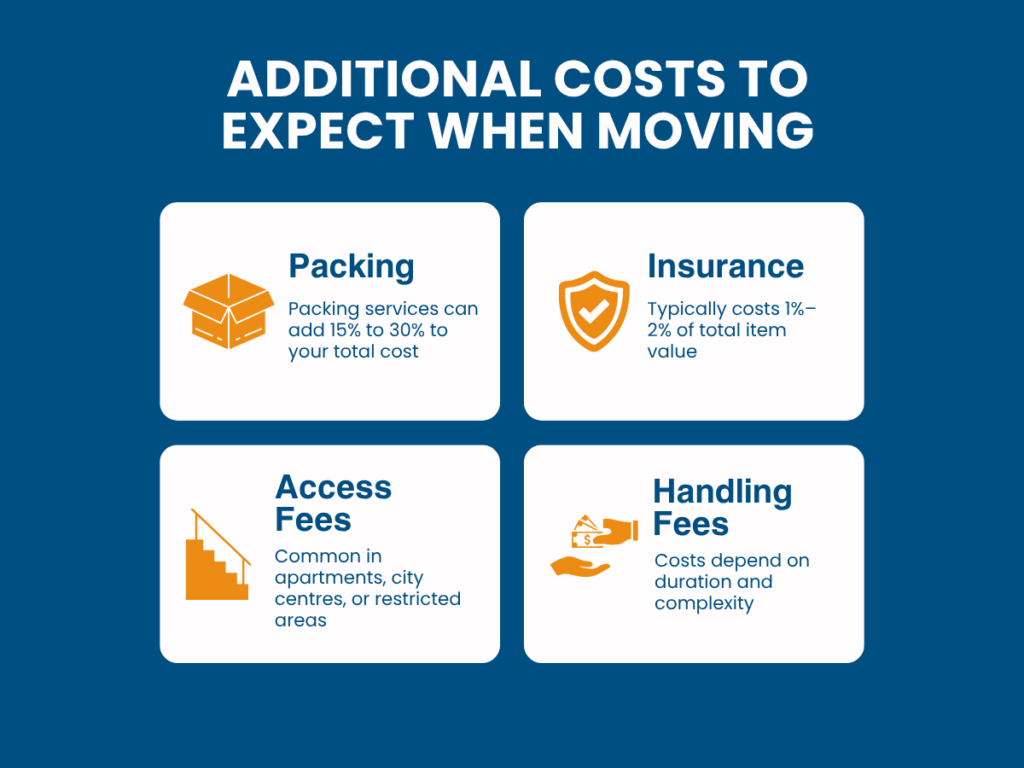
Beyond the base moving cost in the United States, there are several additional expenses that can significantly increase your total.
Common additional costs include:
- Packing materials and services
- Insurance coverage for your belongings
- Long carry fees if access is difficult
- Stair or elevator fees
- Storage costs if there is a gap between moves
- Specialty handling for large or fragile items
- Travel expenses such as fuel, hotels, and meals
Packing services alone can add 15% to 30% to your total cost, while insurance typically costs around 1% to 2% of the total value of your items.
These additional costs are often overlooked but can make a significant difference to your final bill.
Is It Cheaper to Hire Movers or Move Yourself?
Many people assume that a DIY move is always cheaper, but this is not always the case.
Self-service options can reduce upfront costs because you are handling packing, loading, and logistics yourself. However, there are hidden costs to consider, including:
- Truck rental and mileage fees
- Fuel costs
- Equipment rental
- Risk of damage to items
- Time and physical effort required
Professional movers may appear more expensive, but they can offer better efficiency, reduced risk, and time savings. For longer or more complex moves, hiring professionals can often be more cost-effective overall.
How Can You Reduce Your Moving Costs in the U.S.?
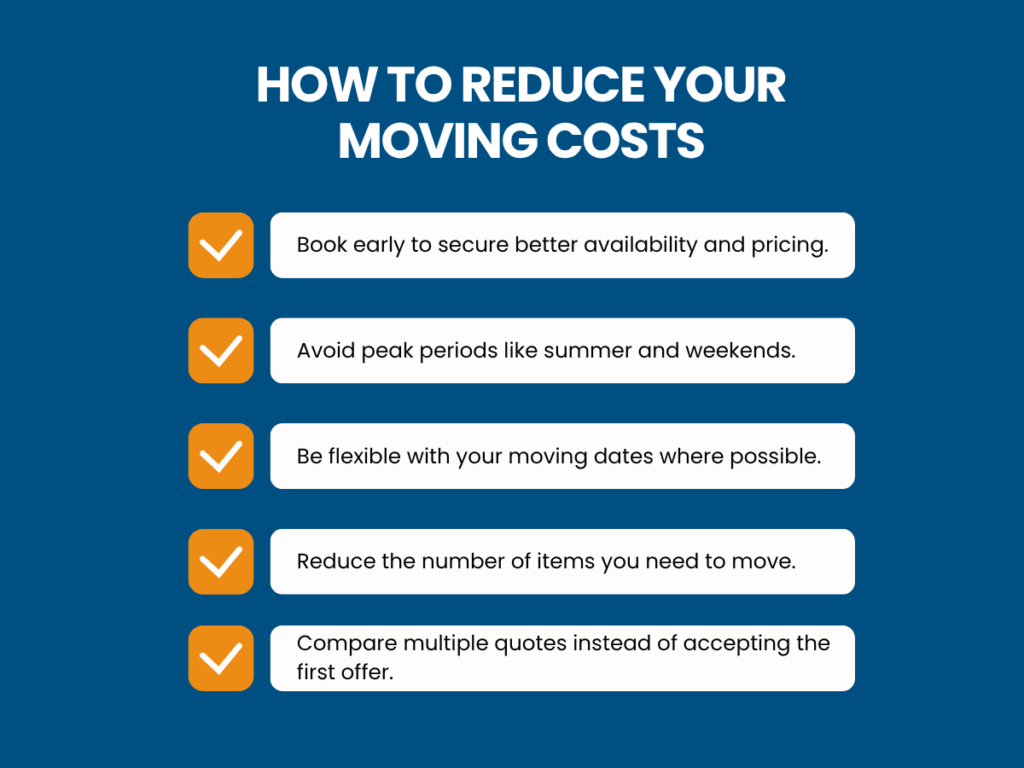
The most effective way to reduce moving costs is to be flexible and compare multiple transport options.
You can lower your moving costs by:
- Booking early to secure better availability
- Avoiding peak moving periods, such as summer and weekends
- Being flexible with your moving dates
- Reducing the volume of items you need to transport
- Comparing multiple quotes instead of accepting the first offer
Flexibility is one of the biggest cost drivers. Moves that can be scheduled around existing transport routes are often significantly cheaper.
Looking for the Best Price for Your Move?
Moving costs can vary dramatically depending on how and when you book. Instead of relying on a single quote, comparing multiple transport providers is the most effective way to secure a better price.
Shiply connects you with a network of rated transport providers who are already making similar journeys, allowing you to receive competitive quotes for your move. This often results in significantly lower costs compared to traditional moving companies.
List your move today to receive quotes and find the most cost-effective way to relocate with confidence.
Sources: Consumer Affairs · U.S. News Real Estate · This Old House · Angi · CapRelo · Forbes