

 Kate Margallo
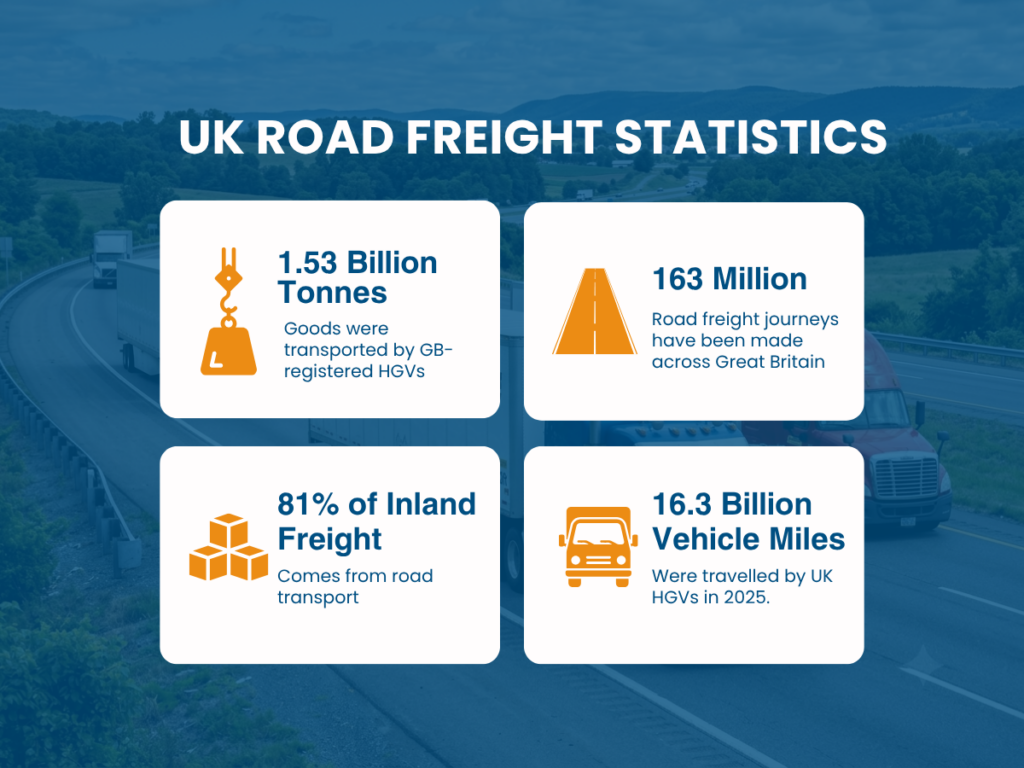
Road freight forms the backbone of the UK’s domestic supply chain. In fact, the latest UK road freight statistics show that 1.53 billion tonnes of goods were transported by heavy goods vehicles (HGVs) across Great Britain in 2025. As businesses increasingly depend on fast and reliable deliveries, road freight continues to connect manufacturers, warehouses, retailers, and consumers across the country.
This article explores the latest UK road freight statistics, including freight volumes, HGV journeys, tonne-kilometres, vehicle activity, haul lengths, and industry trends.
Key UK Road Freight Statistics
Road freight remains the dominant mode of domestic freight transport across the UK. The latest figures highlight the scale of the industry’s operations and its importance to businesses and supply chains.
- 1.53 billion tonnes of goods were transported by GB-registered HGVs in 2025.
- Road freight accounted for approximately 81% of inland freight moved, measured in tonne-kilometres.
- 163 million freight journeys were completed by GB-registered HGVs in 2025.
- The average road freight haul measured 104 kilometres.
- GB-registered HGVs travelled approximately 16.3 billion vehicle miles during the year.
- Groupage (mixed consignments) accounted for 383 million tonnes (25%).
- Food products, beverages, and tobacco represented 197 million tonnes (13%).
- Manufacturing accounted for 40.7% of road freight demand.
- Wholesale and retail accounted for 23.5%, followed by construction at 12.8%.
- Fleet decarbonisation, digital freight management, warehouse expansion, and e-commerce growth continue to reshape the industry.
How Much Freight Is Transported by Road in the UK?
In 2025, GB-registered heavy goods vehicles (HGVs) transported 1.53 billion tonnes of goods. They also accounted for approximately 81% of inland freight when measured in tonne-kilometres. These figures demonstrate the UK’s continued reliance on road transport to move food, medicines, construction materials, manufacturing components, and consumer goods.
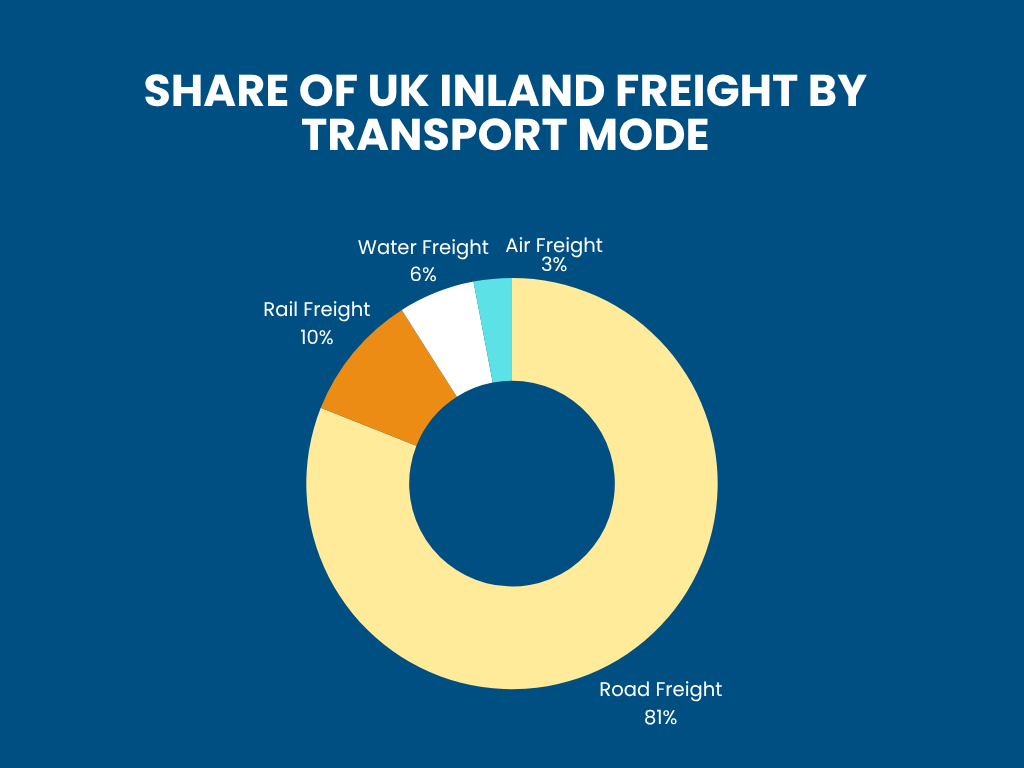
Although rail, maritime, and air freight each play an important role, road transport provides the final connection between ports, warehouses, businesses, and households. Consequently, its flexibility makes it the backbone of the UK’s domestic freight network.
How Many HGV Freight Journeys Are Made Each Year in the UK?
GB-registered heavy goods vehicles (HGVs) completed approximately 163 million freight journeys in 2025. The figure reflects the scale of road freight activity needed to keep the UK’s economy moving. Journeys range from short local deliveries to long-haul routes linking manufacturers, ports, warehouses, and distribution centres.
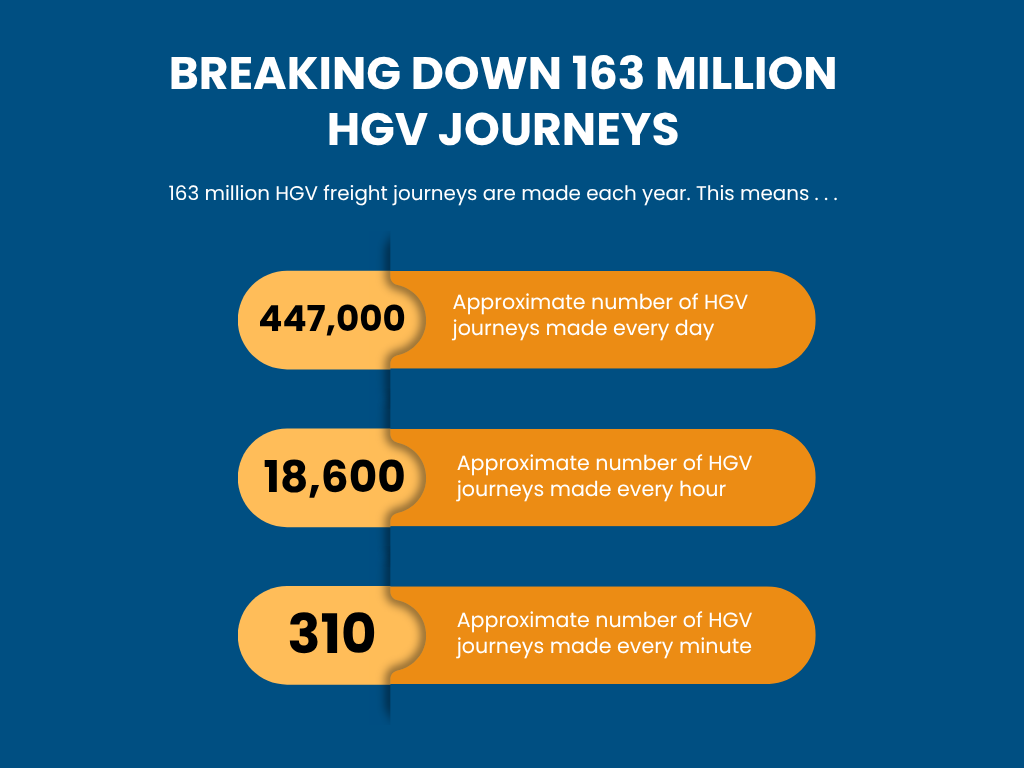
Beyond the headline figure, every freight journey forms part of a wider logistics network. Whether transporting supermarket stock, construction materials, or manufacturing components, HGVs help businesses keep goods moving efficiently throughout the year.
What Is the Average Distance Travelled by Road Freight in the UK?
The average road freight haul in Great Britain measured approximately 104 kilometres in 2025. However, journey distances vary considerably depending on the type of goods being transported and their destination. While many deliveries remain local or regional, others span hundreds of kilometers to connect suppliers, manufacturers, warehouses, and retailers.
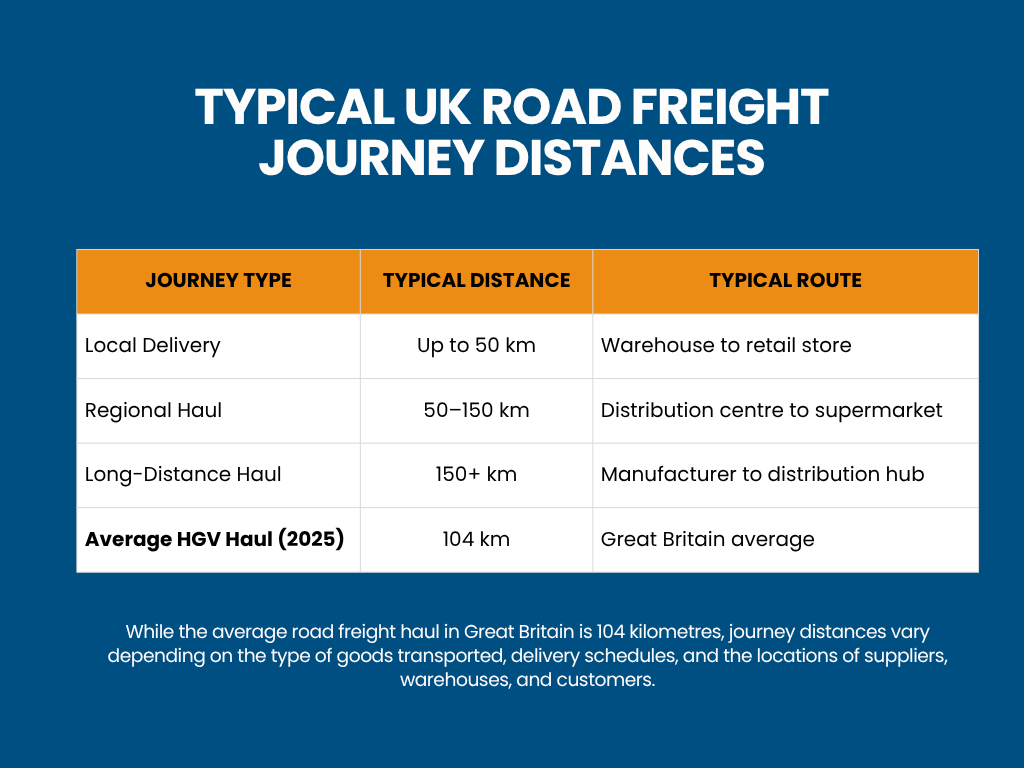
To maximise efficiency, freight operators balance journey distances with delivery schedules and operating costs. As a result, average haul length provides valuable insight into freight patterns, distribution networks, and how goods move throughout the UK’s road freight system.
What Goods Are Transported by Road in the UK?
Road freight carries a diverse range of goods across the UK, supporting industries from agriculture and manufacturing to retail and construction.
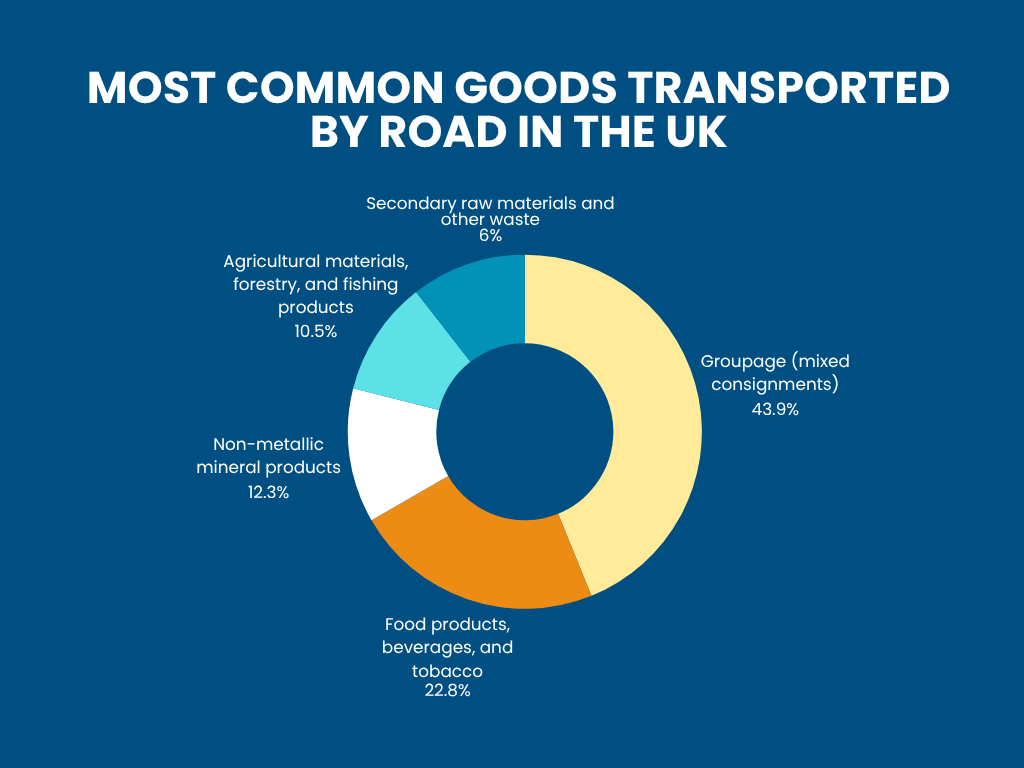
The most common goods transported by road in 2025 were:
- Groupage (mixed consignments) — 25% (383 million tonnes)
- Food products, beverages and tobacco — 13% (197 million tonnes)
- Other non-metallic mineral products (including glass and cement) — 7% (114 million tonnes)
- Agricultural, forestry and fishing products — 7% (103 million tonnes)
- Secondary raw materials and other waste — 6% (98 million tonnes)
Taken together, these commodity groups demonstrate the diversity of the UK’s road freight network. They supply supermarkets, construction sites, farms, factories, and recycling facilities every day.
Which Industries Rely Most on UK Road Freight?
Road freight supports almost every sector of the UK economy. However, demand is concentrated in a handful of major industries.
According to recent industry estimates, the largest end-user industries include:
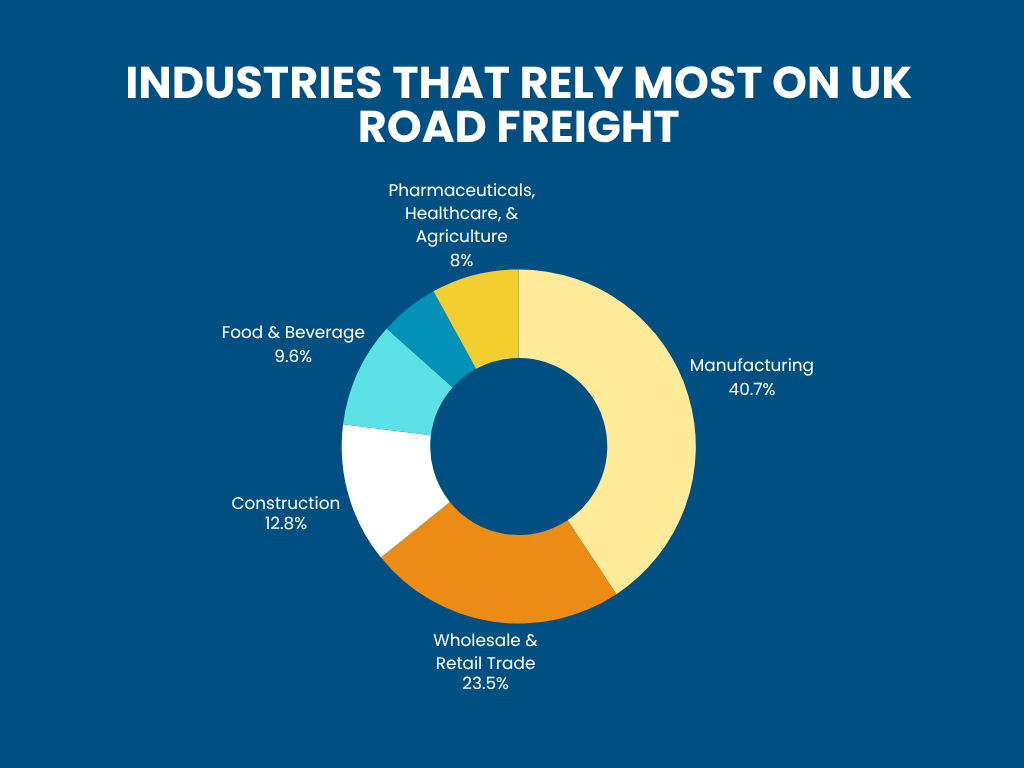
According to recent industry estimates, the largest end-user industries for UK road freight include:
- Manufacturing — 40.7%
- Wholesale & Retail Trade — 23.5%
- Construction — 12.8%
- Food & Beverage — 9.6%
- Automotive — 5.4%
- Pharmaceuticals, Healthcare, & Agriculture— 4.1%
Collectively, these industries generate millions of freight movements every year. Without reliable road transport, manufacturers, retailers, construction firms, and healthcare providers would struggle to maintain efficient supply chains.
How Important Is Road Freight to the UK Economy?
GB-registered HGVs travelled approximately 16.3 billion vehicle miles in 2025. The figure illustrates the scale of road freight activity required to keep the UK’s economy moving. Every mile supports the movement of goods between manufacturers, ports, warehouses, retailers, and consumers.
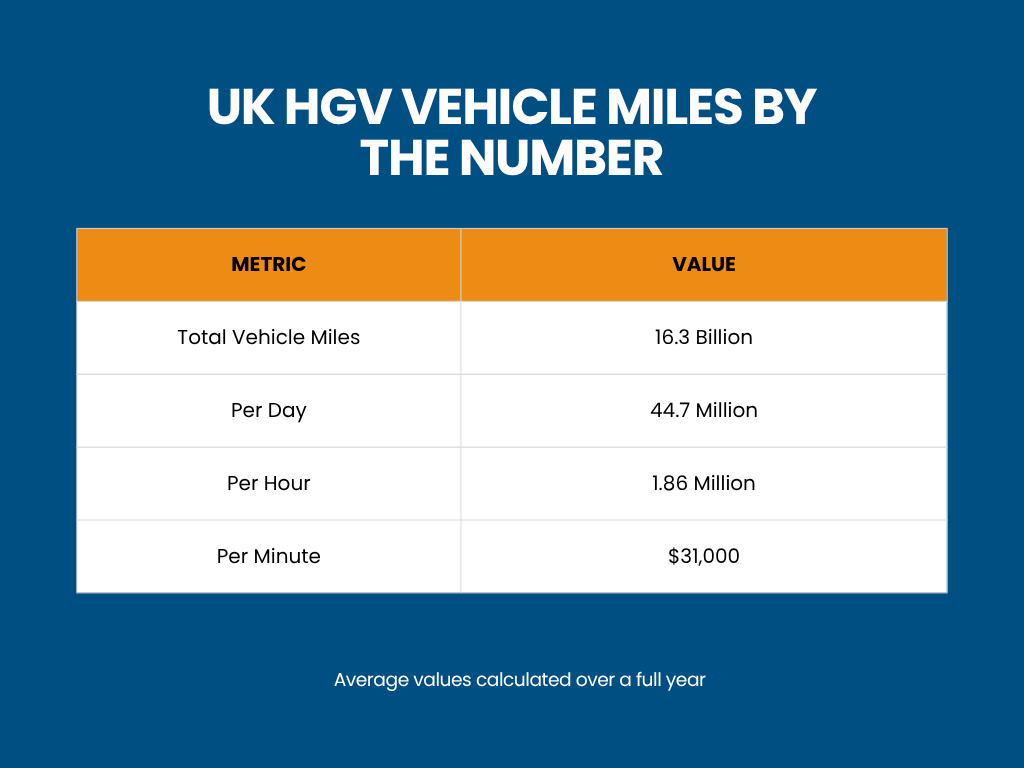
More importantly, the distance travelled reflects the complexity of the UK’s freight network rather than simply the number of vehicles on the road. As goods move through distribution centres and supply chains, road freight provides the vital link between businesses and customers.
What Are the Latest UK Road Freight Trends?
The UK’s road freight industry continues to evolve as businesses respond to changing consumer demand, new technologies, and environmental targets.
The following trends are shaping the future of road freight across the UK:
- Growth in e-commerce is increasing demand for regional distribution and last-mile deliveries.
- Fleet decarbonisation is accelerating as operators adopt electric and alternative-fuel HGVs.
- Digital freight management is improving route planning, vehicle tracking, and operational efficiency.
- Warehouse expansion continues to support faster fulfilment and next-day delivery services.
- Supply chain resilience has become a greater priority as businesses diversify suppliers and strengthen logistics networks.
- Driver recruitment and retention remain key challenges despite continued investment in training and workforce development.
Looking ahead, road freight is expected to remain the dominant mode of domestic goods transport. At the same time, investment in cleaner vehicles, digital technology, and more resilient supply chains will continue to reshape the industry, while labour shortages and rising operating costs remain key challenges.
Ship Road Freight with Confidence
Road freight remains the backbone of the UK’s domestic supply chain, supporting businesses across manufacturing, retail, construction, agriculture, and countless other industries. As these UK road freight statistics show, the sector continues to evolve through technological innovation, sustainability initiatives, and changing consumer demand, ensuring goods move efficiently throughout Great Britain.
When it’s time to arrange your own shipment, Shiply makes finding the right transport provider simple. Whether you’re moving commercial freight, heavy equipment, pallets, or bulky items, you can compare quotes from trusted transport companies across the UK in one place. Start comparing freight quotes today and find a reliable, cost-effective shipping solution tailored to your needs.
Sources: GOV.UK – Domestic Road Freight Data Tables (RFS01) · GOV.UK – Domestic Road Freight Statistics · Logistics UK · Mordor Intelligence · Research and Markets · Transport Statistics Great Britain – Freight Chapter · HMRC – UK Overseas Trade Statistics · HMRC – UK Regional Trade Statistics
“`